The Majestic Tapestry of Isfahan Rugs History: From Persian Royal Courts to Global Treasure
The breathtaking chronicle of Isfahan rugs history weaves through centuries of Persian artistic brilliance, tracing an illustrious path from the golden age of Safavid shahs to the sophisticated workshops that continue producing some of the world’s most exquisite carpets today. These magnificent textiles, originating from one of Persia’s most culturally significant cities, represent the absolute pinnacle of carpet-making artistry combining technical mastery that borders on the miraculous, designs of extraordinary sophistication and beauty, and a refinement that has captivated collectors, museums, and connoisseurs across the globe for over four centuries. Unlike many carpet traditions rooted in tribal necessity or village craft, Isfahan weaving emerged from royal patronage and urban sophistication, creating an aesthetic that reflects the elevated cultural atmosphere of a city that once served as the jewel of the Persian Empire. Understanding the evolution of these masterpieces reveals not merely the story of exceptional craftsmanship, but a window into Persian civilization at its artistic zenith, where poetry, architecture, miniature painting, and carpet weaving converged to create one of history’s great cultural flowerings.
The Imperial City: Cultural Foundation of Isfahan Rugs History Facts
To truly comprehend Isfahan rugs history facts, one must first understand the extraordinary city where this supreme weaving tradition flourished. Isfahan, located in central Iran along the banks of the Zayandeh River, stands as one of Persia’s most historically significant urban centers, with roots extending back over 2,500 years. However, the city reached its absolute cultural and political zenith during the Safavid period (1501-1736), particularly under Shah Abbas I (1588-1629), who made Isfahan his capital and transformed it into one of the world’s most magnificent cities.
The Persian saying “Isfahan nesf-e-jahan” (Isfahan is half the world) captures the city’s historic grandeur and cosmopolitan character. At its height in the 17th century, Isfahan boasted a population of nearly one million, featuring architectural masterpieces including the stunning Naqsh-e Jahan Square (one of the world’s largest public squares), the sublime Shah Mosque with its turquoise dome, the elegant Sheikh Lotfollah Mosque, and the opulent Ali Qapu Palace. This architectural splendor created an environment where all arts flourished, with the same aesthetic principles guiding architecture, manuscript illumination, ceramics, metalwork, and carpet weaving.
The city’s geographic position in central Iran, along ancient trade routes connecting east and west, brought wealth, cultural exchange, and cosmopolitan sophistication. Merchants, diplomats, scholars, and artisans from across Asia and Europe gathered in Isfahan, creating an international atmosphere that enriched local artistic traditions. The exposure to diverse influences from Chinese porcelain to European painting informed Isfahan’s artistic development while the city maintained its distinctly Persian character.
Isfahan’s population was predominantly ethnically Persian, speaking Farsi and maintaining Persian cultural traditions with particular pride and refinement. This cultural homogeneity, combined with urban sophistication and royal patronage, created conditions ideal for developing the most refined expressions of Persian aesthetic. Unlike regions with mixed tribal populations incorporating diverse influences, Isfahan represented distilled Persian artistic vision at its most elevated and sophisticated.
The economic foundation of Safavid Isfahan rested on trade, crafts, and the wealth generated by serving as the imperial capital. Organized guild systems governed various crafts, maintaining quality standards, training apprentices, and regulating production. The carpet weavers’ guild operated under these systems, ensuring knowledge transmission across generations and maintaining the technical excellence for which Isfahan became legendary. This institutional framework supported the development and preservation of the extraordinary skills required for creating Isfahan’s masterpiece carpets.
The Glorious Safavid Era: Birth of the Isfahan Weaving Tradition

The documented history of Isfahan carpet weaving reaches its first golden age during the Safavid period, when royal patronage elevated the craft to unprecedented heights and established the aesthetic principles that continue defining Isfahan work today.
Shah Abbas and the Royal Workshops
The reign of Shah Abbas I (1588-1629) marks the pivotal moment in Isfahan rugs history. When Abbas moved the Safavid capital from Qazvin to Isfahan in 1597, he initiated an ambitious program of urban development and cultural patronage that transformed the city into a showcase of Persian civilization. Central to this vision was the establishment of royal workshops (karkhanehs) producing carpets, textiles, metalwork, ceramics, and illuminated manuscripts of extraordinary quality.
These court workshops employed the finest craftspeople from across Persia, provided unlimited access to the best materials regardless of cost, and created an environment where artistic excellence was the sole priority and economic considerations were secondary to achieving perfection. The designers and master weavers in these workshops could pursue their craft at the highest possible level, experimenting with techniques, developing new designs, and pushing the boundaries of what was technically achievable.
The carpets produced in Safavid Isfahan workshops represent some of the finest textiles ever created. Technical characteristics included extraordinarily fine knotting (often 500-800+ knots per square inch in the finest examples), silk pile or silk-and-wool combinations creating lustrous surfaces and enabling extremely fine detail, elaborate designs executed with precision impossible in coarser weaving, and rich color palettes using the finest natural dyes including expensive materials like cochineal and lapis lazuli.
Several legendary Safavid-era carpets survive in museum collections worldwide, providing tangible evidence of the extraordinary heights Isfahan weaving achieved. These masterpieces demonstrate technical perfection, artistic sophistication, and refined beauty that continue inspiring awe centuries after their creation. The famous Polish carpets (so-called because many ended up in Polish collections), the silk Kashan carpets attributed to the Safavid period, and various documented court pieces show the remarkable capabilities of Isfahan’s master weavers.
Design Innovation and Artistic Integration
One of the most significant Isfahan rugs history facts concerns the integration of carpet design with other Persian arts. The Safavid period saw carpet designers drawing inspiration from manuscript illumination, miniature painting, architectural decoration, and garden design. This cross-pollination created sophisticated carpet compositions that reflected the full spectrum of Persian aesthetic achievement.
The concept of the Persian garden representing paradise on earth with its ordered beauty, flowing water, and lush vegetation profoundly influenced Isfahan carpet design. Garden carpets depicting formal layouts with water channels, planting beds, and pavilions brought this ideal space into interior settings. Even more abstract floral carpets echo garden aesthetics, creating textile gardens for contemplation and beauty.
The connection to miniature painting manifested in the pictorial quality of some Isfahan designs. The finest Isfahan carpets approach paintings in their sophisticated compositions, color modulations, and attention to detail. This painterly quality required extraordinary technical skill to achieve in knotted form, with weavers essentially translating artists’ visions into textile reality.
The development of distinctive Isfahan design categories during the Safavid period established patterns that remain recognizable today. These included elaborate medallion-and-corner formats with unprecedented complexity, all-over floral patterns covering entire fields with sophisticated repeats, pictorial compositions depicting hunting scenes, court life, or garden vistas, and intricate arabesque patterns showing mathematical precision and aesthetic refinement.
The Post-Safavid Decline and Survival
The fall of the Safavid dynasty in 1736 and subsequent Afghan invasion devastated Isfahan. The city was sacked, much of the population killed or dispersed, and the economic and cultural infrastructure that had supported the arts was destroyed. For Isfahan carpet weaving, this represented a catastrophic break: the royal workshops closed, master weavers died or fled, and organized production essentially ceased.
Through the 18th and early 19th centuries, Isfahan carpet production remained dormant or barely alive. What weaving occurred was purely for local use at levels far below Safavid sophistication. The great tradition seemed destined to become merely historical, remembered only through museum examples of past glory. The knowledge, skills, and aesthetic sensibilities that had created Safavid masterpieces survived only in fragments, preserved imperfectly by scattered survivors and their descendants.
The Remarkable Revival: Modern Isfahan Rug Patterns and Production
The revival of Isfahan carpet production in the late 19th and early 20th centuries represents one of the most remarkable stories of cultural preservation and artistic renaissance in the history of textile arts.
The Foundations of Renaissance (1880s-1920s)
The revival began in the 1880s-1890s, driven by multiple factors: growing European and American demand for Oriental carpets creating economic opportunity, recognition that Isfahan’s reputation and historical legacy could support premium pricing, surviving fragmentary knowledge of traditional techniques providing starting points, and entrepreneurial merchants willing to invest in rebuilding the industry.
Key figures in this revival included merchant families who organized production and master weavers who reconstructed technical knowledge. These pioneers studied surviving Safavid carpets in museums and private collections, documented traditional designs and techniques, recruited skilled weavers and trained new ones, and established quality standards appropriate for Isfahan’s prestigious heritage.
The revived production consciously referenced Safavid-era work, viewing those masterpieces as the gold standard to emulate. However, the revival also adapted to contemporary realities. The designs sometimes simplified complex Safavid patterns for commercial viability, synthetic dyes began supplementing or replacing natural dyes, and production organized around commercial workshops rather than court patronage. Despite these adaptations, the finest revival-period Isfahan carpets achieved remarkable quality perhaps not matching the absolute finest Safavid pieces but representing genuine excellence by any reasonable standard.
The Golden Age of Modern Production (1920s-1970s)
The early-to-mid 20th century saw Isfahan achieve consistent excellence in carpet production. This period, particularly the decades before the 1979 Iranian Revolution, produced carpets that rank among the finest Persian commercial production ever achieved. Technical quality reached extraordinary levels, with the finest workshops producing pieces with 400-600+ knots per square inch, using excellent materials including fine wool and silk, executing elaborate traditional designs with precision and refinement, and maintaining quality control ensuring consistent excellence.
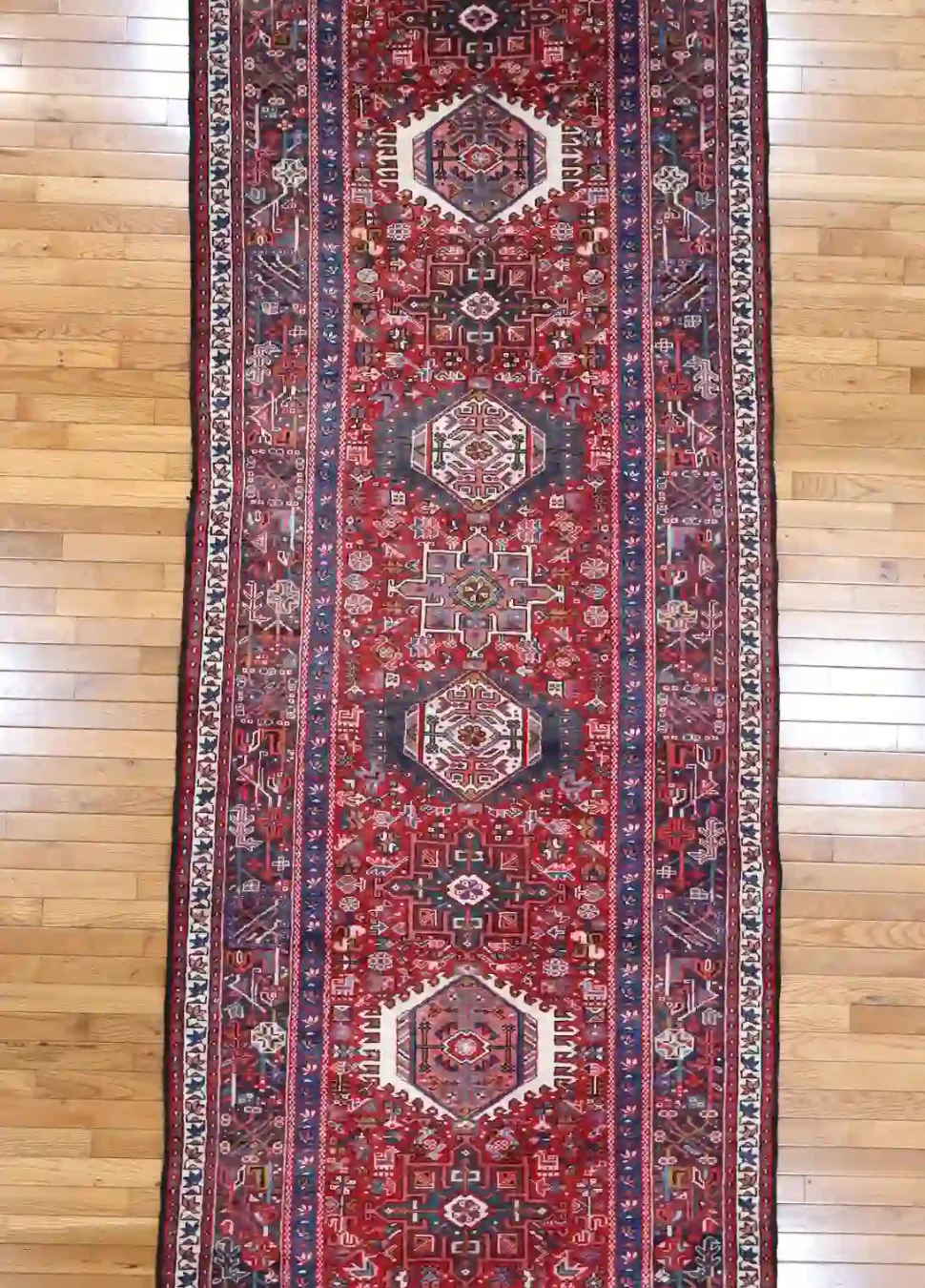
During this golden age, several design categories became particularly associated with Isfahan. The Shah Abbas pattern, featuring elaborate palmettes, vines, and cloud bands in sophisticated repeating arrangements, became a signature Isfahan design. Named after the great Safavid shah who elevated Isfahan to prominence, this pattern references classical Persian design vocabulary while allowing for individual interpretation and creativity within the traditional framework.
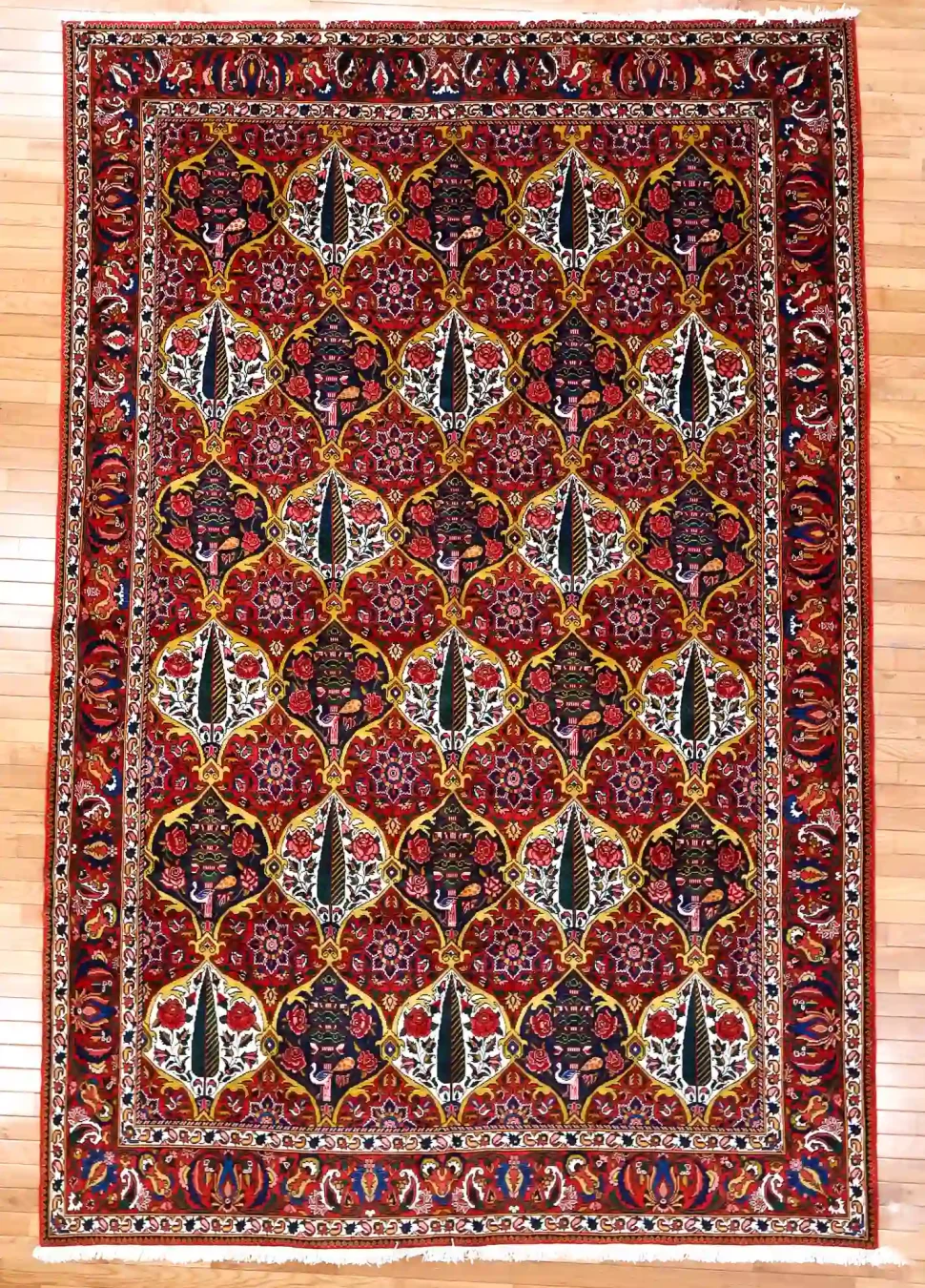
The Tree of Life design featuring stylized trees (often cypresses) rising vertically through the field—became another Isfahan specialty. The Isfahan Tree of Life rug format draws on ancient Persian symbolism, with the tree representing the axis mundi connecting earth and heaven, embodying themes of growth, life, and spiritual ascent. Isfahan weavers executed these designs with particular refinement, creating compositions that balance naturalism with stylization, vertical dynamism with overall harmony.
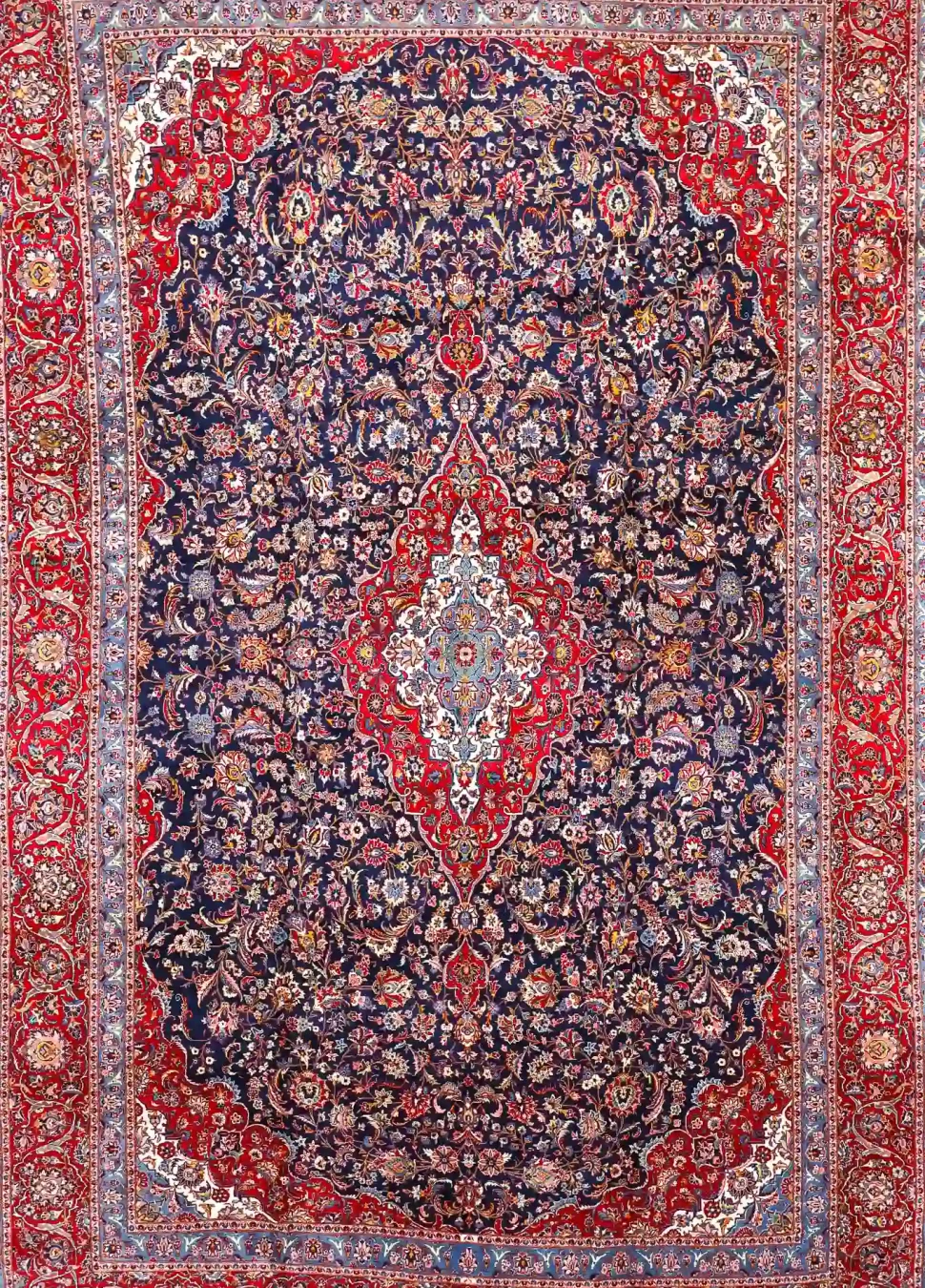
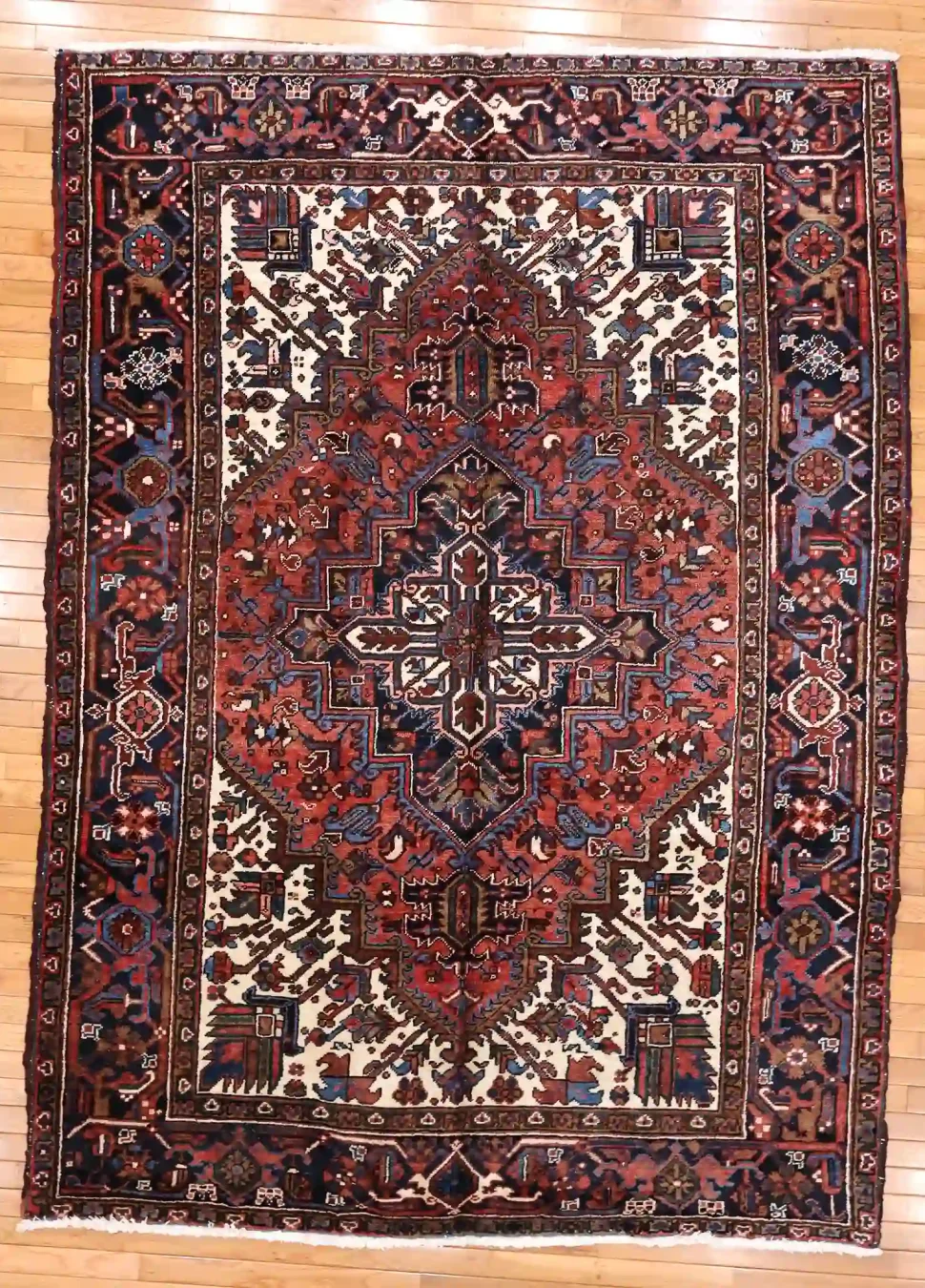
Elaborate medallion-and-corner formats with unprecedented detail and complexity characterized much Isfahan production. Central medallions might contain dozens of distinct elements, elaborate floral sprays, arabesques, cloud bands, and geometric frameworks all executed with precision possible only through extremely fine knotting. The fields surrounding these medallions featured equally elaborate secondary patterns creating rich, densely ornamented surfaces that rewarded extended viewing.
Contemporary Production and Market Position
Today, Isfahan maintains its position as one of the most prestigious Persian carpet-producing centers. Contemporary production ranges from exceptional workshop pieces maintaining the highest traditional standards to more commercial work targeting different market segments. The challenge, as with all traditional crafts, is preserving quality and authenticity amid commercial pressures and changing economic realities.
The finest contemporary Isfahan workshops continue producing extraordinary carpets worthy of the name’s illustrious heritage. These pieces use excellent materials, maintain rigorous technical standards with extremely fine knotting, execute sophisticated traditional designs with appropriate refinement, and honor the aesthetic principles established during the golden ages of production. While expensive, these contemporary masterpieces represent the continuation of a living tradition and will themselves become the antiques and collectibles of the future.
However, not all contemporary production labeled “Isfahan” maintains traditional standards. Some commercial pieces use the prestigious name while delivering inferior quality coarser weaving, synthetic materials, simplified designs, and hasty execution that dishonors Isfahan’s heritage. Buyers must develop discernment to distinguish genuine quality from commercial exploitation of a famous name. This requires understanding the technical and aesthetic characteristics that define authentic Isfahan excellence and working with reputable sources who provide accurate information and stand behind their attributions.

Understanding the Sophistication of Isfahan Rug Patterns
The visual vocabulary of Isfahan rug patterns represents the pinnacle of Persian design sophistication, combining centuries of aesthetic development with extraordinary technical capabilities that enable their realization.
The Shah Abbas Pattern: Classical Refinement
The Shah Abbas pattern ranks among the most recognizable and prestigious Isfahan designs. This elaborate format features scrolling vines bearing large-scale palmettes, cloud bands (chintamani motifs borrowed from Chinese art), elaborate floral rosettes, and intricate arabesque frameworks all arranged in sophisticated repeating patterns that create rich, complex surfaces.
The execution of Shah Abbas patterns requires extraordinary skill. The curvilinear elements must flow gracefully with proper tension and rhythm, the large-scale palmettes must be rendered with internal detail and proper proportion, the cloud bands must integrate smoothly within the overall composition, and the color placement must create depth and visual interest while maintaining overall harmony. Only extremely fine knotting enables the precise execution required; attempting these patterns with coarse weaving results in crude, awkward renditions that betray the design’s sophisticated intentions.
Color use in Shah Abbas patterns demonstrates particular sophistication. Traditional examples might feature rich reds or deep blues for fields with contrasting medallion and border colors, ivory or pale backgrounds allowing elaborate patterns to show clearly, and rich jewel tones providing accent and variety. The overall effect in fine examples is simultaneously rich and harmonious, complex and readable, traditional and timelessly elegant.
The Isfahan Tree of Life Rug: Symbolic Verticality
The Tree of Life motif holds deep symbolic significance in Persian culture, representing the connection between earthly and celestial realms, embodying themes of growth, fertility, and spiritual aspiration. Isfahan weavers elevated this ancient symbol to extraordinary artistic heights through refined execution and sophisticated design development.
Isfahan Tree of Life rugs typically feature vertical compositions with stylized trees, often cypresses, symbolizing eternity rising from the bottom of the field toward the top. The trees might be rendered with considerable naturalism showing branches, leaves, and even birds or animals, or more abstractly as formal vertical elements with symmetrical offshoots and stylized foliage. The background around the tree often features elaborate floral elements, creating garden-like settings that enhance the overall composition.
The challenge in Tree of Life designs lies in creating vertical dynamism while maintaining overall balance. The eye naturally follows the tree upward, creating movement and energy, yet the composition must remain harmonious and balanced rather than feeling unstable or awkward. Isfahan designers solved this through careful proportion, symmetrical elements that provide stability, and elaborate borders that frame and contain the vertical energy.
Color in Isfahan Tree of Life rugs typically emphasizes naturalistic tones greens for foliage, browns for trunks and branches, blues for skies or water elements while maintaining the sophisticated chromatic sense characteristic of Isfahan work. The finest examples achieve remarkable subtlety in color modulation, with multiple shades creating depth and naturalism within the stylized format.
Pictorial and Figural Compositions
Isfahan’s technical fineness enabled pictorial compositions with detail approaching paintings. These pieces might depict hunting scenes with horsemen, animals, and elaborate landscapes, court scenes showing rulers, courtiers, and architectural settings, religious or literary subjects from Persian poetry and mythology, or elaborate garden scenes with pavilions, water features, and abundant vegetation.
The creation of pictorial Isfahan rugs required specialized knowledge and exceptional skill. Designers created detailed cartoons that weavers followed precisely, translating pictorial visions into knotted reality. The finest examples show remarkable detail, individual facial features, architectural specifics, naturalistic landscape elements achieved through extraordinary knotting fineness that enabled near-photographic precision.
While pictorial rugs represent a relatively small portion of total Isfahan production, they demonstrate the tradition’s remarkable versatility and technical capabilities. These pieces command particular attention from collectors and museums as they represent the ultimate expression of Isfahan technical mastery and the successful integration of different Persian artistic traditions: carpet weaving and miniature painting.
Medallion and All-Over Formats
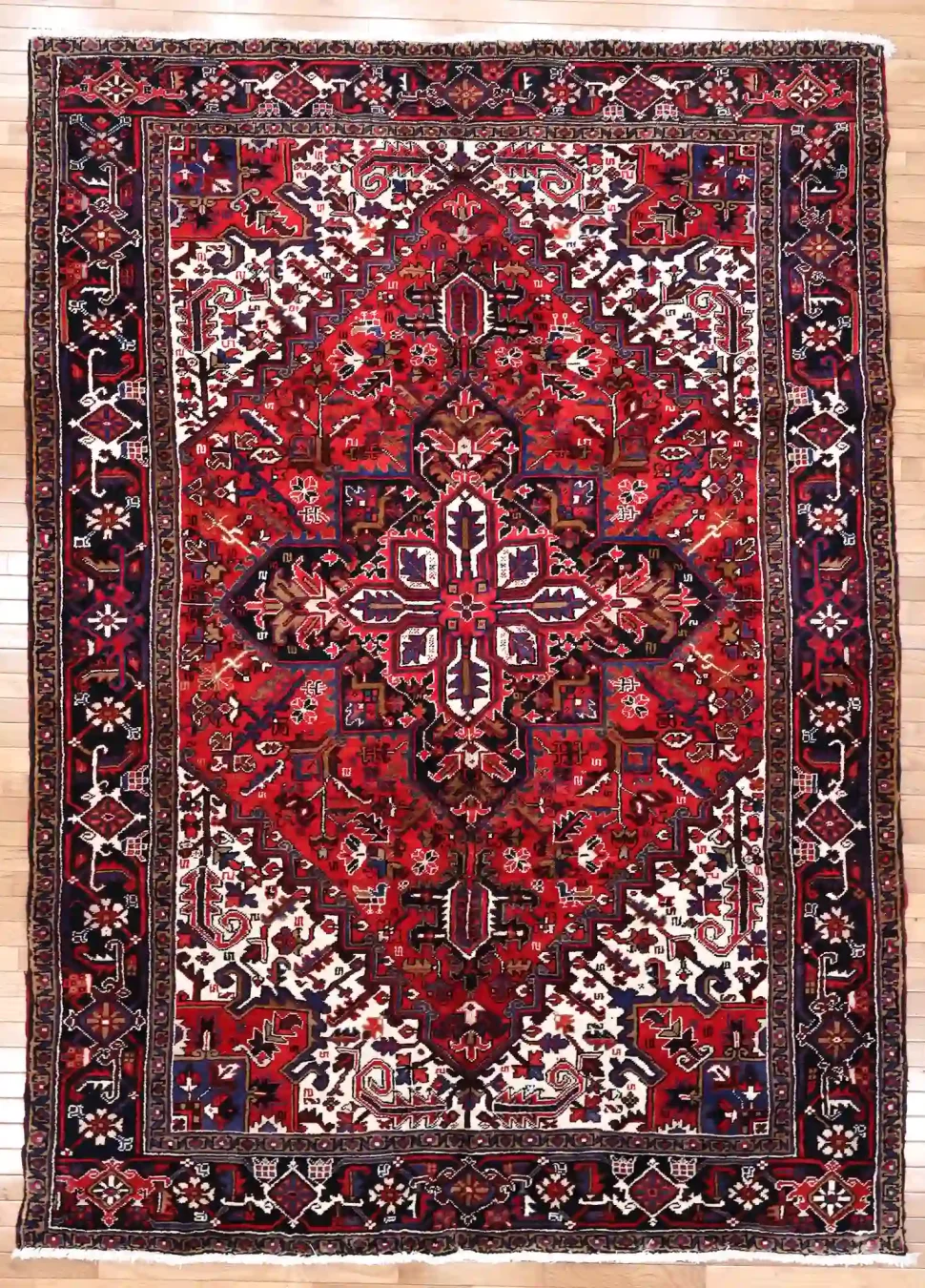
Beyond specific named patterns, Isfahan production encompasses the full range of Persian design formats executed with characteristic refinement. Medallion-and-corner layouts receive particularly elaborate treatment, with central medallions containing extraordinary internal complexity and detail, corner elements that echo and complement the medallion while allowing creative variation, fields filled with secondary patterns creating rich texture, and borders featuring multiple elaborate bands with different ornamental motifs.
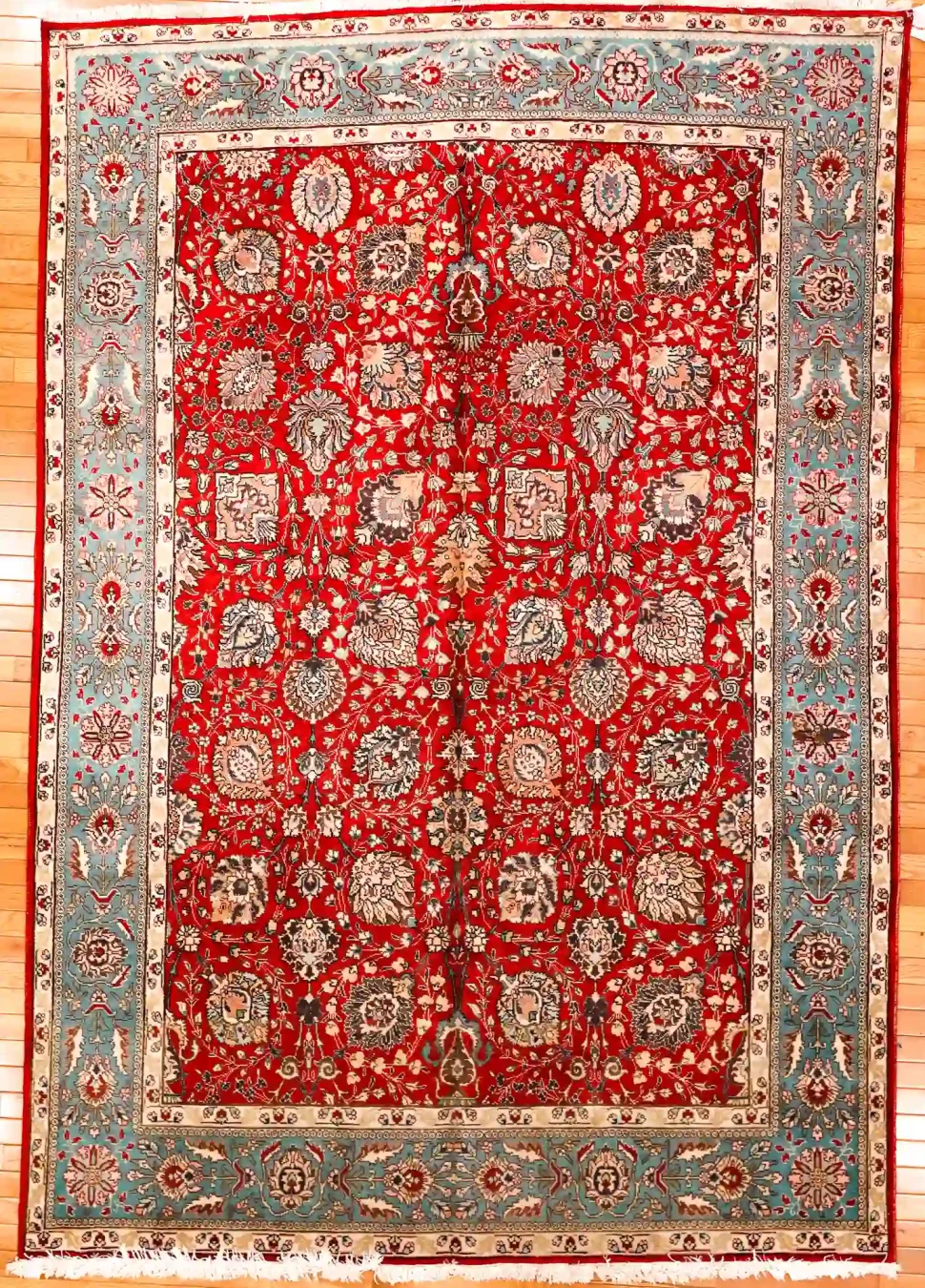
All-over patterns where repeating elements cover the entire field without dominant central medallions show different design challenges and possibilities. These compositions require careful balancing to create visual interest without monotony, rhythmic repetition that guides the eye without feeling mechanical, and color placement that creates depth and movement within the repeating framework. Isfahan weavers excel at these sophisticated compositional challenges, creating all-over designs that reward extended viewing with continually discovered details and relationships.
Collecting and Valuing Antique Isfahan Rugs

Understanding the market for antique Isfahan rugs requires knowledge of the multiple factors that determine value, authenticity considerations, and the dynamics of this prestigious collecting category.
Age and Historical Periods
Safavid-period pieces (16th-18th centuries) represent the absolute pinnacle of Isfahan production and are extraordinarily rare and valuable. The handful of documented Safavid Isfahan carpets in private hands command astronomical prices when they appear, often hundreds of thousands to over a million dollars for museum-quality examples. Most Safavid pieces reside in institutional collections and rarely enter the market.
Late 19th-century revival pieces represent the earliest Isfahan carpets regularly available to private collectors. These carpets, woven as master craftspeople rebuilt the tradition after its near-extinction, combine historical significance with often excellent quality. Values for fine examples typically range from $20,000-$100,000+ for room sizes depending on condition, specific characteristics, and quality level.
Early-to-mid 20th century Isfahan carpets (roughly 1900-1960) represent what many collectors consider the golden age of modern production. These pieces often show exceptional quality while remaining somewhat more accessible than 19th-century examples. Quality pieces from this period typically range from $10,000-$50,000 for room sizes, offering excellent entry points for serious collecting of genuine antique Isfahan rugs.
Pre-1979 Revolution pieces have special status as the last examples before major political and social changes transformed Iran. These carpets represent the culmination of traditional production before subsequent disruptions and are increasingly valued as that historical period recedes into the past.
Technical Quality Assessment
Knot density provides an objective quality measure that significantly affects both appearance and value. Fine antique Isfahan rugs typically show 300-500+ knots per square inch, with the finest examples reaching 600-800+ knots. This extraordinary fineness enables the sophisticated designs and refined execution that distinguish Isfahan from other types. However, density alone doesn’t determine quality; the regularity, precision, and overall execution quality matter equally.
Material quality dramatically affects appearance, durability, and value. The finest antique Isfahan rugs use exceptional materials: lustrous, fine wool creating smooth, elegant surfaces; silk pile or silk highlights adding luster and enabling finer detail; excellent natural dyes creating rich, harmonious colors that age beautifully. Examining wool quality, does it feel soft and silky or harsh and coarse? provides immediate quality feedback. Silk content should be genuine silk (not mercerized cotton sometimes passed off as silk) used skillfully to enhance rather than overwhelm the design.
Construction quality separates masterpiece examples from ordinary commercial work. Examining the back reveals whether the knotting is extraordinarily regular and precise or shows irregularities, whether the foundation is sound or showing weaknesses, and whether edges and ends are properly finished. The rug should lie perfectly flat without buckling or rippling (except where old age has created minor natural distortions), edges should be straight and even, and the overall construction should demonstrate meticulous care.
Condition and Restoration Considerations
Condition profoundly impacts the value of antique Isfahan rugs, perhaps more dramatically than with some other types due to their refinement and the premium placed on pristine examples. A perfect antique Isfahan might command 5-10 times the price of a similar but significantly damaged example.
Key condition factors include pile condition: is the original pile full and intact or worn down or damaged?; color condition do colors retain their original vibrancy or show significant fading, bleeding, or discoloration?; structural integrity is the foundation sound or showing deterioration, dry rot, or weak areas?; and repair history is restoration minimal and skillfully executed or extensive and obvious? For valuable Isfahan rugs, even moderate condition issues significantly reduce value, though the relationship isn’t entirely linear the difference between pristine and excellent condition is proportionally less dramatic than between poor and fair condition.
Restoration and conservation require expert attention. Proper conservation preserves original materials where possible, uses techniques and materials appropriate to the rug’s age and construction, and doesn’t attempt to “improve” the rug beyond stabilization and preservation. For museum quality pieces, conservation-level treatment by textile specialists is essential. Crude repairs using mismatched materials or inappropriate techniques can reduce value more than leaving damage unrepaired.
Market Dynamics and Investment Potential
The market for antique Isfahan rugs remains strong, with quality examples commanding healthy prices and showing consistent long-term appreciation. Several factors support this market strength: limited supply genuine antiques cannot be replicated and become scarcer over time; proven quality Isfahan’s reputation for excellence is well-established and universally recognized; aesthetic appeal the refined beauty of Isfahan rugs suits diverse decorating contexts; and cultural significance these pieces represent important Persian artistic heritage with scholarly and institutional interest.
However, the market discriminates sharply between excellence and mediocrity. Exceptional pieces with superior characteristics appreciate strongly, while ordinary commercial examples show more modest appreciation. The current market particularly favors pieces with documented provenance, museum-quality technical excellence, pristine or near-pristine condition, and distinctive characteristics or rare designs.
For investment purposes, working with reputable specialists, focusing on quality over quantity, maintaining proper documentation, and providing appropriate conservation and care all support value preservation and appreciation. However, rugs should primarily be acquired for their beauty and cultural significance, with investment appreciation considered a fortunate byproduct rather than the primary motivation.
The Experience of Buying Isfahan Rugs Online
In the digital age, purchasing Isfahan rugs online has become increasingly common, offering both opportunities and challenges for collectors and consumers.
Advantages of Online Purchasing
The online marketplace provides several advantages: access to global inventory impossible to see physically; ability to compare many examples across different dealers and price points; convenience of shopping from home with time to research and consider; and often competitive pricing due to lower overhead and broader competition. For buyers in locations without local Persian rug specialists, online purchasing provides access to quality examples that would otherwise be unavailable.
Specialized online dealers focusing on Persian rugs can offer expertise and inventory rivaling or exceeding physical galleries. Many establish reputations through accurate descriptions, clear photography, fair pricing, and standing behind their merchandise with appropriate guarantees. These reputable online sources provide valuable service connecting buyers with quality rugs while maintaining professional standards.
Challenges and Risk Mitigation
However, online purchasing presents challenges absent from physical inspection: inability to see, feel, and examine rugs in person before committing; difficulty assessing condition details that photographs might not reveal; risk of misrepresentation regarding age, origin, materials, or quality; and complications with returns, shipping, and dispute resolution for high-value items.
Mitigating these risks requires careful strategies: research sellers thoroughly check reviews, verify business credentials, and assess their expertise and reputation; examine photographs critically request additional detailed images of any areas of concern; ask specific questions about condition, materials, construction details, and provenance; understand return policies clearly before purchasing; request independent appraisals for significant purchases; use secure payment methods providing buyer protection; and start with more modest purchases to evaluate a seller before committing to expensive acquisitions.
What to Look for When Buying Online
When evaluating Isfahan rugs online, pay attention to several key factors: detailed, high-quality photographs showing the full rug, close-ups of pile and knotting, back construction, edges and ends, and any condition issues; accurate, specific descriptions including precise dimensions, knot count, material identification, age assessment, condition details, and provenance information if available; realistic pricing unusually low prices suggest potential problems with authenticity, quality, or condition; clear policies regarding returns, authenticity guarantees, and dispute resolution; and seller expertise demonstrated through accurate terminology, detailed knowledge, and appropriate context for offerings.
For significant purchases, consider requesting additional services: professional appraisal from an independent expert, condition report from a rug conservator, shipping with appropriate insurance and tracking, or even video calls allowing real time examination and questions. Reputable sellers should accommodate reasonable requests that facilitate informed purchasing decisions for valuable pieces.

Care, Preservation, and Living with Isfahan Masterpieces
For those fortunate enough to own antique Isfahan rugs, proper care ensures these treasures survive and continue bringing beauty for generations while preserving their cultural and monetary value.
Daily and Routine Care
Regular maintenance protects Isfahan rugs from unnecessary wear and damage. Vacuum weekly using suction only without beater bars the fine pile and intricate patterns require gentle treatment. Vacuum both the face and, periodically, the back to remove dirt that penetrates through the pile. For particularly valuable or fragile pieces, use screening over the rug during vacuuming to prevent suction damage.
Rotation every six months ensures even wear and light exposure. This practice prevents obvious traffic patterns from developing and ensures fading or color changes occur evenly rather than creating disfiguring contrasts. For Isfahan rugs in rooms with strong directional light, more frequent rotation provides additional protection.
Using appropriate rug pads is essential. Quality pads designed specifically for hand-knotted rugs prevent slipping, provide cushioning that reduces wear, protect floors from dye transfer, and allow air circulation preventing moisture accumulation and mold. Avoid rubber-backed pads that can deteriorate and damage both rugs and floors.
Professional Care and Conservation
Professional cleaning by specialists experienced with fine Persian rugs maintains condition and appearance while protecting these valuable textiles. The extreme fineness, silk content in many examples, and sometimes-fragile age of antique Isfahan rugs require expert treatment not aggressive methods suitable for coarser, more robust carpets.
Frequency depends on use every 3-5 years for normal residential placement in low-traffic areas, more frequently for higher-traffic locations or homes with pets. Cleaning should always be gentle, using appropriate methods for the specific rug’s materials, condition, and age. Proper drying is crucial to prevent mold or mildew, particularly important for pieces with cotton foundations that retain moisture.
For valuable antique Isfahan rugs showing significant wear or damage, conservation rather than simple repair is appropriate. Textile conservators trained in museum-standard techniques can stabilize weak areas, secure deteriorating foundations, and preserve original materials using reversible methods that don’t compromise authenticity. While expensive, proper conservation protects significant investments and ensures these cultural artifacts survive for future generations.
Environmental Protection and Display
Protecting Isfahan rugs from environmental damage extends their lifespan significantly. Direct sunlight is particularly damaging, fading dyes (even relatively stable synthetic dyes will eventually fade) and weakening fibers. Use UV-filtering window treatments, strategic placement away from bright windows, or UV-filtering glass in frames if displaying pieces as wall hangings.
Maintain appropriate humidity (40-60%) and stable temperature. Extremely dry conditions make wool brittle and increase static that attracts dirt, while excessive humidity promotes mold and creates favorable conditions for pest activity. Stable conditions prevent stress on fibers from expansion and contraction cycles.
For display rather than floor use, proper mounting and handling are crucial. Wall-mounted Isfahan rugs should be properly supported to distribute weight evenly, avoiding stress on the foundation. Rotating displays prevent uneven light exposure and allows periodic condition assessment. Never use nails, tacks, or other fasteners that pierce the textile use proper hanging systems designed for valuable textiles.
Conclusion: The Enduring Magnificence of Isfahan Rugs History
The journey through Isfahan rugs history reveals one of humanity’s great artistic achievements: a tradition that reached extraordinary heights during Persia’s golden age, survived near-extinction, and experienced a remarkable renaissance to continue producing carpets of exceptional beauty and quality today. From Safavid court workshops where cost was no object and perfection was the only standard, through the dark period when the tradition barely survived, to the revival period and modern production that honor this illustrious heritage, Isfahan weaving demonstrates the resilience of artistic traditions and the enduring appeal of genuine excellence.
What makes Isfahan rugs history particularly significant is the level of achievement these textiles represent. The finest examples whether Safavid masterpieces in museum collections or exceptional modern pieces from the best workshops demonstrate what human skill, patience, artistic vision, and dedication to excellence can achieve. These aren’t simply functional floor coverings but works of art that happen to be woven rather than painted, embodying the same aesthetic principles and cultural values expressed in Isfahan’s magnificent architecture, its exquisite miniature paintings, and its sublime poetry.
Understanding the sophistication of Isfahan rug patterns enhances appreciation of these magnificent textiles. The elaborate Shah Abbas designs, symbolic Tree of Life compositions, intricate medallion formats, and pictorial masterpieces all reflect sophisticated aesthetic philosophy developed over centuries. The designs aren’t arbitrary decorations but meaningful expressions of Persian cultural values, spiritual concepts, and artistic ideals, executed with technical mastery that enables their full realization.
For collectors and enthusiasts, antique Isfahan rugs represent pinnacle acquisitions—pieces that combine historical significance, technical excellence, and refined beauty in ways few other textiles can match. The market reflects this status, with quality examples commanding appropriate premiums while continuing to appreciate as they become scarcer and their cultural importance is increasingly recognized. Whether viewed as investments, cultural artifacts, or simply beautiful objects for daily enjoyment, fine Isfahan rugs justify the attention and resources devoted to acquiring and preserving them.
The availability of Isfahan rugs online has democratized access while creating new challenges around authentication and quality assessment. Buyers must develop knowledge and work with reputable sources to navigate this marketplace successfully, but the opportunities are real for those willing to invest the necessary care and attention.
As we look to the future, Isfahan rugs history continues unfolding. Contemporary production maintains this illustrious tradition, with the finest workshops upholding standards established during the golden ages. Earlier pieces are aging into ever-greater rarity and value. The aesthetic remains timelessly beautiful, ensuring continued appreciation across changing fashions and preferences.
For anyone fortunate enough to own, or aspiring to acquire, an Isfahan rug whether an antique Isfahan rug from the golden ages of production or a contemporary masterpiece from today’s finest workshops these textiles offer something precious: tangible connection to one of humanity’s great artistic traditions, daily beauty that enriches life immeasurably, and the profound satisfaction of preserving and cherishing genuine excellence. This is the lasting gift of Isfahan rugs history to all who appreciate its beauty that transcends time, craftsmanship that inspires awe, and cultural heritage that connects us to the heights of human creative achievement.
Frequently Asked Questions About Isfahan Rugs
What makes Isfahan rugs so special and valuable compared to other Persian rugs?
Isfahan rugs are considered among the finest Persian carpets due to several exceptional characteristics. Technically, Isfahan rugs feature extraordinarily fine knotting, typically 300-600+ knots per square inch in quality examples, with the finest reaching 700-800+ knots enabling intricate designs impossible with coarser weaving. Many incorporate silk pile or silk highlights creating lustrous surfaces and allowing even finer detail. The designs are exceptionally sophisticated, featuring elaborate patterns like the Shah Abbas motif, intricate medallion-and-corner formats, symbolic Tree of Life compositions, and sometimes pictorial scenes, all executed with near-painterly precision. Historically, Isfahan represents the pinnacle of Persian carpet artistry; the Safavid-era court workshops in Isfahan produced some of history’s finest textiles, and modern production consciously honors this legacy. The city’s cultural significance as the jewel of Safavid Persia means Isfahan rugs carry special prestige and historical importance. Aesthetically, Isfahan carpets project refined elegance and sophisticated beauty reflecting the elevated cultural atmosphere of one of Persia’s greatest cities. The combination of supreme technical excellence, sophisticated designs, prestigious heritage, and refined beauty justifies the premium prices quality Isfahan rugs command. While other Persian types like Tabriz, Nain, or Qum might rival Isfahan technically, few combine the same historical pedigree, consistent quality reputation, and universally recognized prestige that make Isfahan carpets particularly valued by collectors, museums, and connoisseurs worldwide.
How can I tell if an Isfahan rug is genuinely antique and what determines its value?
Authenticating antique Isfahan rugs and assessing their value requires examining multiple factors. For age determination, look for construction characteristics: genuine antique examples show hand-spun wool with slight irregularities, natural dyes creating rich colors with characteristic aging (mellowing, abrash variations), cotton or silk foundations appropriate to age and quality level, and construction details reflecting pre-industrial or early industrial techniques. Examine wear patterns should be natural and appropriate to claimed age, showing gentle overall thinning rather than isolated damage or artificial aging. Check dye quality natural dyes age harmoniously while early synthetic dyes often show harsh colors or unstable fading. Structural examination reveals foundation condition, repair history, and whether construction quality matches claimed attribution. For value assessment, consider age (Safavid pieces extraordinarily rare and valuable; 19th-century revival pieces highly valuable; early-to-mid 20th century valuable; post-1970s less valuable historically); knot density (finer generally more valuable 400+ knots per square inch indicates exceptional quality); silk content (substantial genuine silk adds significant value); design quality (elaborate traditional patterns like Shah Abbas, Tree of Life, or exceptional medallion formats command premiums); condition (pristine antiques worth multiples of damaged examples condition affects value more dramatically than almost any other factor); provenance (documented history adds value and confidence); size (room sizes most desirable; unusual sizes might be rarer but have limited markets); and current market dynamics (sophisticated collectors pay premiums for documented excellence). Approximate values: museum-quality Safavid pieces $500,000-$1,000,000+; fine 19th-century pieces $20,000-$100,000+; quality early-to-mid 20th century $10,000-$50,000. For significant purchases, professional appraisal by Persian rug specialists provides reliable authentication and valuation.
What is an Isfahan Tree of Life rug and what does it symbolize?
An Isfahan Tree of Life rug features a distinctive vertical composition centered on a stylized tree typically a cypress, symbolizing eternity in Persian culture rising from the bottom of the field toward the top. This ancient motif holds profound symbolic significance in Persian and broader Near Eastern traditions, representing the axis mundi (world axis) connecting earthly and celestial realms, embodying growth, life, fertility, and spiritual aspiration toward the divine, and serving as a paradise symbol the tree representing the ultimate goal of spiritual development. Isfahan weavers elevated this traditional motif to extraordinary artistic heights through their characteristic refinement and technical mastery. The trees might be rendered naturalistically with detailed branches, foliage, birds, and sometimes human or animal figures, or more abstractly as formal vertical elements with symmetrical branching and stylized floral elements. The background typically features elaborate floral patterns creating garden-like settings that enhance the composition and reinforce paradise imagery. The finest Isfahan Tree of Life rugs achieve remarkable balance between vertical dynamism (the eye naturally follows the tree upward) and overall compositional stability, preventing the format from feeling unstable despite its vertical emphasis. Color palettes often emphasize naturalistic tones greens for foliage, browns for trunks, blues for skies while maintaining the sophisticated chromatic harmonies characteristic of Isfahan work. These rugs are particularly prized by collectors for their symbolic depth, distinctive compositions, and the technical excellence required to execute them successfully. Quality antique Isfahan Tree of Life rugs command premium prices due to their relative rarity, symbolic significance, and the extraordinary skill their creation demands.
Is it safe to buy Isfahan rugs online and what should I look for?
Buying Isfahan rugs online can be safe and even advantageous when approached carefully, though it requires more diligence than physical purchases. Advantages include access to global inventory, ability to compare many examples, convenience, and often competitive pricing. To buy safely online, thoroughly research sellers, verify business credentials, read reviews from multiple sources, check Better Business Bureau ratings, and assess expertise through website content and communications. Examine photographs critically quality sellers provide numerous high-resolution images showing the full rug, close-ups of pile and knotting, back construction, edges and ends, and any condition issues. Request additional images if needed. Read descriptions carefully, accurate listings include precise dimensions, specific knot counts, honest material identification, realistic age assessments, detailed condition descriptions, and any available provenance. Be wary of vague or hyperbolic descriptions. Understanding policies clearly return terms, authenticity guarantees, shipping costs and insurance, and dispute resolution procedures should be transparent before purchase. Ask specific questions about anything unclear construction details, condition issues, restoration history, and documentation. Request independent verification for significant purchases, professional appraisal or condition report from experts. Use secure payment methods providing buyer protection. Be skeptical of prices significantly below market; genuine antique Isfahan rugs have established value ranges; dramatic discounts suggest potential issues with authenticity, condition, or quality. Start modestly testing a seller with smaller purchases before committing to expensive acquisitions. For valuable pieces, consider requesting video calls for real-time examination. Reputable online dealers specialize in Persian rugs, provide extensive expertise, maintain professional standards, and stand behind merchandise with appropriate guarantees. With proper diligence, online purchasing can successfully connect buyers with quality Isfahan rugs anywhere in the world.
How should I care for my Isfahan rug to preserve its beauty and value?
Caring for Isfahan rugs requires gentle, appropriate treatment respecting their refinement and value. For routine maintenance, vacuum weekly using suction only without beater bars the fine pile requires gentle treatment to avoid damage. Vacuum the back periodically to remove embedded dirt. Rotate every six months (180 degrees) to ensure even wear and light exposure crucial for preventing uneven fading or traffic patterns. Use quality rug pads designed for hand-knotted rugs to prevent slipping, provide cushioning reducing wear, and protect both rug and floor. Address spills immediately by blotting with clean white cloths never rub, which spreads stains and damages fibers. For stubborn stains, consult professionals rather than attempting aggressive home treatment. Professional cleaning by specialists experienced with fine Persian rugs every 3-5 years for normal residential use maintains condition. Never use carpet-cleaning machines, steam cleaners, or general carpet services; the extreme fineness, silk content, and sometimes-delicate age of Isfahan rugs requires expert treatment using gentle, appropriate methods. Protect aggressively from direct sunlight, which fades dyes and weakens fibers use UV-filtering window treatments or strategic placement away from bright windows. Maintain moderate humidity (40-60%) and stable temperature to prevent fiber stress. Avoid placing heavy furniture directly on valuable Isfahan rugs and use furniture coasters if necessary. For antique pieces showing significant wear, consult textile conservators trained in museum-standard techniques rather than general repair services. Store rolled (never folded) with pile facing inward around acid-free tubes, wrapped in clean cotton fabric in climate-controlled spaces away from moisture, temperature extremes, and pests. Inspect regularly for moth damage, which can devastate fine wool and silk. With proper care, quality Isfahan rugs can survive for centuries while maintaining their extraordinary beauty and value, serving multiple generations while potentially appreciating as genuine antiques.
Isfahan as a Royal Center of Persian Weaving
EXCELLENTTrustindex verifies that the original source of the review is Google. I feel fortunate that we found Surena Rugs. We happened by after visiting a number of other rug stores, none of which had what we wanted in terms of size, color, style and price. Surena didn't have it either, but what set them apart was that Faye listened very carefully as we described our criteria and said that she would do her best to find a suitable solution. Not long after, she had two beautiful rugs for us to choose from, both of which worked well and were great values. We were very pleased with the entire process, and, Faye was wonderful to work with. Can't recommend them enough.Posted onTrustindex verifies that the original source of the review is Google. Faye was wonderful to work with. She has beautiful rugs and was patient in helping me find just the right ones for my space! Could not be happier with the service and quality of the rugs at Surena.Posted onTrustindex verifies that the original source of the review is Google. Faye is a delight to work with and has an amazing selection of rugs. I would 100% recommend Surena Rugs to anyone looking for beautiful rugs.Posted onTrustindex verifies that the original source of the review is Google. Wonderful establishment, kind and knowledgeable owner, beautiful quality rugs. A+, strongly recommendedPosted onTrustindex verifies that the original source of the review is Google. As an interior designer, who has worked with this family for many years , I can say Surena Rugs is reputable and dependable, with excellent quality and pricing. They offer a wide selection of antique rugs, as well as the beautiful light oushak rugs we are seeing in the market today. Highly recommended.Posted onTrustindex verifies that the original source of the review is Google. Three years ago I was in Atlanta and bought a New Zealand hand-knotted wool rug for my dining room. Moe, the owner of Surena Rugs, was very kind and patient as I was choosing the perfect rug for my home. I had the rug shipped to me (I live in Northern California). It arrived promptly and the rug is perfect in my dining room. After not being able to go to Atlanta and our most recent trip being cancelled, I reached out to Surena Rugs to find a runner that would complement the dining room rug. Faye, the other owner of Surena Rugs, was so helpful. She went beyond my expectations to help me. I explained to her what I wanted and sent her a photo of my dining room rug. After looking at rugs at her showroom, she sent me a photo of the runner she thought would work. The rug looked perfect. Faye shipped the rug to me, it arrived and is absolutely perfect! I highly recommend Surena Rugs. The craftsmanship and quality of the rugs are impeccable.What is even more special is the excellent service you will receive when looking and purchasing the perfect rug(s) for your home.Posted onTrustindex verifies that the original source of the review is Google. Best fine rug shopping! I purchase a very large handmade rug and they were very patient and accommodating me in the narrowing down, selection process. The rug was a great value and reasonable price and I get lots of compliments on it. It has held up very well over the last 18 months - we will have the rug for many many years to come. I highly recommend checking out their selection of rugs and customer experience! Will not disappoint!!!Posted onTrustindex verifies that the original source of the review is Google. I highly recommend SURENA rugs! I found the perfect rug (size, color, look) and Faye went to great lengths to make sure I found the one! Thank you Faye + team!! ❤️Posted onTrustindex verifies that the original source of the review is Google. Surena Rugs has the best collection! Faye has great taste and is there to help you pick the perfect rug to match your home. Highly recommend!Posted onTrustindex verifies that the original source of the review is Google. What an amazing store, the owner is very friendly and knowledgeable. Me and my wife came to buy a rug from here and we got an amazing fair price compared to other places! Highly recommend if you’re looking for a great quality, old or new rug!Verified by TrustindexTrustindex verified badge is the Universal Symbol of Trust. Only the greatest companies can get the verified badge who has a review score above 4.5, based on customer reviews over the past 12 months. Get a Quote
Surena Rugs is a trusted provider of high-quality Isfahan rugs in the United States. With over two decades of dedicated experience in the rug industry, we take pride in offering carefully selected rugs that combine timeless craftsmanship, durability, and elegant design. Our commitment to quality and customer satisfaction has earned us a 5-star rating on Google from happy customers nationwide. Whether you’re looking for a statement piece or a subtle addition to your space, we invite you to explore our collection and experience the craftsmanship that sets Surena Rugs apart.