
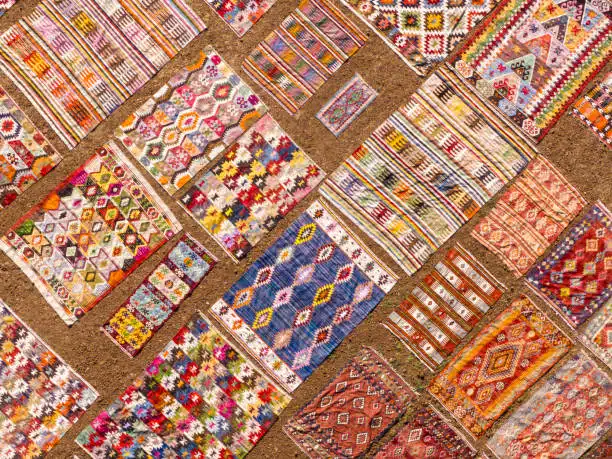
How Long Do Handmade Persian Rugs Last? (Expert’s 25-Year Guide)
TL DR – Quick Answers:
- How long do handmade Persian rugs last? Quality pieces last 100-200+ years with proper care, often outlasting multiple generations.
- What affects lifespan most? Knot density (400+ KPSI), wool quality, and consistent maintenance are the biggest factors.
- Are they better than machine-made? Yes – handmade rugs last 10-20x longer due to superior materials and construction techniques.
- Do they appreciate in value? Authentic antique Persian rugs typically appreciate 3-7% annually when properly maintained.
Expected Lifespan of Handmade Persian Rugs
A genuine handmade Persian rug should last 100 to 200 years minimum with proper care. But that’s just the starting point – I’ve personally handled pieces from the 16th century that are still functional.
Here’s what determines where your rug falls on that spectrum. Knot density is everything. Rugs with 400+ knots per square inch (KPSI) can easily reach 200+ years. The tighter the weave, the more durable the foundation. I’ve seen Isfahan rugs with 600+ KPSI that look brand new after 150 years of use.
💡 Key Insight: The “century test” – if a Persian rug can’t survive 100 years of normal use, it wasn’t made properly to begin with.
The material quality makes or breaks longevity. Genuine Persian wool – particularly from the highland regions around Isfahan and Kashan – contains natural lanolin that acts as a protective coating. This isn’t marketing speak – I can feel the difference when I handle these pieces. The wool has a almost oily texture that repels dirt and moisture naturally.
Silk Persian rugs are tricky. They’re incredibly durable against wear but vulnerable to UV damage and moisture. A silk Qum rug I evaluated last year had faded sections where sunlight hit it through a window, but the areas under furniture looked perfect after 80 years.
What Affects Persian Rug Durability
Foundation material determines everything. Cotton warps and wefts create the strongest base – they don’t stretch or shrink like wool foundations. Most premium Persian rugs use cotton foundations with wool pile, and there’s a reason for that.
Dye quality separates the masterpieces from the mediocre. Natural dyes – madder root for reds, indigo for blues, saffron for yellows – actually strengthen the wool fibers over time. Synthetic dyes from the 1920s-1960s often weakened the wool. I can spot these rugs immediately – the colors look flat and the wool feels brittle.
⚠️ Common Mistake: Assuming newer rugs are more durable. Many contemporary Persian rugs use cheaper materials and shortcuts that reduce lifespan to 50-75 years instead of centuries.
The weaving tension matters more than most people realize. Loose weaving creates gaps where dirt accumulates and pile wears unevenly. Tight, even tension distributes weight across the entire rug surface. When I examine vintage pieces, the ones with consistent tension show remarkably even wear patterns even after decades.
Geographic origin tells you a lot about durability. Tabriz rugs are built like tanks – dense, heavy, nearly indestructible. Isfahan pieces combine durability with incredible fineness. Tribal rugs like Bakhtiari or Qashqai are designed for nomadic life – they can handle whatever you throw at them.
The 200-Year Rule: Proper Care Techniques
I call this the Persian Rug 200-Year Rule: any authentic handmade Persian rug should reach 200 years if you follow three non-negotiable maintenance principles.
Rotation is religion. Every six months, rotate your rug 180 degrees. This ensures even wear patterns and prevents permanent traffic lanes. I’ve seen rugs where one end is completely worn down while the other looks new – all because the owner never rotated it.
✅ Essential Care Checklist:
- □ Rotate rug 180 degrees every 6 months
- □ Professional cleaning every 3-5 years (never steam clean)
- □ Use quality rug pad to prevent slipping and reduce wear
- □ Vacuum weekly with beater bar OFF
- □ Address spills within 24 hours using blotting technique
Professional cleaning frequency depends on use. High-traffic rugs need cleaning every 3 years, low-traffic pieces every 5-7 years. But here’s the catch – never use steam cleaning or carpet cleaning companies. Persian rugs need specialized hand-washing that preserves the wool’s natural oils.
Need expert rug cleaning in Atlanta? Get in Touch Now!
Sunlight is the silent killer. UV rays break down wool fibers and fade dyes. I’ve seen museum-quality pieces ruined by window placement. If your rug gets direct sunlight, use UV-filtering window film or reposition it entirely.
Humidity control prevents fiber damage and moth infestations. Keep humidity between 30% and 50%. Too dry and the wool becomes brittle. Too moist and you’re inviting mold and pests. The antique Persian rugs I’ve seen survive centuries were all stored in naturally climate-controlled environments.
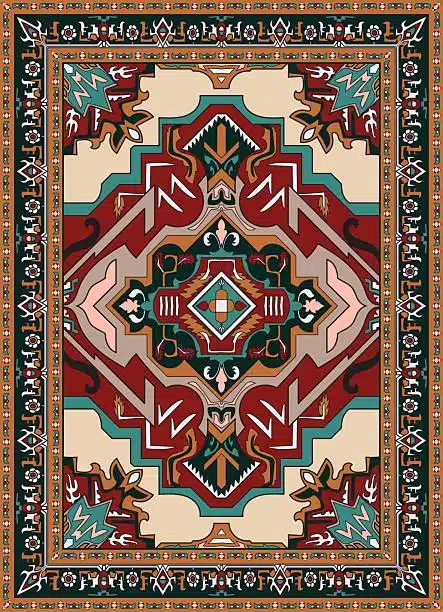
Handmade vs Machine-Made: Durability Comparison
The durability gap between handmade and machine-made rugs isn’t just significant – it’s massive. Machine-made rugs typically last 10-25 years. Quality handmade Persian rugs last 100-200+ years. That’s literally 10-20 times longer.
Here’s why: machine production prioritizes speed over longevity. Power looms can’t replicate the irregular tension variations that make hand-knotted rugs so resilient. Every knot in a handmade rug is slightly different, creating a flexible structure that adapts to stress.
| Factor | Handmade Persian | Machine-Made |
|---|---|---|
| Expected Lifespan | 100-200+ years | 10-25 years |
| Knot Type | Hand-tied, irregular | Machine loops, uniform |
| Foundation | Cotton warp/weft | Synthetic backing |
| Pile Density | 200-800+ KPSI | 50-150 KPSI |
| Repair Options | Full restoration possible | Limited patch repairs |
Material quality tells the whole story. Handmade Persian rugs use wool from specific sheep breeds – Highland wool has longer staple lengths and higher lanolin content. Machine-made rugs often use whatever wool is cheapest, sometimes mixed with synthetic fibers that break down over time.
The repair factor is huge. When a handmade rug gets damaged, skilled restorers can reweave entire sections using matching materials and techniques. Machine-made rugs? Once the backing fails or pile wears through, you’re buying a replacement.
💪 Pro Tip: Look at the back of the rug. Handmade pieces show clear knot patterns and slight irregularities. Machine-made rugs have uniform grid patterns and synthetic backing material.
Persian Rugs as Long-Term Investments
Authentic antique Persian rugs appreciate in value – but not all of them, and not automatically. The key word is “authentic.” I’ve tracked pieces over decades, and quality vintage Persian rugs typically appreciate 3-7% annually when properly maintained.
Age isn’t everything – provenance and condition matter more. A 50-year-old Isfahan in perfect condition will appreciate faster than a 150-year-old Tabriz that’s been poorly maintained. The market rewards quality and authenticity, not just age.
Here’s what drives appreciation: Scarcity and craftsmanship. Master weavers from the golden age of Persian rug making (1880-1920) are gone. Their techniques died with them. The rugs they created become more valuable as they become rarer.
Regional markets affect values differently. Isfahan, Kashan, and Nain rugs consistently appreciate because they represent the pinnacle of Persian weaving artistry. Tribal pieces like Heriz or Serapi have seen massive appreciation recently as collectors recognize their bold designs and incredible durability.
💡 Key Insight: Investment-grade Persian rugs need three things: authenticated provenance, exceptional condition, and sizes that fit modern homes (8×10 or 9×12 are most valuable).
At Surena Rugs, we’ve watched clients’ collections appreciate significantly over the years. One client purchased a 1920s Kashan for $8,000 in 2010. Similar pieces now sell for $15,000-18,000. That’s not just inflation – it’s genuine appreciation driven by increasing scarcity.
When and How to Restore Your Persian Rug
Restoration timing is everything. Wait too long, and damage becomes irreversible. Act too quickly, and you might reduce the rug’s authenticity value. The sweet spot is addressing issues while they’re still manageable but before they spread.
Minor fringe damage should be addressed immediately. Loose or broken fringes allow the rug’s foundation to unravel from the edges. This is like a small hole in a sweater – it only gets bigger. Professional fringe repair costs $200-500 but prevents thousands in structural damage.
Moth damage requires immediate action. I’ve seen collectors lose entire sections of valuable rugs because they ignored early moth activity. The telltale signs: small bald spots in wool pile and tiny cocoons along rug edges. Professional treatment can stop moth damage in its tracks.
📋 Restoration Decision Framework:
- Assess the damage: Document all issues with photos and measurements
- Get professional evaluation: Experienced restorers can predict how damage will progress
- Calculate cost vs value: Restoration shouldn’t exceed 30-40% of rug’s current value
- Choose appropriate techniques: Museum-quality vs functional restoration have different costs and outcomes
Color bleeding from water damage needs specialized treatment. Don’t attempt DIY solutions – I’ve seen owners accidentally set stains permanently by using wrong cleaning products. Professional dye stabilization can often reverse bleeding if caught early.
Concerned about rug damage? Get in Touch Now! for professional assessment.
The restoration decision comes down to emotional vs financial value . If it’s your grandmother’s rug, restore it regardless of cost. If it’s an investment piece, crunch the numbers carefully. A $3,000 restoration on a $5,000 rug rarely makes financial sense, but it might be worth it for sentimental reasons.
Frequently Asked Questions
How Many Years Can a Handmade Persian Rug Last?
A quality handmade Persian rug should last 100-200 years minimum with proper care, and many pieces survive well beyond that timeframe.
The key factors that determine lifespan are knot density, wool quality, and maintenance consistency. Rugs with 400+ knots per square inch and highland wool can easily reach 200+ years. I’ve personally handled 16th-century pieces that are still functional today.
However, not all Persian rugs are created equal. Contemporary pieces made with shortcuts or cheaper materials might only last 50-75 years. The golden age of Persian rug making (1880-1920) produced pieces that consistently reach centuries of use.
My advice: when evaluating a Persian rug’s potential lifespan, examine the knot density on the back, feel the wool quality (it should have natural oils), and research the weaving region. Tabriz, Isfahan, and Kashan consistently produce the most durable pieces.
What Factors Affect the Lifespan of a Handmade Rug?
The primary factors are foundation material, knot density, wool quality, dye type, and weaving tension – but the foundation is absolutely critical.
Cotton warps and wefts create the strongest base because they don’t stretch or shrink like wool foundations. Most premium Persian rugs use cotton foundations with wool pile for exactly this reason. The foundation carries all the structural stress, so cheap materials here doom the entire rug.
Knot density determines durability under foot traffic. Rugs with 200+ KPSI handle moderate use well, but 400+ KPSI pieces can withstand heavy traffic for decades without showing wear. Geographic origin matters too – Tabriz weavers are famous for incredibly dense, durable rugs.
Natural dyes actually strengthen wool fibers over time, while synthetic dyes (especially from the 1920s-1960s) often weaken them. I can identify synthetic dye rugs by their flat appearance and brittle wool texture. If you’re buying for longevity, stick with naturally dyed pieces or high-quality contemporary synthetic dyes.
How Do You Maintain a Handmade Rug to Make It Last Longer?
Follow the Persian Rug 200-Year Rule: rotate every six months, professional cleaning every 3-5 years, and never use steam cleaning or standard carpet cleaners.
Rotation is absolutely essential – I’ve seen valuable rugs where one end is completely worn while the other looks new because the owner never rotated it. Every six months, turn your rug 180 degrees to ensure even wear patterns and prevent permanent traffic lanes.
For cleaning, high-traffic rugs need professional attention every 3 years, while low-traffic pieces can go 5-7 years. But here’s the critical part: Persian rugs need specialized hand-washing that preserves the wool’s natural oils. Steam cleaning or standard carpet cleaning will damage the fibers and fade the colors.
UV protection is equally important. Direct sunlight breaks down wool fibers and fades dyes faster than anything else. Use UV-filtering window film or reposition rugs away from direct sunlight. Keep humidity between 30-50% to prevent fiber brittleness and moth infestations. These simple steps can literally add decades to your rug’s lifespan.
Are Handmade Persian Rugs More Durable Than Machine-Made Rugs?
Yes, dramatically more durable – handmade Persian rugs last 10-20 times longer than machine-made rugs, often surviving 100-200+ years compared to 10-25 years for machine production.
The durability difference comes down to construction methods and materials. Hand-knotted rugs have irregular tension variations that create flexibility and resilience under stress. Machine looms produce uniform tension that can’t adapt to wear patterns, leading to premature failure.
Material quality is completely different too. Handmade Persian rugs use highland wool with long staple lengths and high lanolin content. Machine-made rugs often use whatever wool is cheapest, sometimes mixed with synthetic fibers that break down over time. The foundation materials tell the whole story – cotton warps versus synthetic backing.
The repair factor is huge for longevity. When a handmade rug gets damaged, skilled restorers can reweave entire sections using matching materials and traditional techniques. Machine-made rugs have limited repair options – once the backing fails or pile wears through, you’re replacing the entire rug. That’s why investment in a quality handmade piece makes financial sense over decades of use.
Do Handmade Persian Rugs Increase in Value Over Time?
Authentic antique Persian rugs typically appreciate 3-7% annually when properly maintained, but not all Persian rugs are investment pieces – authenticity and condition are everything.
The key factors driving appreciation are scarcity and craftsmanship quality. Master weavers from the golden age (1880-1920) are gone, and their techniques died with them. This makes their surviving work increasingly valuable as pieces become rarer. Geographic origin matters enormously – Isfahan, Kashan, and Nain consistently appreciate because they represent peak Persian artistry.
Age alone doesn’t guarantee appreciation. A 50-year-old Isfahan in perfect condition will often appreciate faster than a 150-year-old piece that’s been poorly maintained. The market rewards quality, provenance, and condition over simple age. Size matters too – rugs in standard home sizes (8×10 or 9×12) are most valuable because they fit modern living spaces.
Investment-grade pieces need authenticated provenance, exceptional condition, and recognized artistry. At Surena Rugs, we’ve watched clients’ collections appreciate significantly – one 1920s Kashan purchased for $8,000 in 2010 would sell for $15,000-18,000 today. That’s genuine appreciation driven by increasing scarcity and recognition of traditional craftsmanship.
The Bottom Line on Persian Rug Longevity
Look, after 25 years in this business, I’ve seen it all – from 400-year-old masterpieces that still look stunning to 20-year-old rugs that are falling apart. If you’re investing in a handmade Persian rug, here’s what actually matters:
- Buy for the centuries, not the decades – A quality piece should outlast you, your children, and probably your grandchildren. If it can’t do that, it wasn’t made right.
- Maintenance isn’t optional – Rotate every six months, professional cleaning every 3-5 years, and protect from UV damage. These aren’t suggestions – they’re requirements for longevity.
- Know what you’re buying – 400+ KPSI, cotton foundation, natural dyes, and authentic provenance. These factors determine whether you get 50 years or 200 years of use.
The rugs that make it to 200+ years aren’t accidents. They’re the result of master craftsmanship combined with proper care. Everything else is just expensive floor covering.
Read More: Wool vs Silk Persian Rugs: Complete Buyer’s Guide 2026
