
Description
Origin: Central Asia (Khotan region, likely Uzbek or East Turkestan weaving tradition)
Actual Dimensions: 6′ 4″ × 12′ 0″ (rounded 6×12)
Style: Vintage Tribal
Material: Wool (hand-knotted pile, wool or cotton foundation common in Khotan pieces)
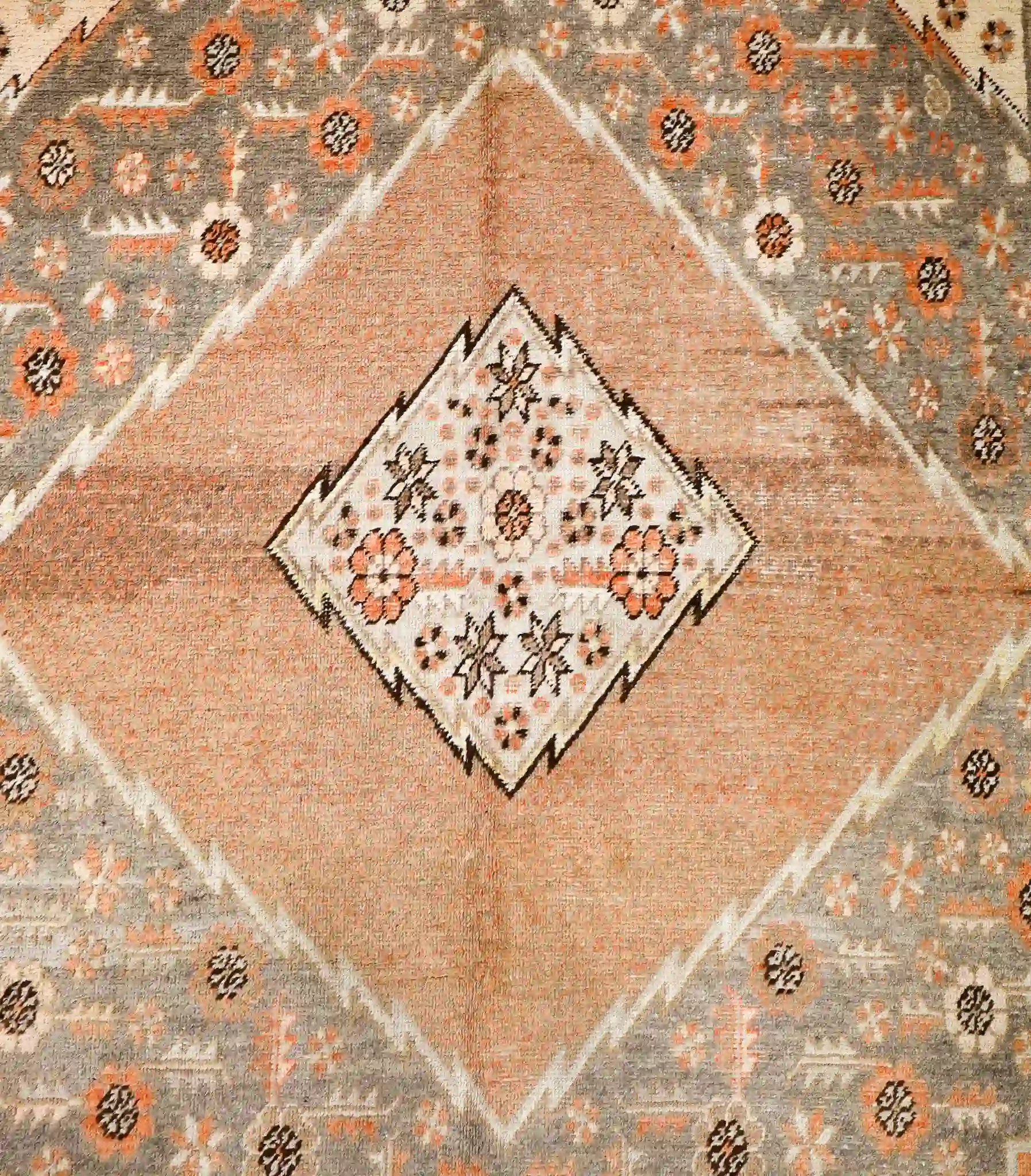
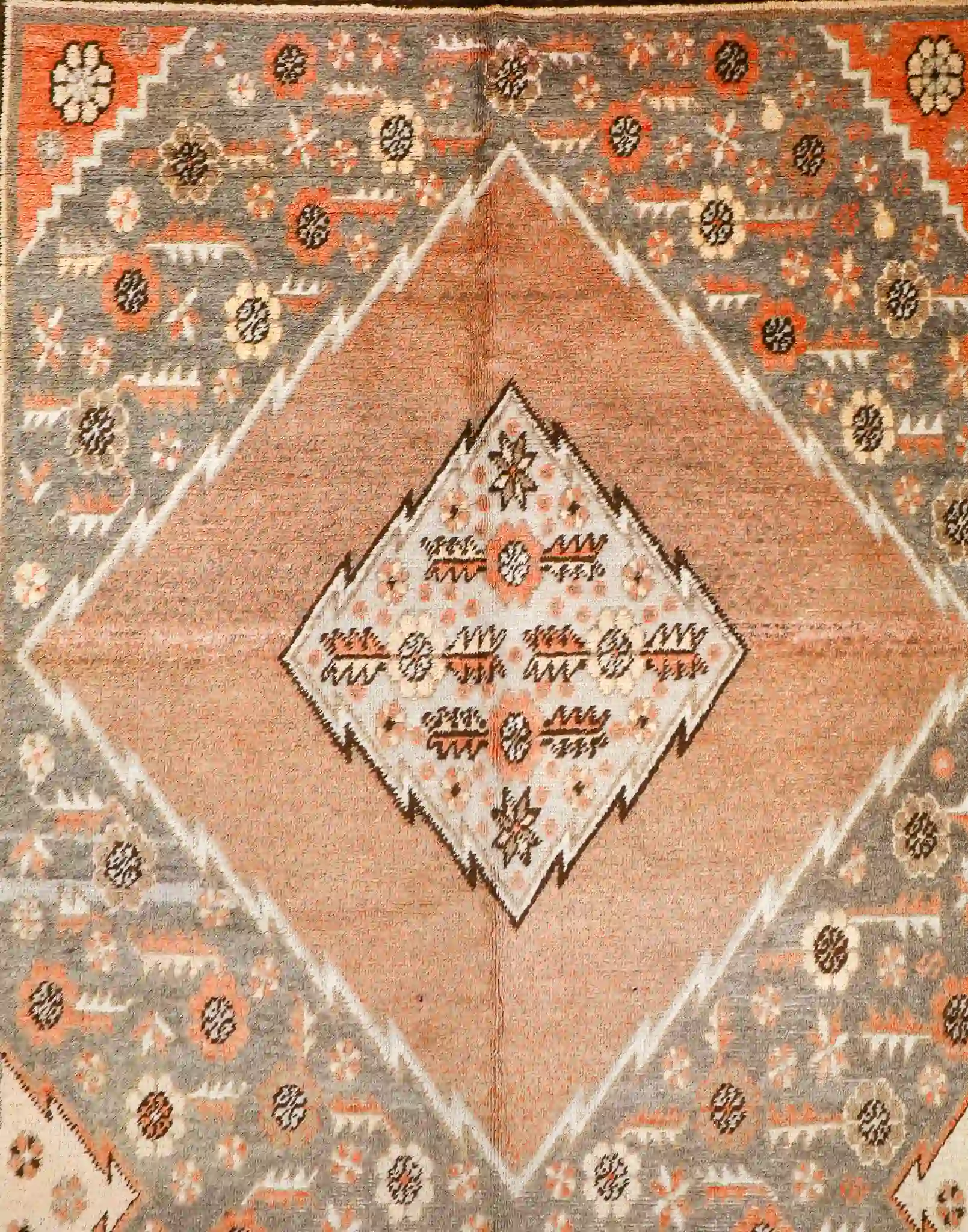
Color Palette: Soft gray main field, warm terracotta and coral accents, ivory and beige geometric elements, touches of dark brown/black outlines, subtle rust and muted blue details
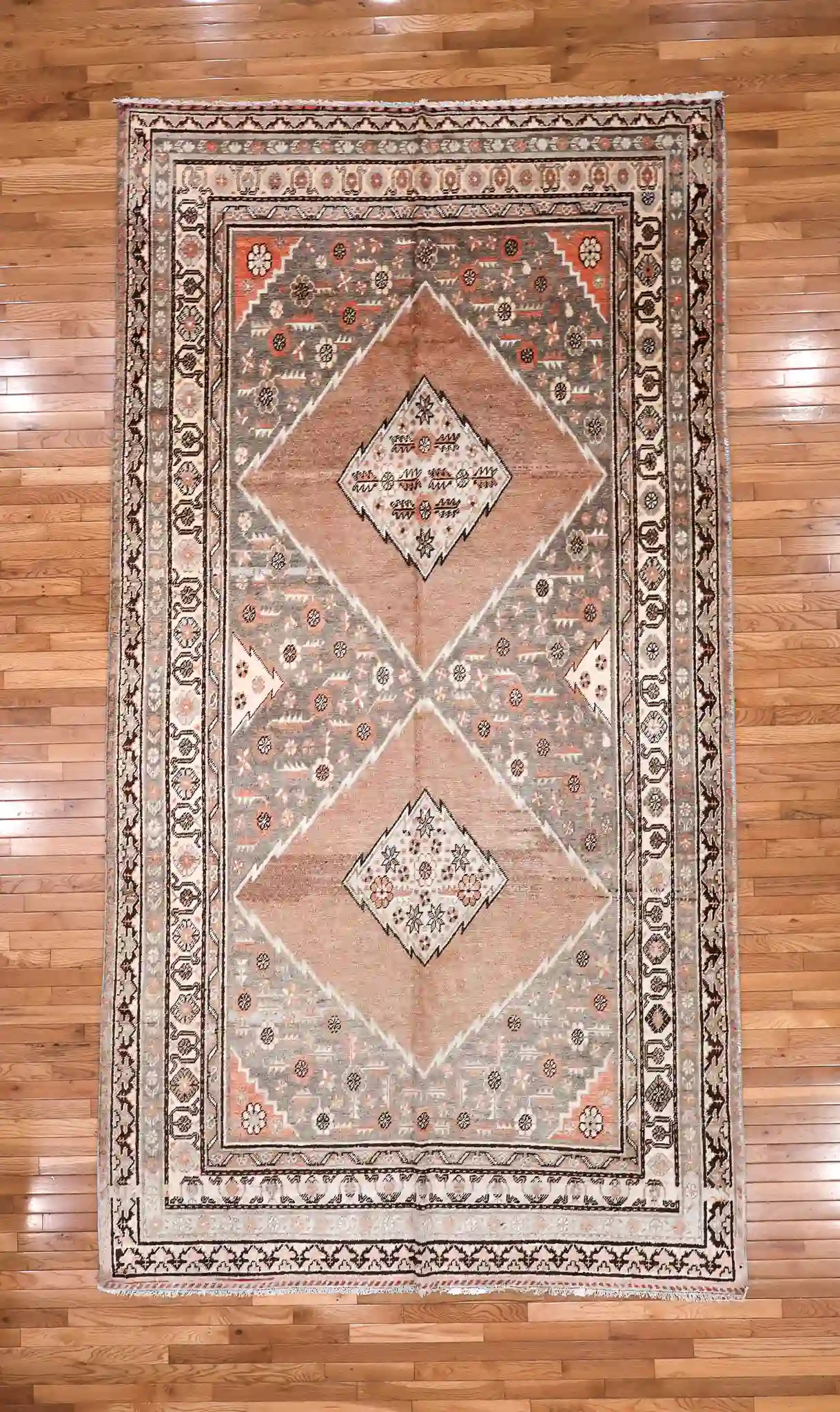
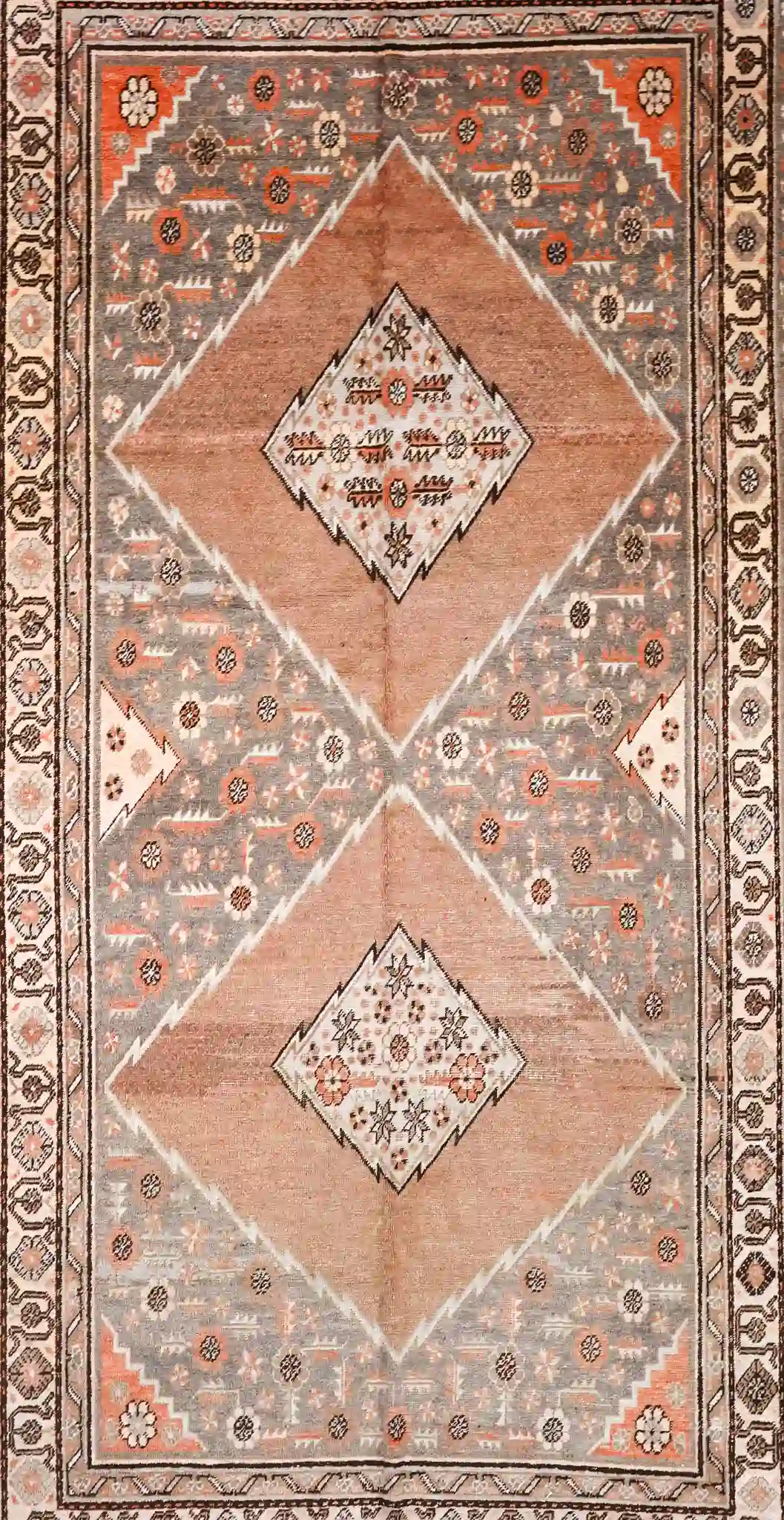
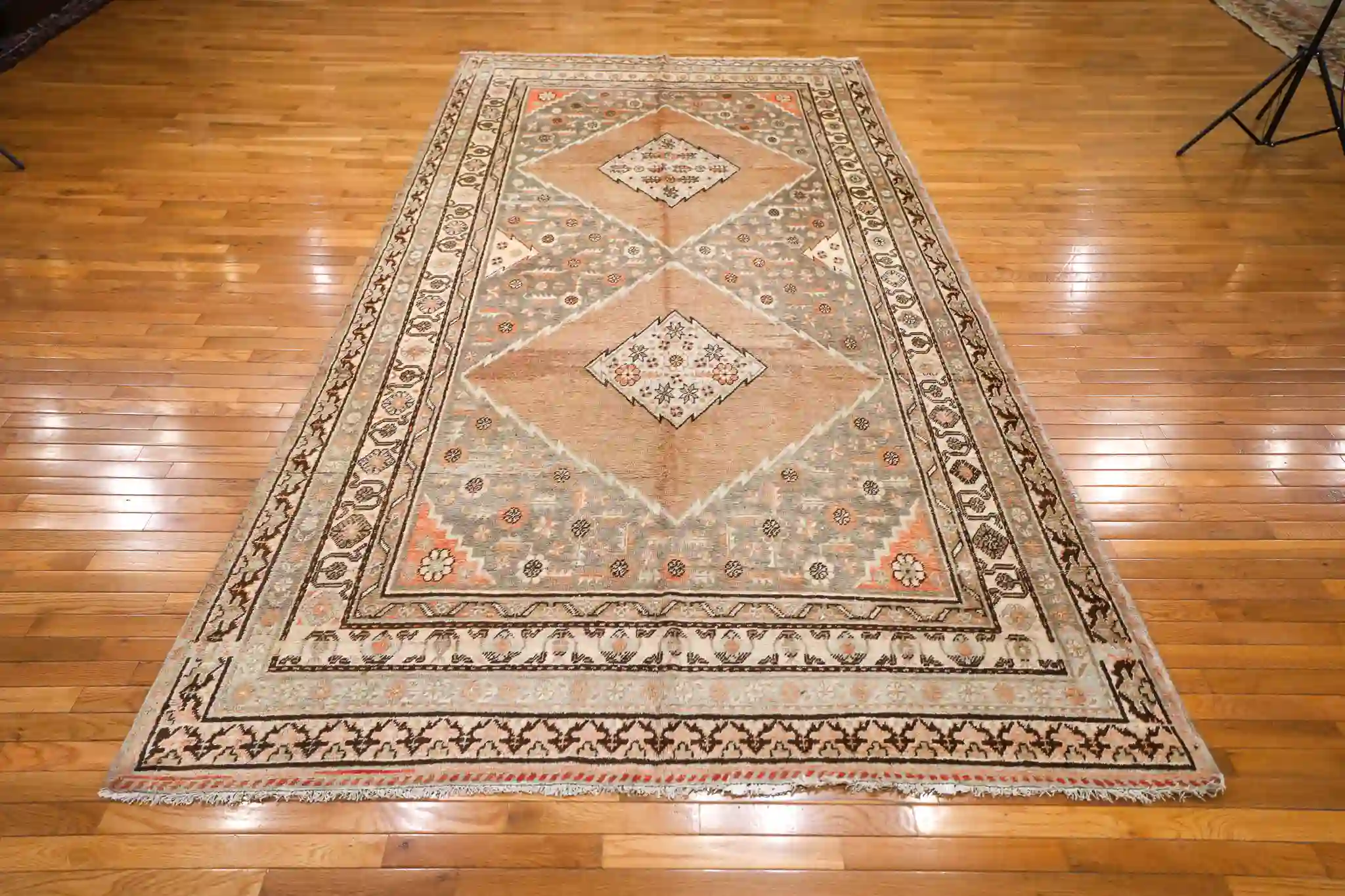
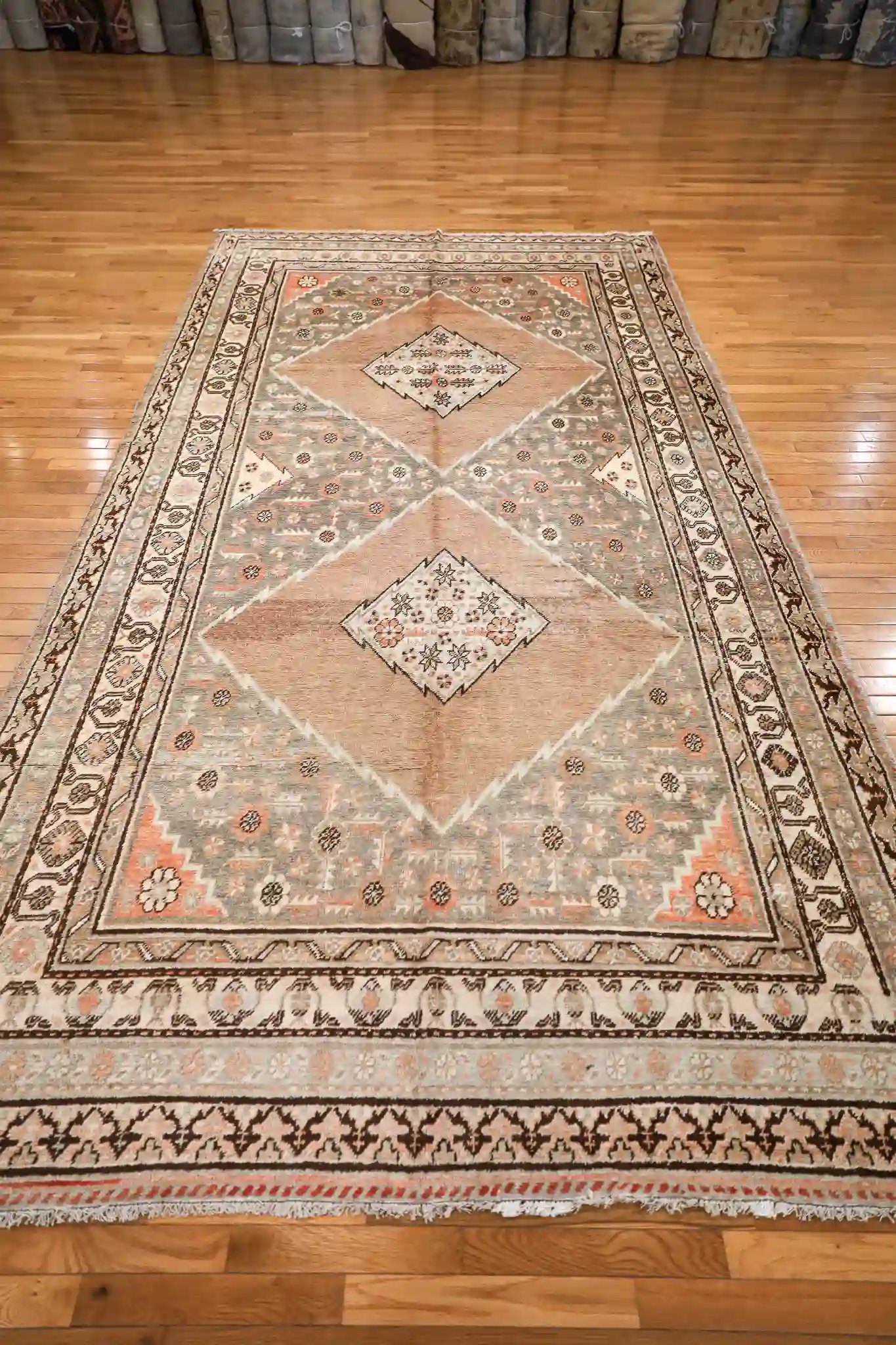
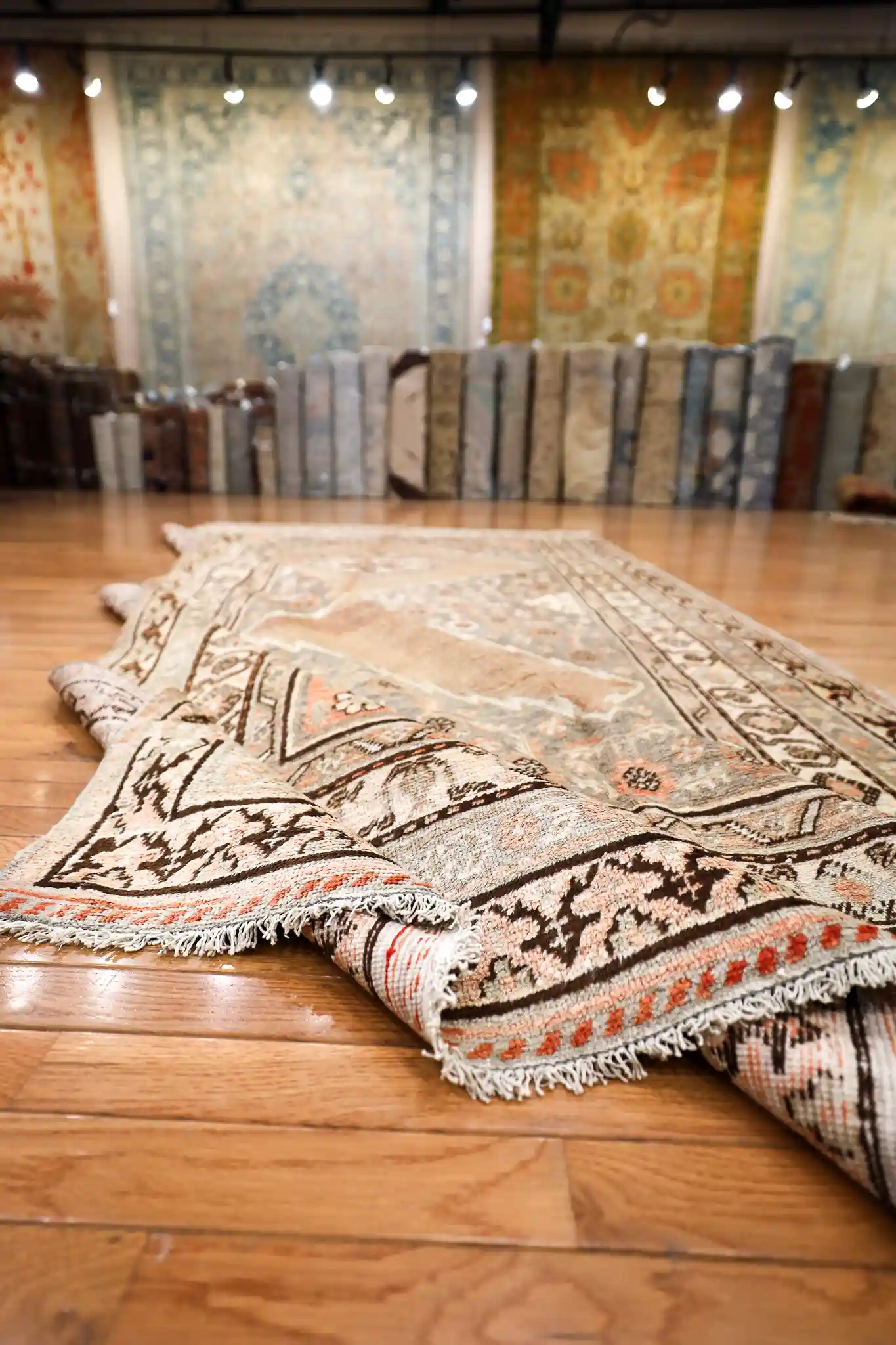
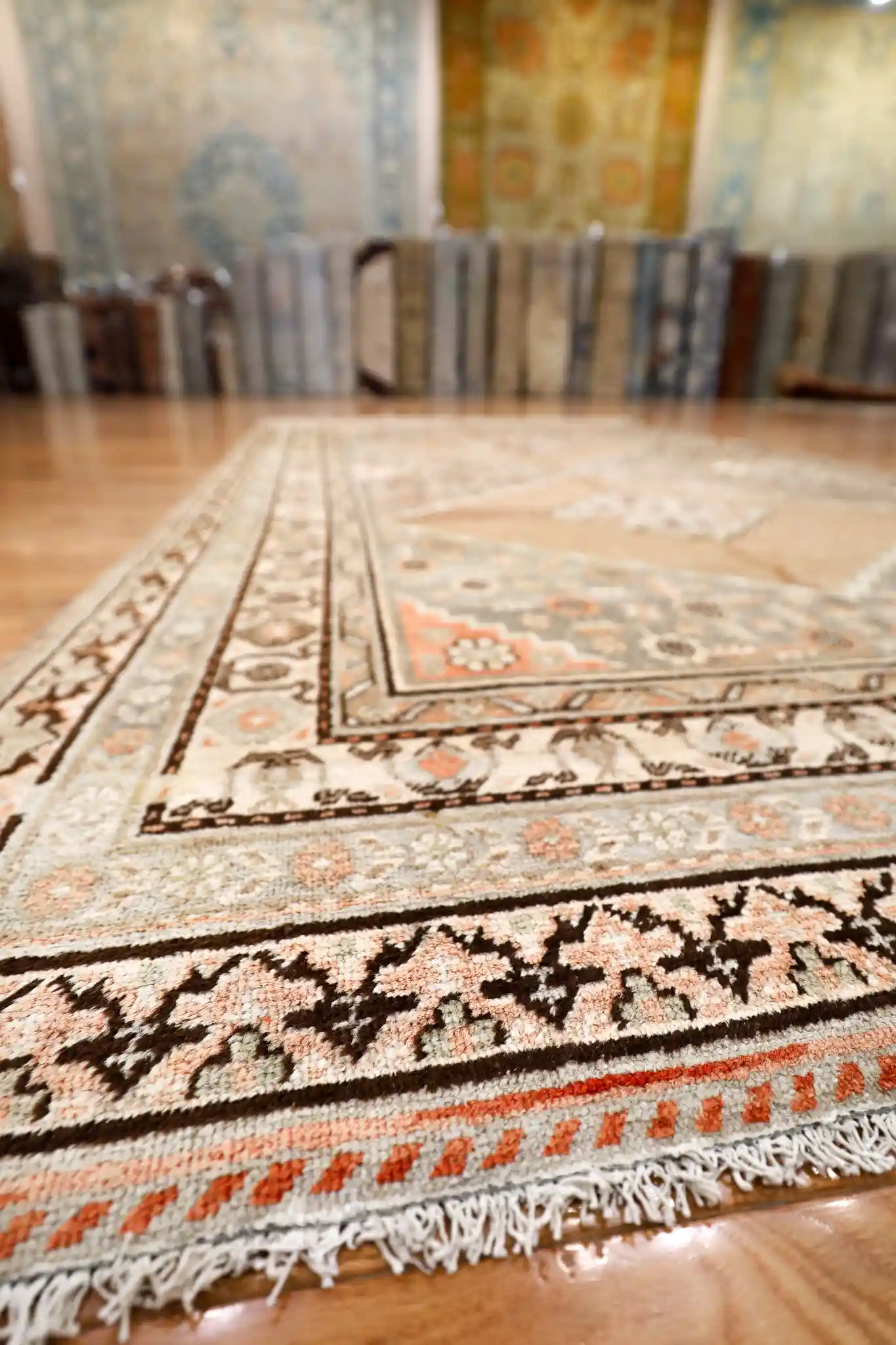
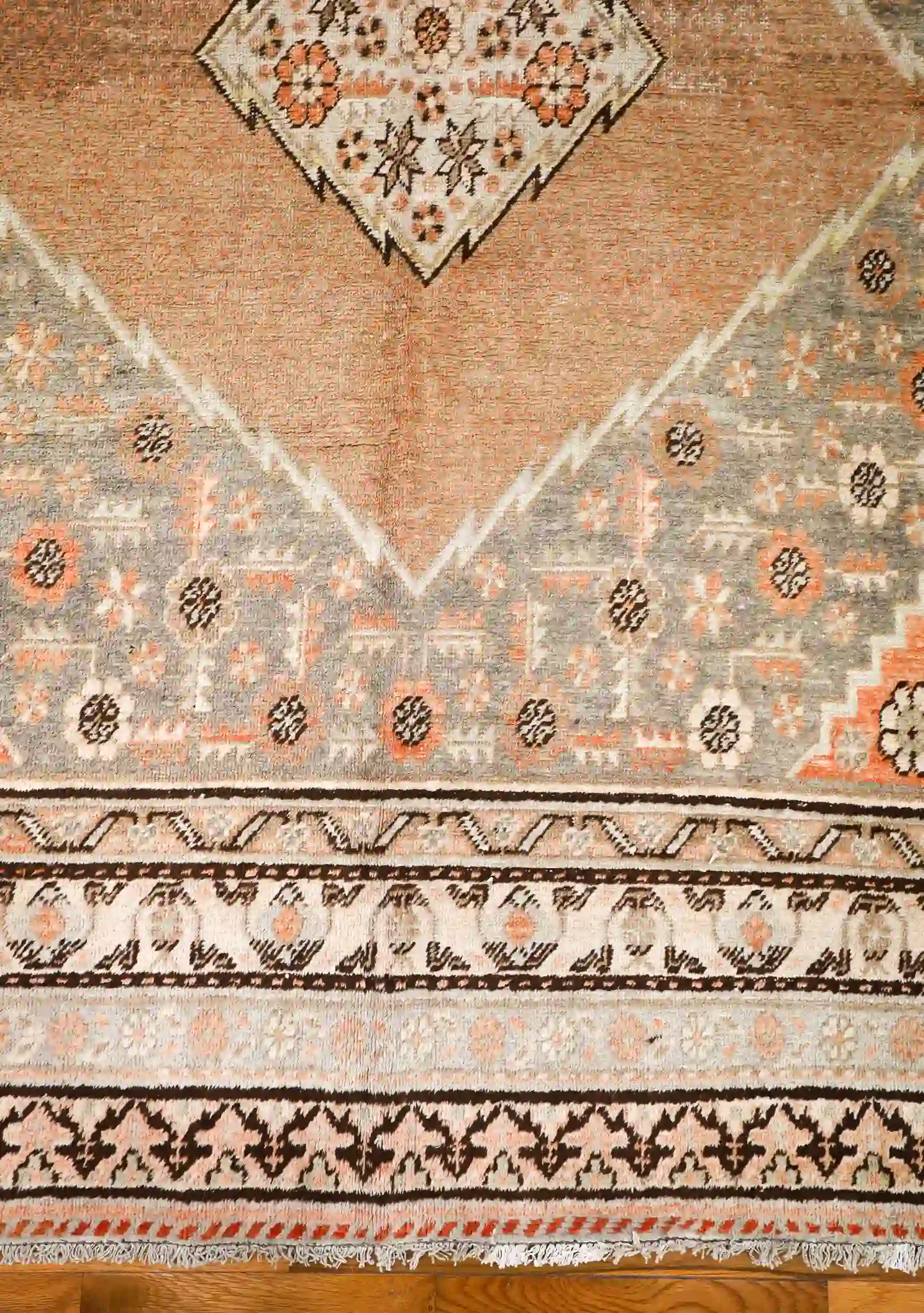
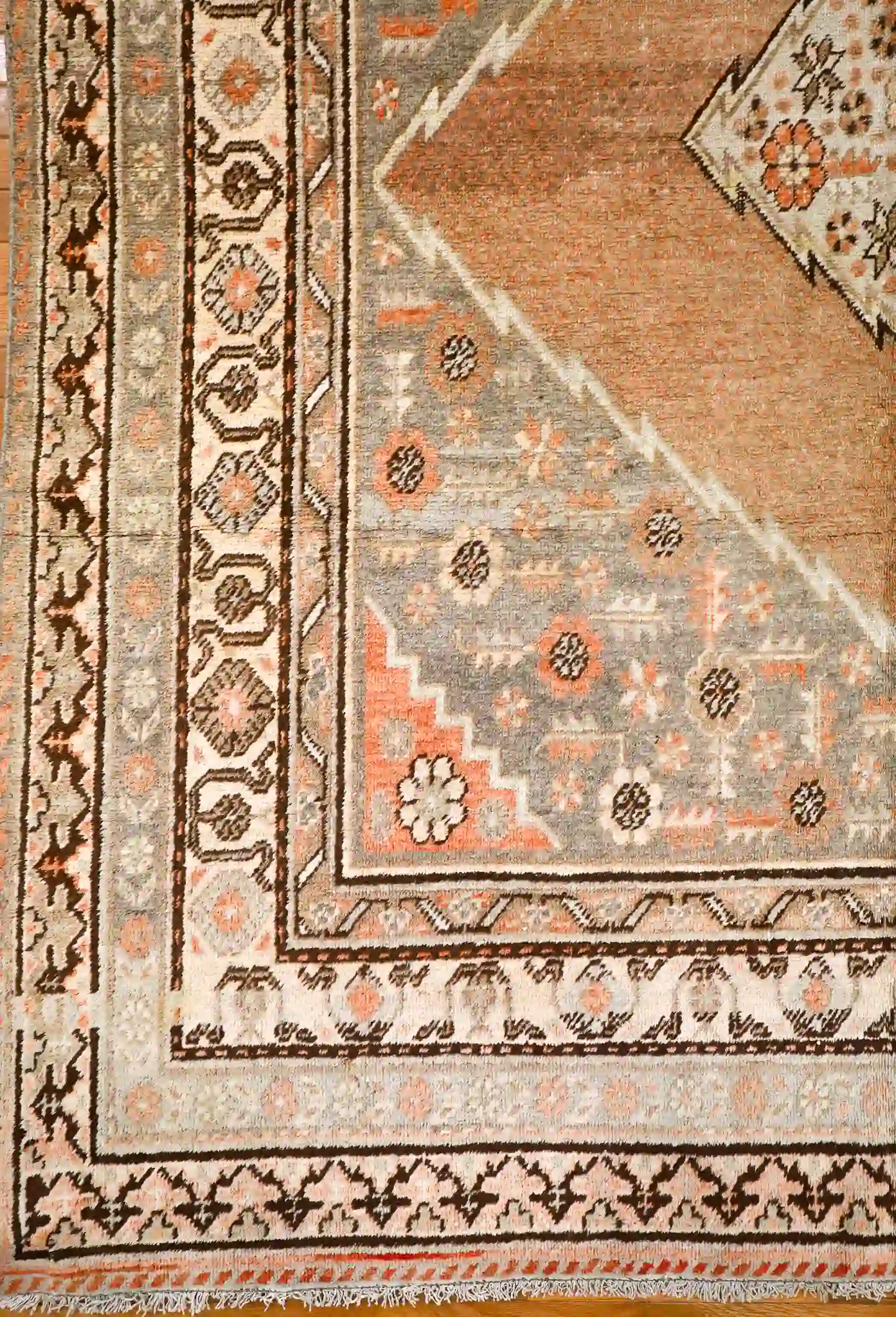
This vintage Khotan rug displays a long, narrow format with a large central diamond medallion in soft terracotta on a pale gray field, crossed by diagonal bands that create an X-shaped division. Inside the diamond are small tribal motifs like stars, hooked elements, and tiny flowers in ivory and coral, while the surrounding areas fill with repeating geometric patterns, small trees, animals, and stepped borders typical of nomadic Central Asian designs. Multiple wide borders feature intricate repeating geometric chains, flower rosettes, and meandering vines in contrasting dark and light tones, giving the rug strong structure and ethnic character.
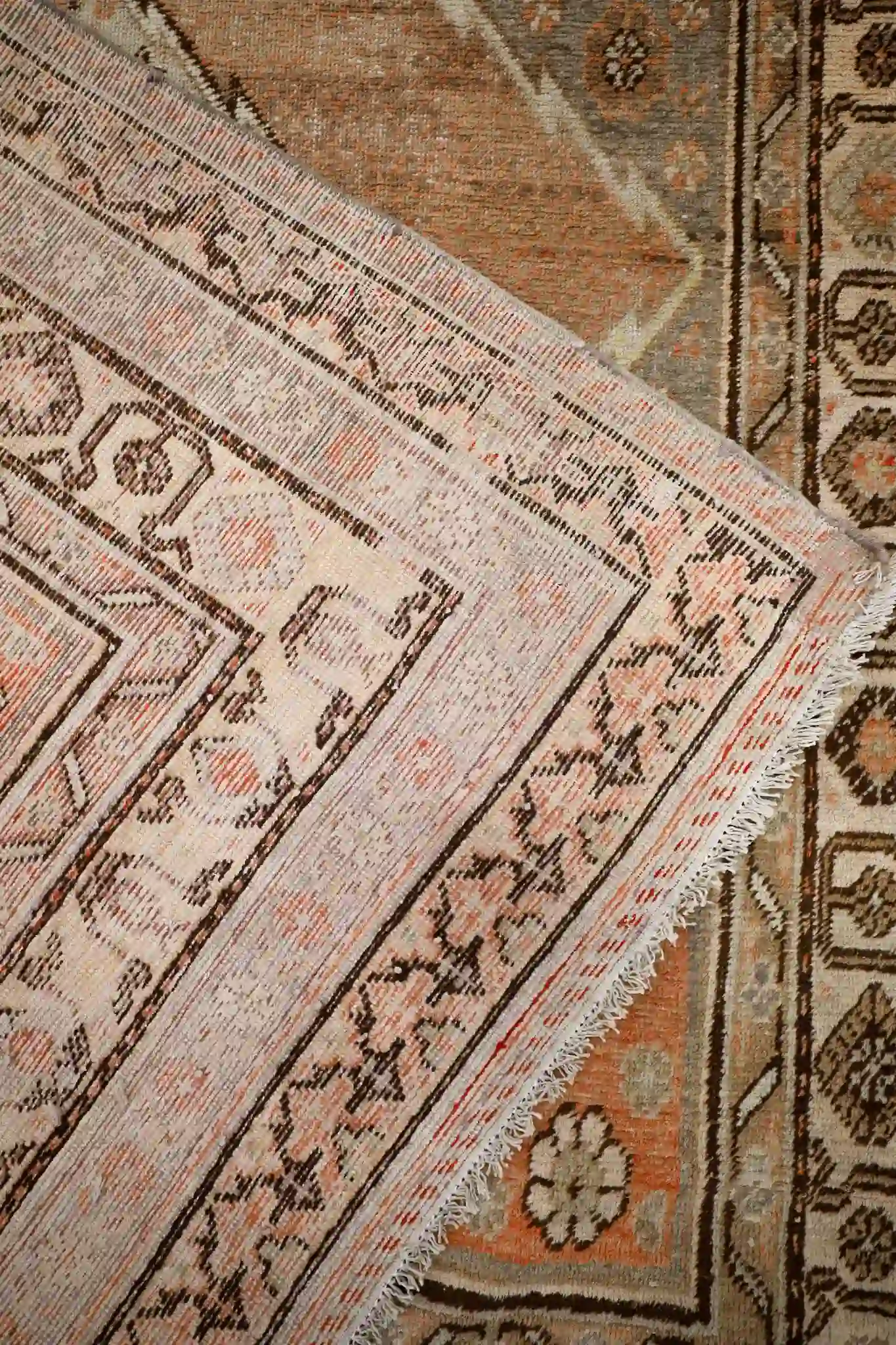
Khotan rugs come from the oasis towns of East Turkestan (Xinjiang), blending influences from Persian, Chinese, and local Turkic weaving traditions, often made by Uzbek or Uyghur weavers. Vintage pieces from the mid-20th century or earlier show bold tribal layouts with softer, naturally faded wool colors and a slightly irregular hand-knotted construction using the asymmetric Persian knot. These rugs have a medium pile that feels sturdy yet soft, with natural abrash adding depth and a lived-in quality.
This runner-like size works well in long hallways, wide entryways, or along the side of a dining table in homes with high ceilings and open floor plans. The wool provides excellent durability for foot traffic, natural warmth, and resistance to wear, with maintenance limited to regular vacuuming and gentle spot cleaning. Vintage Khotan rugs bring authentic tribal heritage and subtle sophistication, appealing to those who want a piece with cultural depth and understated pattern that complements modern or eclectic spaces.