

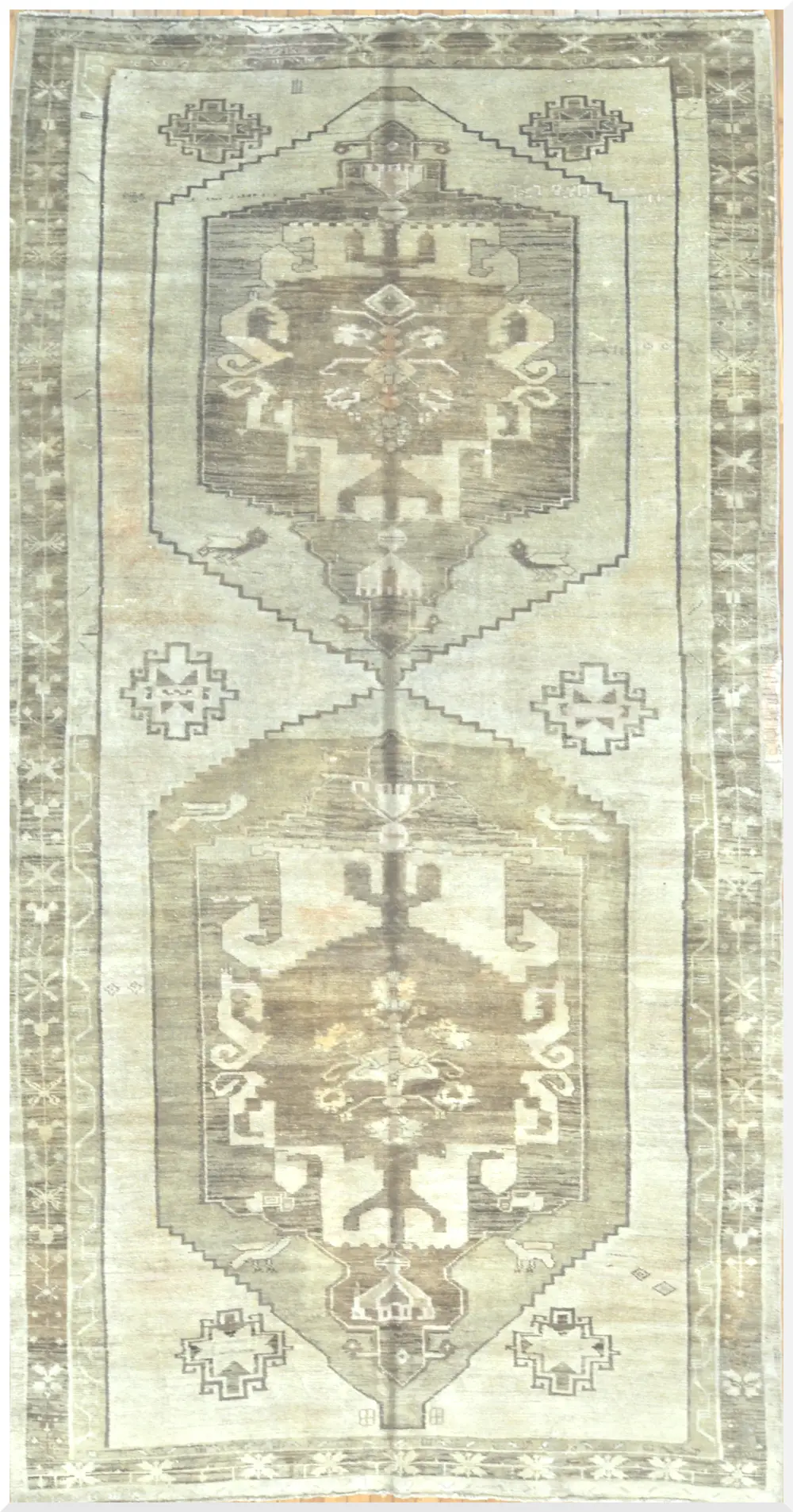
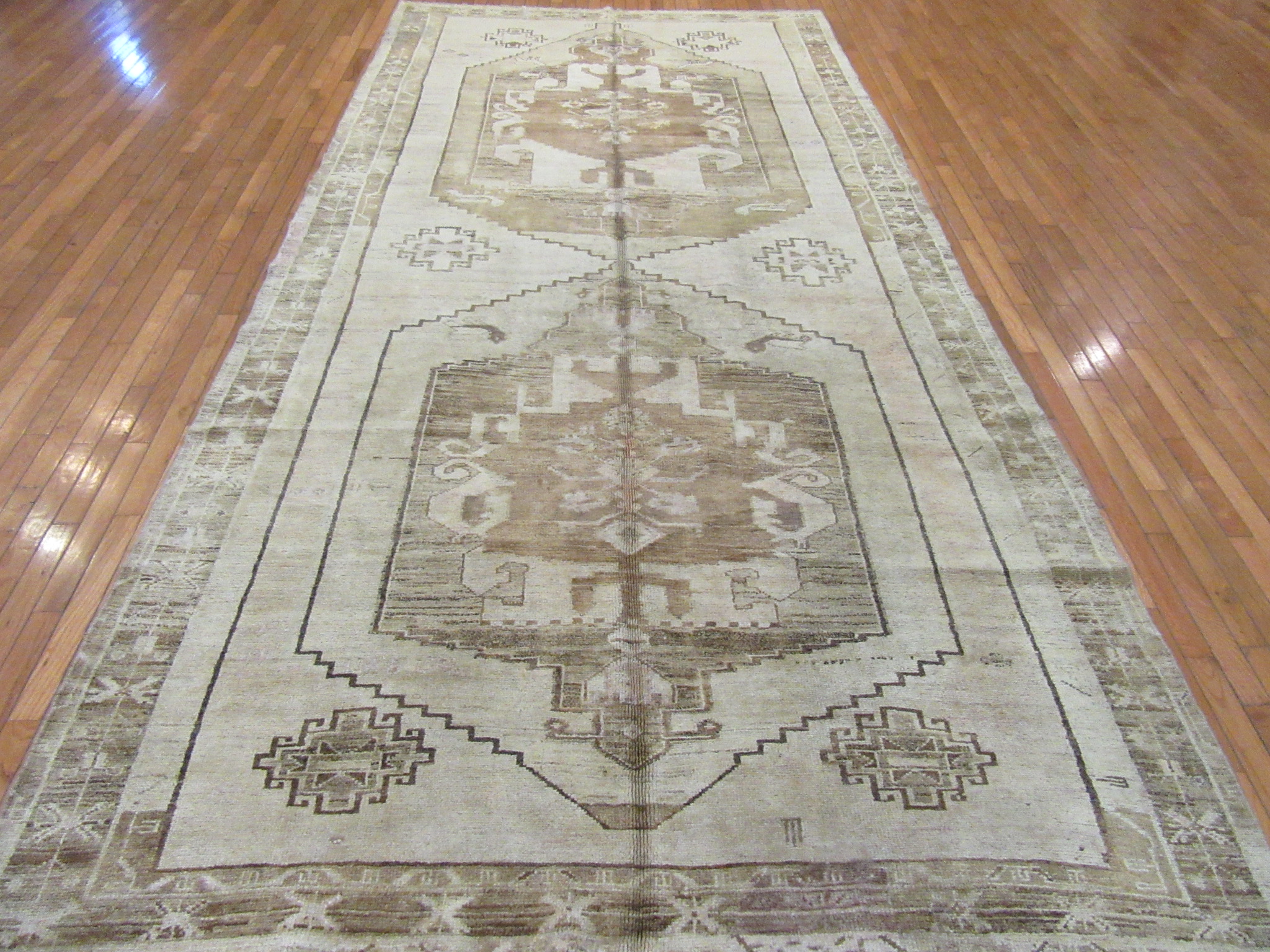
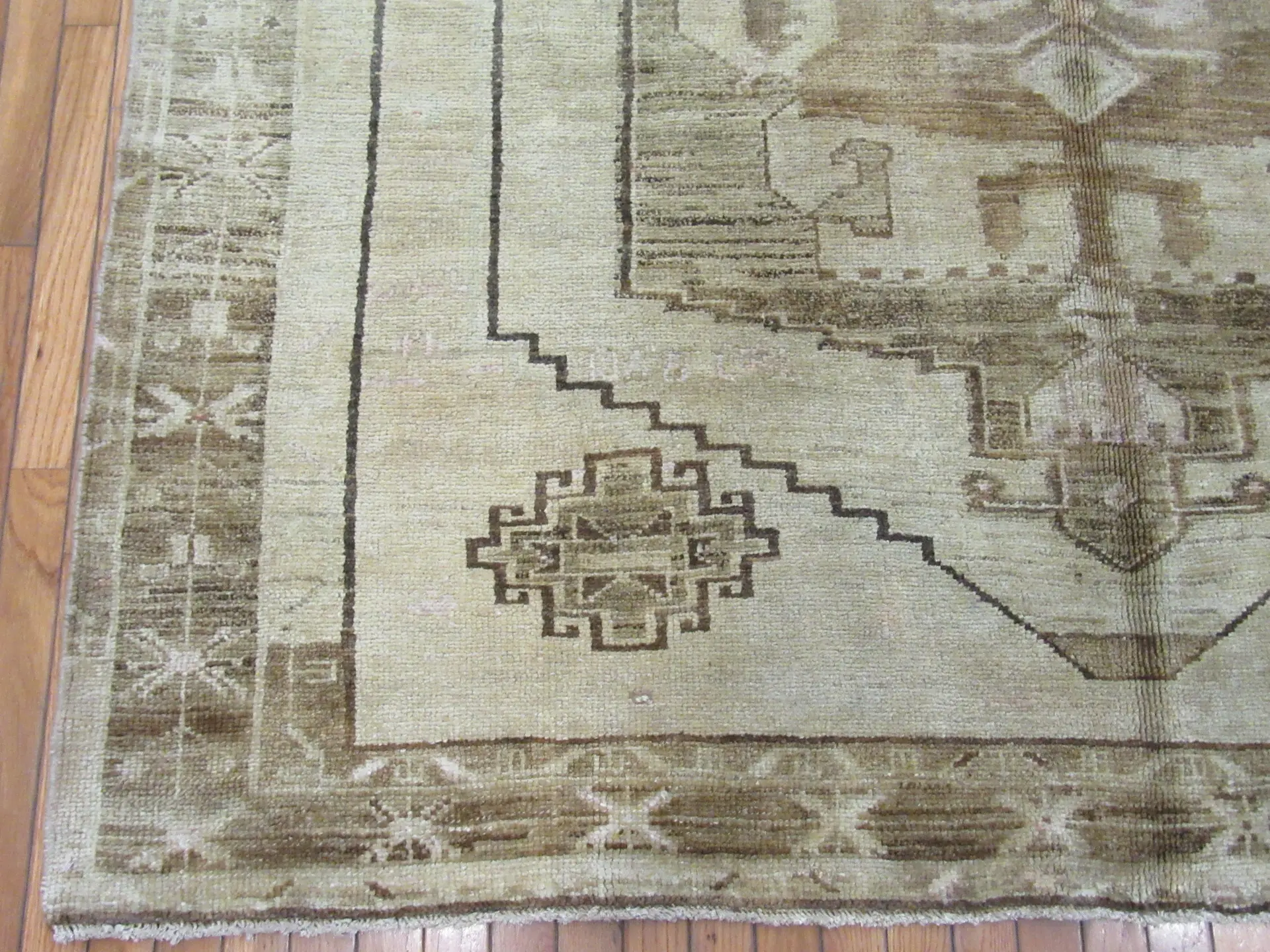
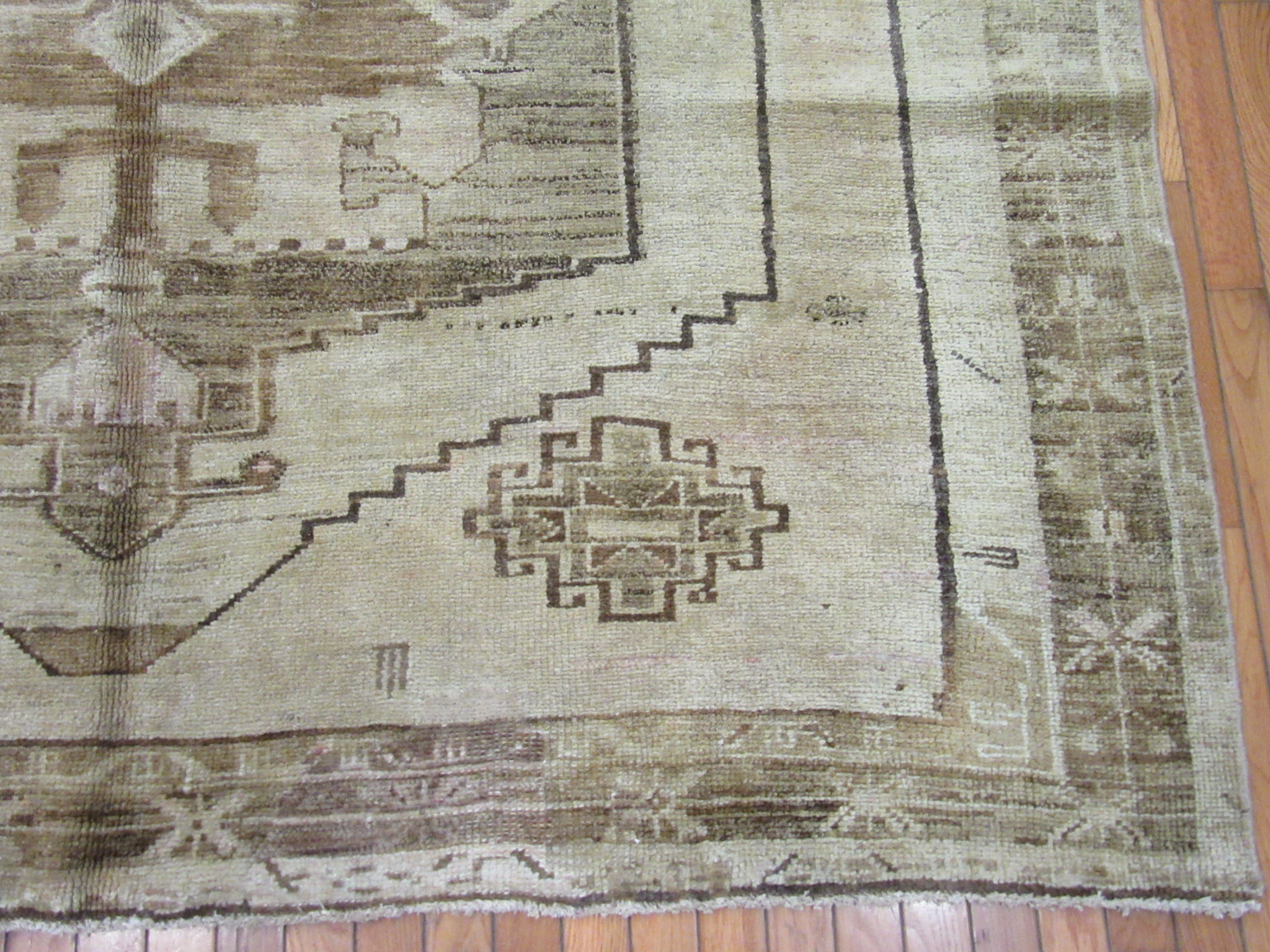

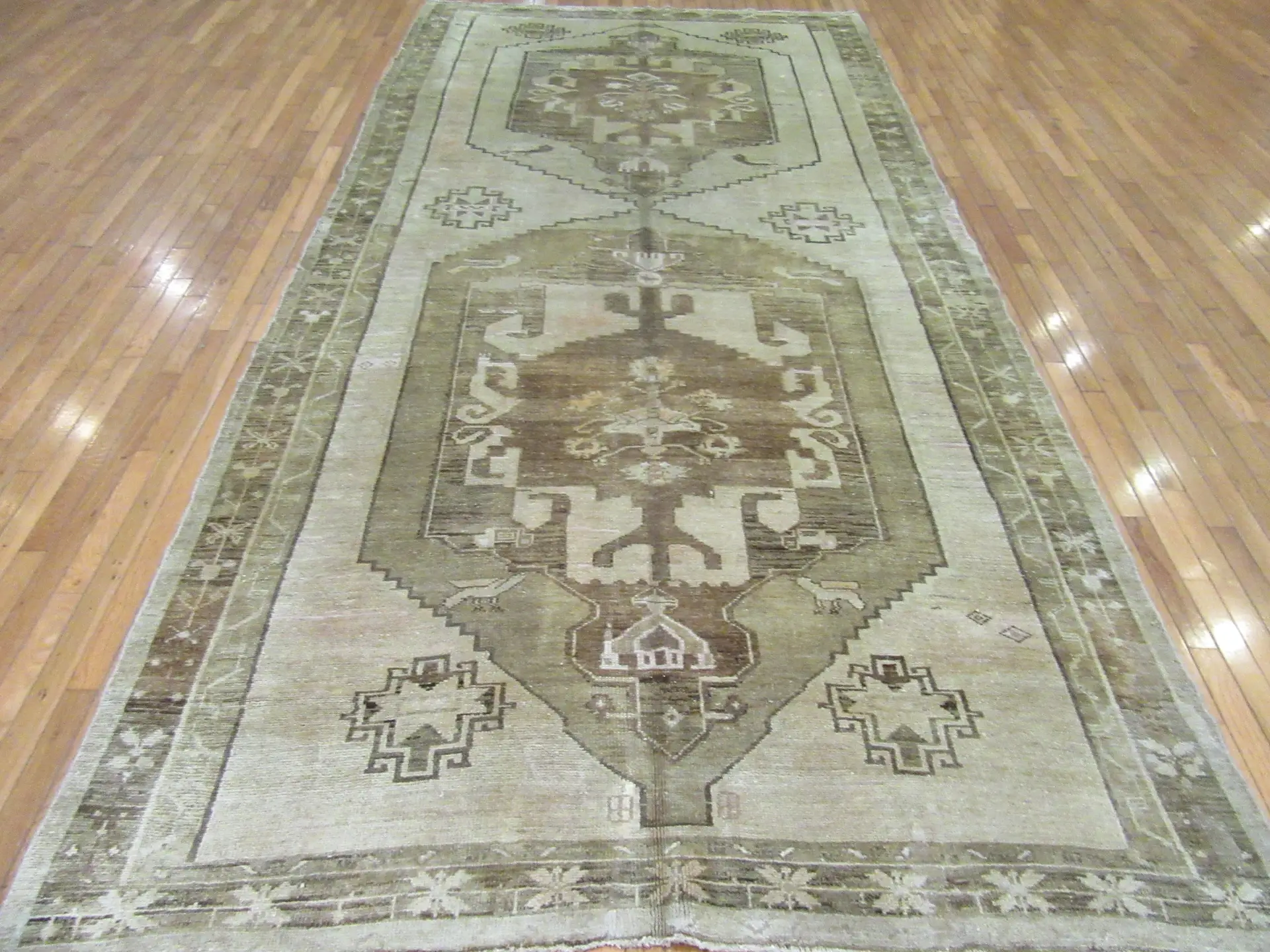
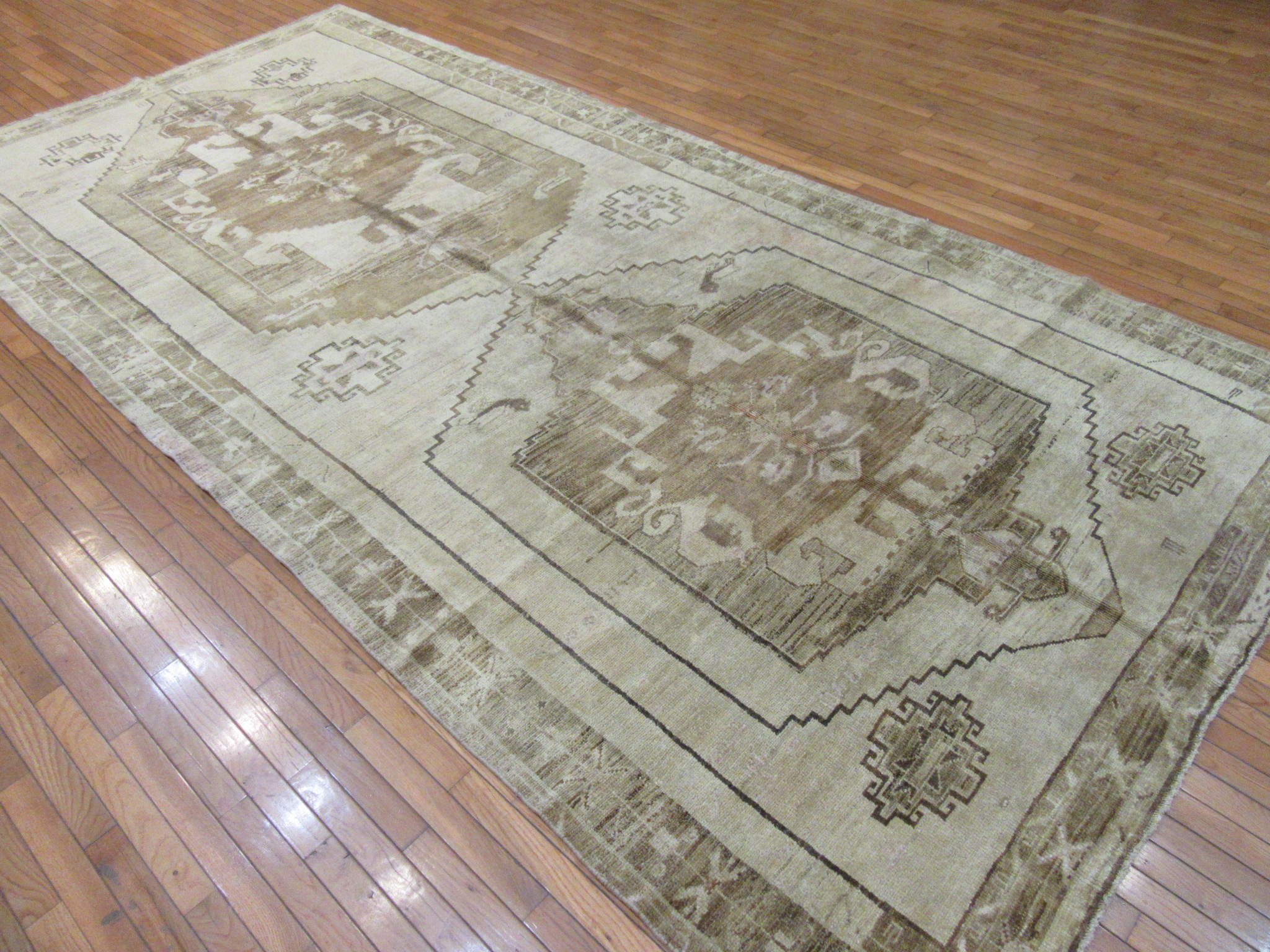
Description
Origin: Turkey (Anatolian region, likely from a central or western village weaving center)
Actual Dimensions: 6′ 10″ × 13′ 10″ (rounded 7×14)
Style: Traditional
Material: Wool (hand-knotted pile, cotton foundation, antique washed for faded effect)
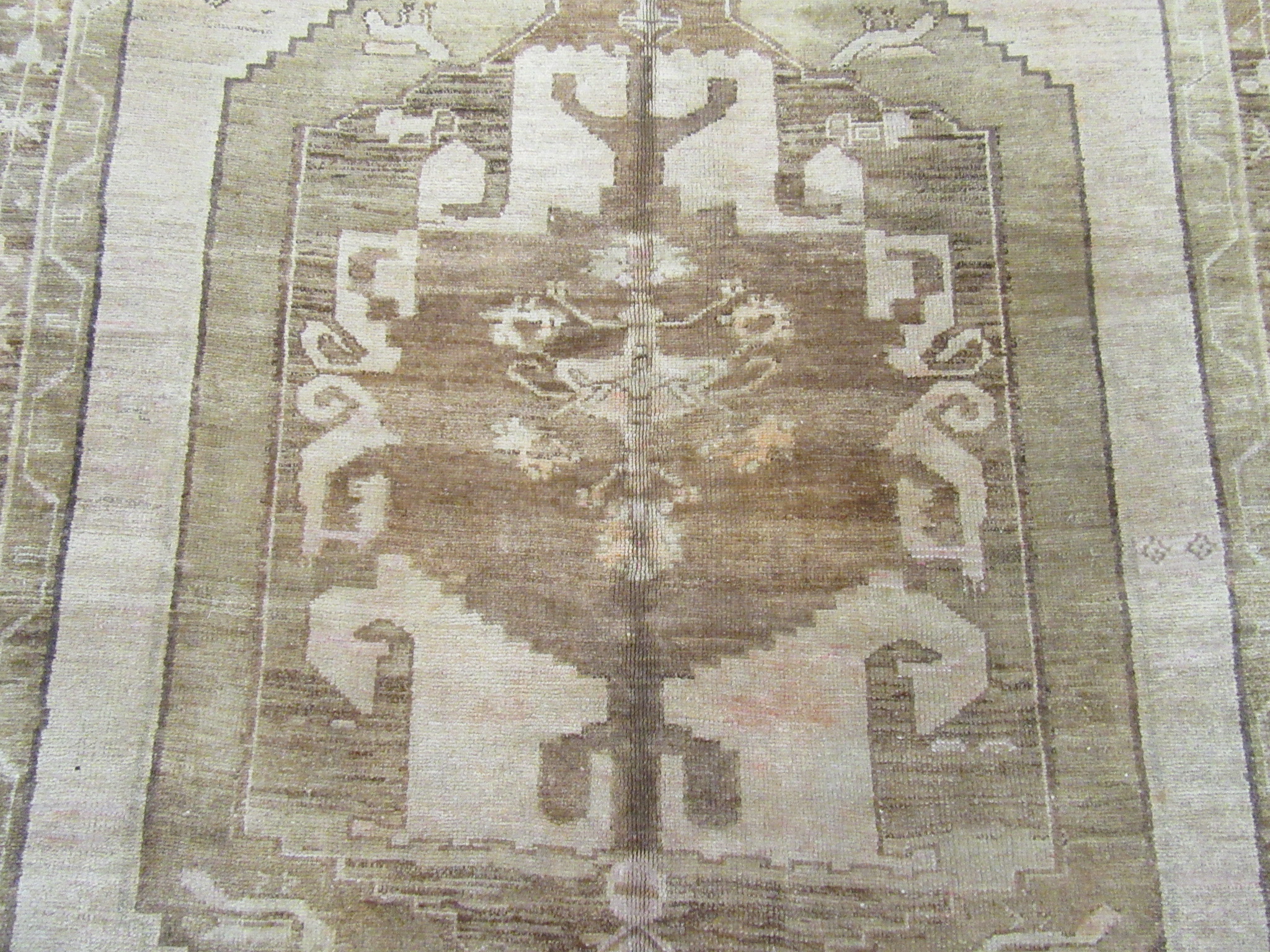
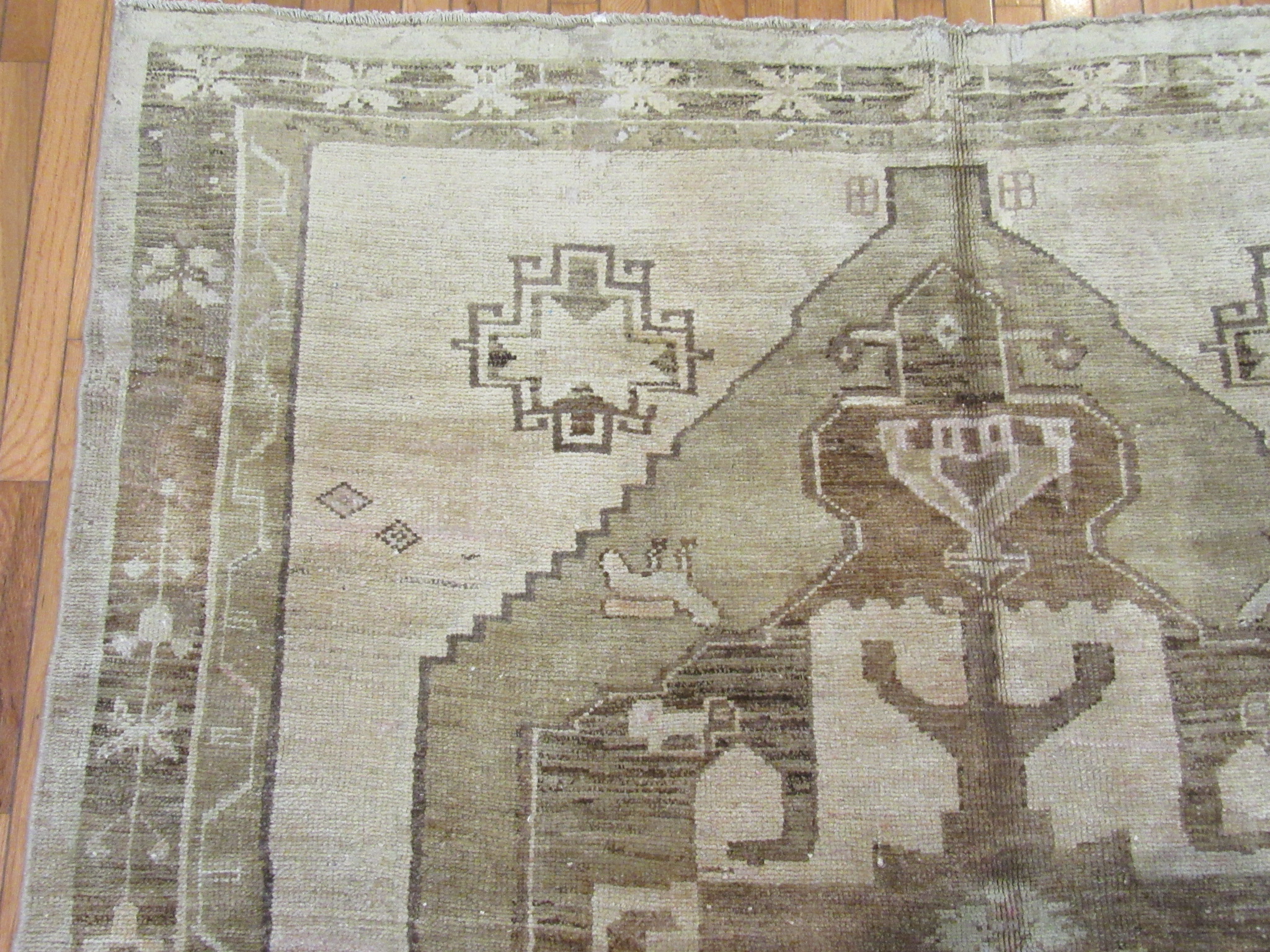
Color Palette: Soft beige and light taupe overall field, warm gray-brown medallions, ivory and cream geometric elements, subtle accents in pale gold, muted blue-gray, and faint rose tones
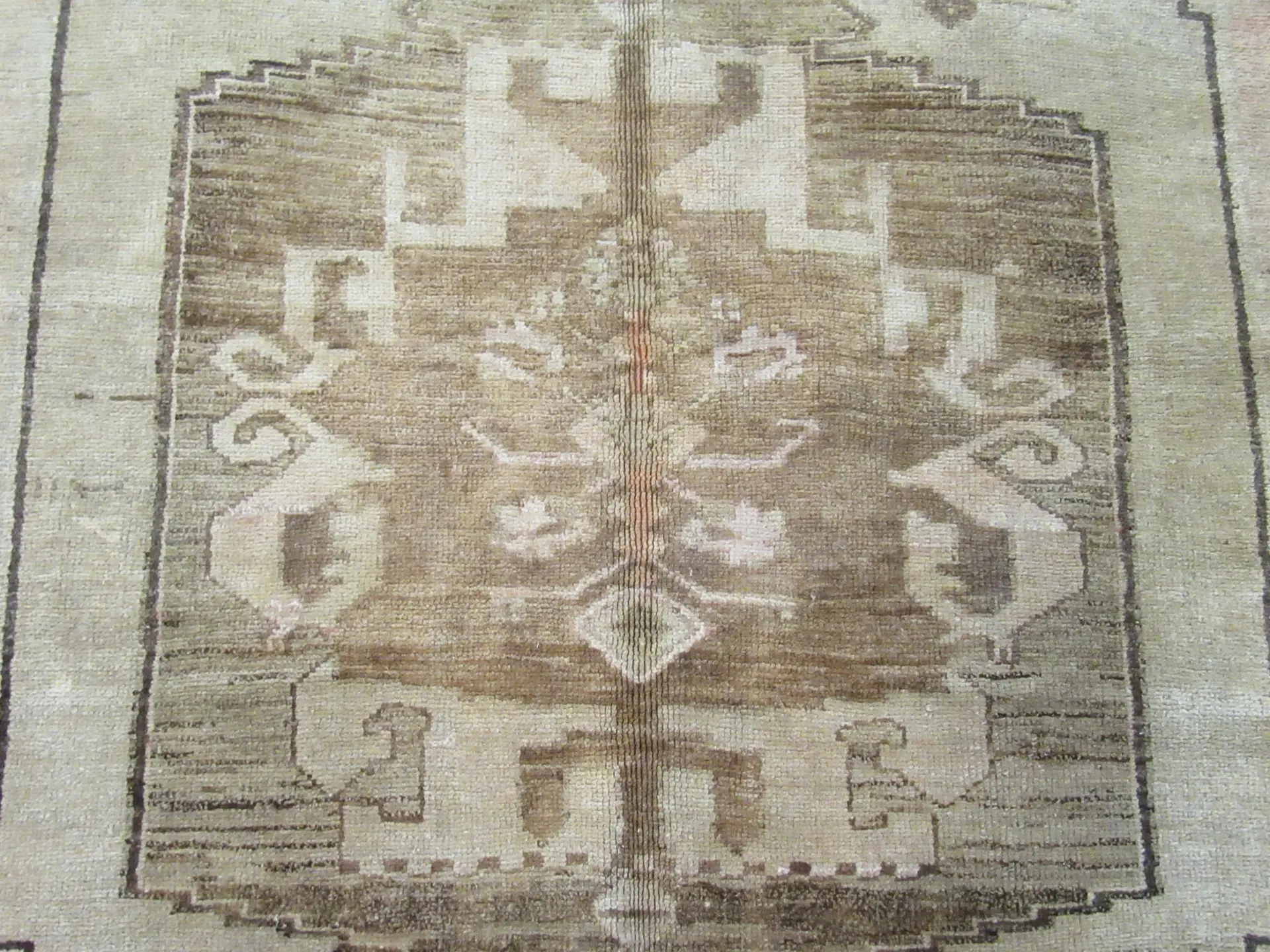
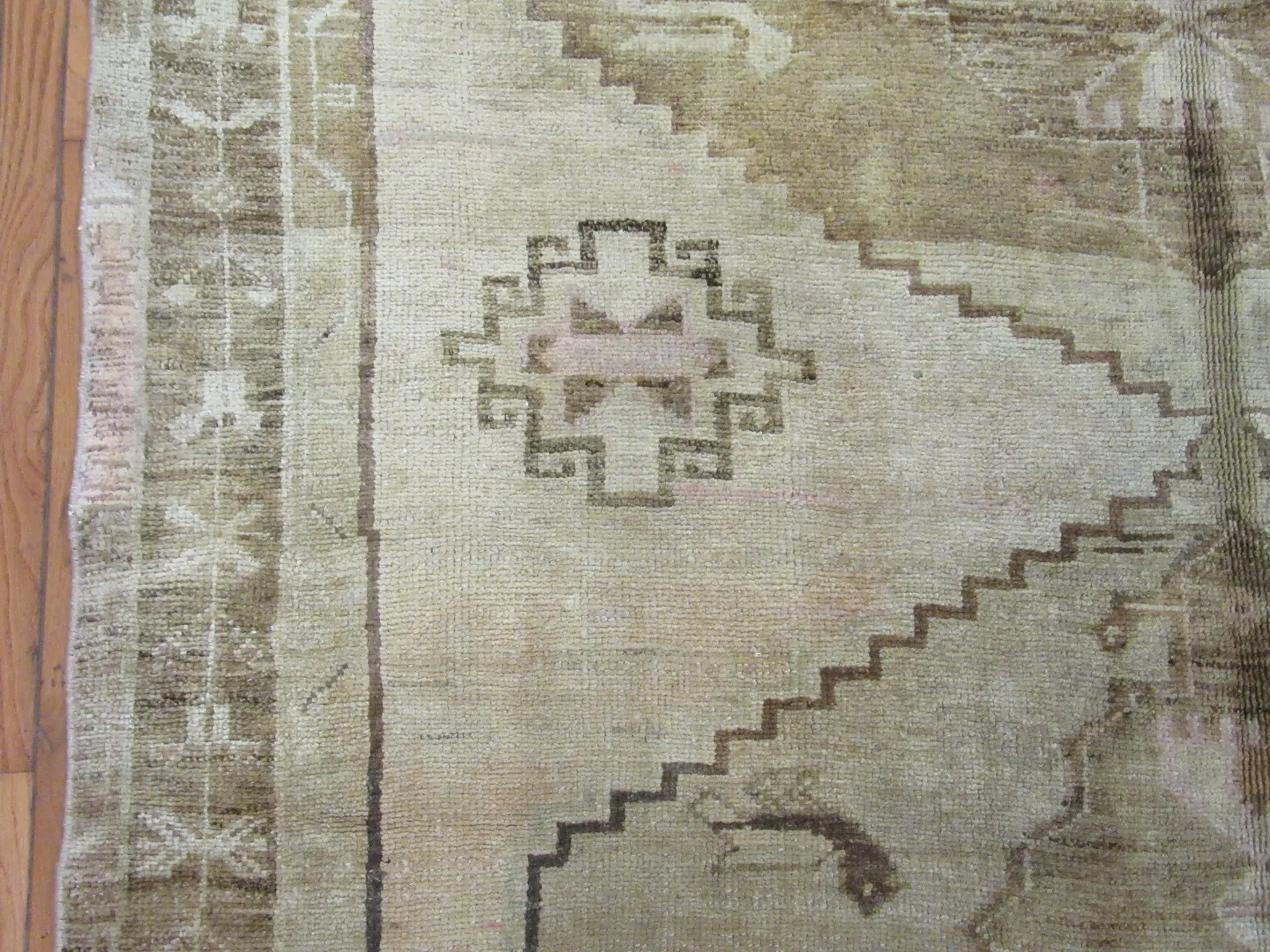
This vintage Turkish Anatolian rug has been antique washed to create a highly softened, neutral appearance with a long central diamond medallion in taupe tones, filled with angular star shapes, hooked motifs, and small floral details that repeat symmetrically. The design extends to matching end panels with similar scaled elements, connected by faint lattice lines and small fillers on the pale beige field for an open, elongated structure. Wide borders feature repeating geometric chains, palmettes, and vine-like patterns in matching subdued colors, contributing to a calm and harmonious antique look.
Anatolian rugs represent diverse village traditions across Turkey, often featuring bold geometric forms with influences from neighboring weaving cultures. Vintage washed examples like this one, typically from the early 20th century or mid-century, undergo a gentle chemical or natural washing process to fade vibrant original dyes into the desirable low-contrast patina seen here. The hand-knotting employs the Turkish symmetric knot for a sturdy, even pile that remains comfortable and resilient despite age.
This wide and long format is excellent for large hallways, gallery spaces, or running alongside extended dining tables in bigger homes, providing subtle pattern and floor protection in high-traffic zones. The wool offers natural toughness, good insulation, and easy care with low-suction vacuuming, while the washed finish helps it integrate smoothly into modern or neutral interiors. Antique washed Anatolian rugs hold strong appeal for their timeless versatility, understated elegance, and solid value retention over time.