Indian Rugs History: From Mughal Splendor to Modern Masterpieces
Picture yourself walking through the corridors of the Taj Mahal, where beneath your feet lie carpets of such exquisite beauty that they seem to rival the marble masterpiece itself. These aren’t mere floor coverings, they’re woven stories of an empire’s grandeur, a testament to centuries of artistic refinement, and tangible connections to one of the world’s most sophisticated carpet-weaving traditions. The Indian rugs history represents a fascinating journey that begins with Persian masters invited to Mughal courts, evolves through centuries of cultural synthesis, and continues today in workshops across the subcontinent where weavers still create pieces worthy of palaces.
Unlike Persia or Turkey where carpet weaving developed organically over millennia, India’s sophisticated rug-making tradition emerged relatively suddenly in the 16th century when Mughal emperors themselves descendants of Central Asian conquerors deliberately imported Persian expertise to create carpets matching their architectural ambitions. The result was a unique fusion: Persian techniques and design sensibilities filtered through Indian artistic traditions, local materials, and a cultural context that valued intricate decoration and symbolic richness. This cross-cultural pollination produced carpets that were unmistakably Indian while honoring their Persian heritage.
What makes the story even more compelling is how this courtly tradition spread beyond palace walls. Regional styles emerged across India, each reflecting local aesthetics, materials, and cultural influences. From the floral masterpieces of Kashmir to the geometric precision of Agra, from village dhurries to contemporary interpretations, Indian carpet weaving developed a remarkable range. Today, India stands as one of the world’s largest producers of hand-knotted carpets, creating everything from faithful reproductions of classical designs to innovative contemporary pieces that push traditional boundaries while respecting time-honored techniques.
Indian Rugs History: Persian Masters and Mughal Foundations
The story of sophisticated Indian carpet weaving begins not in ancient times but in the 16th century with the Mughal Empire, which ruled most of the Indian subcontinent from 1526 to the mid-19th century. The Mughals, despite ruling India, traced their ancestry to Central Asian Turkic-Mongol dynasties, and their cultural orientation looked as much toward Persia as to the Indian traditions they encountered.
Emperor Akbar (1556-1605), the greatest of the Mughal rulers, established the systematic carpet-weaving tradition that would transform India into a major carpet-producing center. Understanding that Persia led the world in carpet artistry, Akbar invited master weavers from Persia to establish workshops in India. These Persian masters brought not just technical skills but entire aesthetic systems design principles, color theories, and quality standards that had been refined over centuries.
The Persian influence proved foundational but not limiting. Indian weavers learned Persian techniques including the asymmetrical Persian knot, which allowed for the fine detail and curvilinear designs characteristic of the tradition. They adopted Persian design vocabularies: elaborate floral patterns, hunting scenes, garden carpets representing paradise, and intricate borders. They even used Persian artistic conventions like the use of multiple perspectives and stylized natural forms.
However, from the beginning, Indian production showed distinctive characteristics. The abundant availability of certain materials in India particularly fine cashmere wool, silk, and cotton influenced construction and aesthetics. Indian artistic traditions emphasizing elaborate ornamentation, bright colors, and symbolic complexity shaped design evolution. Hindu and Buddhist iconography occasionally appeared alongside Islamic motifs, creating unique cultural syntheses.
The imperial workshops in Agra, Lahore, and Fatehpur Sikri employed hundreds or even thousands of workers in highly organized systems. Master designers created cartoons (full-scale patterns), specialized dyers prepared colors, spinners created yarn, and weavers executed the actual knotting all under court supervision ensuring quality rivaled Persian production. The emperors themselves took personal interest, sometimes suggesting design modifications or commissioning pieces for specific spaces.
The carpets created during the Mughal golden age (roughly 1580-1650) rank among the finest ever produced anywhere. These pieces achieved extraordinary technical quality with knot densities sometimes exceeding 500 knots per square inch, used the finest materials including silk and gold-wrapped threads, and displayed design sophistication matching contemporary miniature painting, the other great Mughal art form.
The Artistic Fusion: Indian Aesthetics Meet Persian Technique

While Mughal carpets began as essentially Persian pieces made in India, they gradually developed distinctive Indian characteristics that distinguished them from their Persian models.
Floral Exuberance and Natural Detail
Indian carpets developed increasingly elaborate floral designs that reflected both Persian influence and Indian artistic sensibilities. While Persian carpets featured stylized flowers within controlled compositions, Indian pieces often displayed more botanical naturalism flowers rendered with greater detail and variety, sometimes almost identifiable as specific species.
This naturalistic tendency reflected Mughal miniature painting traditions, where artists depicted flora and fauna with scientific precision. The same artistic impulses that created botanical studies in painting appeared in carpet design. Lotus flowers sacred in both Hindu and Buddhist traditions appeared frequently alongside roses, poppies, irises, and fantastic blooms that existed only in artistic imagination.
The abundance and variety of floral motifs in Indian carpets sometimes exceeded Persian models. Where a Persian carpet might feature three or four flower types arranged in patterns, an Indian piece might include dozens of different blossoms, creating gardens of extraordinary diversity. This exuberance reflected Indian aesthetic preferences for richness and variety over restraint and repetition.
Color Palettes and Dye Traditions
Indian carpets developed distinctive color sensibilities influenced by local dye sources and aesthetic preferences. The subcontinental’s rich botanical resources provided abundant natural dyes: indigo produced the deep blues so characteristic of many pieces, madder root created rich reds, turmeric and other sources yielded brilliant yellows, and various combinations produced an extraordinary range of intermediate tones.
Indian color preferences tended toward brightness and saturation. While Persian carpets often favored more muted, harmonious palettes, Indian pieces embraced bold color contrasts brilliant reds against deep blues, vibrant greens alongside warm golds. This chromatic intensity reflected broader Indian aesthetic traditions visible in architecture, textiles, and painting.
The Mughal period saw sophisticated dye chemistry that created stable, lightfast colors rivaling Persian achievement. Master dyers guarded their formulas carefully, creating complex colors requiring multiple dye baths, precise mordant application, and exact timing. The jewel-like quality of colors in the finest Mughal carpets demonstrates extraordinary technical mastery.
Prayer Rugs and Religious Syncretism
India’s religious diversity created unique opportunities for carpet design. While Islamic prohibition of representational imagery in religious contexts encouraged abstract decoration in Persian and Turkish traditions, Indian Islam existed alongside Hinduism, Buddhism, Jainism, and other traditions with different attitudes toward imagery.
This religious pluralism occasionally appeared in carpets. Some pieces incorporated motifs from multiple traditions Islamic geometric patterns alongside Hindu-inspired lotus flowers, or Buddhist symbols within Persian compositional frameworks. While court production generally adhered to Islamic artistic principles, the underlying cultural diversity subtly influenced aesthetics.
Prayer rugs produced in India followed Persian and Turkish models but sometimes incorporated distinctively Indian elements. The mihrab (prayer niche) might be surrounded by more elaborate floral decoration than typical Persian examples. Color palettes might be brighter. The overall effect remained Islamic but with an unmistakable Indian accent.
Traditional Indian Rugs: Regional Styles and Variations
As carpet weaving spread beyond imperial workshops, regional traditions emerged across India, each developing distinctive characteristics reflecting local materials, aesthetics, and cultural influences.
Kashmir: Silk and Sophistication
Kashmir, the mountainous region in northern India, developed perhaps the most renowned regional carpet tradition. Kashmiri weavers achieved extraordinary technical refinement, creating pieces that rivaled the finest Persian silk carpets in quality while developing a distinctive aesthetic.
Kashmir carpets often feature all-silk construction silk foundations with silk pile allowing for exceptional fineness and luster. The knot densities in the finest examples exceed 400 knots per square inch, sometimes reaching 600-800 KPSI or even higher. At these densities, designs can achieve almost photographic detail.
The designs favor elaborate floral patterns, often with central medallions surrounded by intricate field decorations. Kashmiri weavers developed particular expertise in rendering complex curvilinear arabesques, delicate floral sprays, and architectural elements. The color palettes tend toward sophistication, deep jewel tones, subtle pastels, and complex intermediate shades rather than primary color dominance.
One distinctive Kashmiri type includes “tree of life” designs featuring elaborate trees with birds, flowers, and sometimes animals amid branches. These pieces demonstrate both technical mastery and artistic imagination, creating fantastical botanical compositions.
The finest Kashmiri carpets functioned as luxury items comparable to jewelry or precious metals in value. They adorned palaces and wealthy homes, often displayed on walls rather than floors to prevent wear. Today, antique Kashmiri silk carpets rank among the most valuable Indian textiles.
Agra: Mughal Heritage Continued
Agra, the city that served as Mughal capital during much of the empire’s glory period, naturally became a major carpet-producing center. Agra carpets maintained close connections to classical Mughal aesthetics even as the empire declined, preserving design traditions and technical standards.
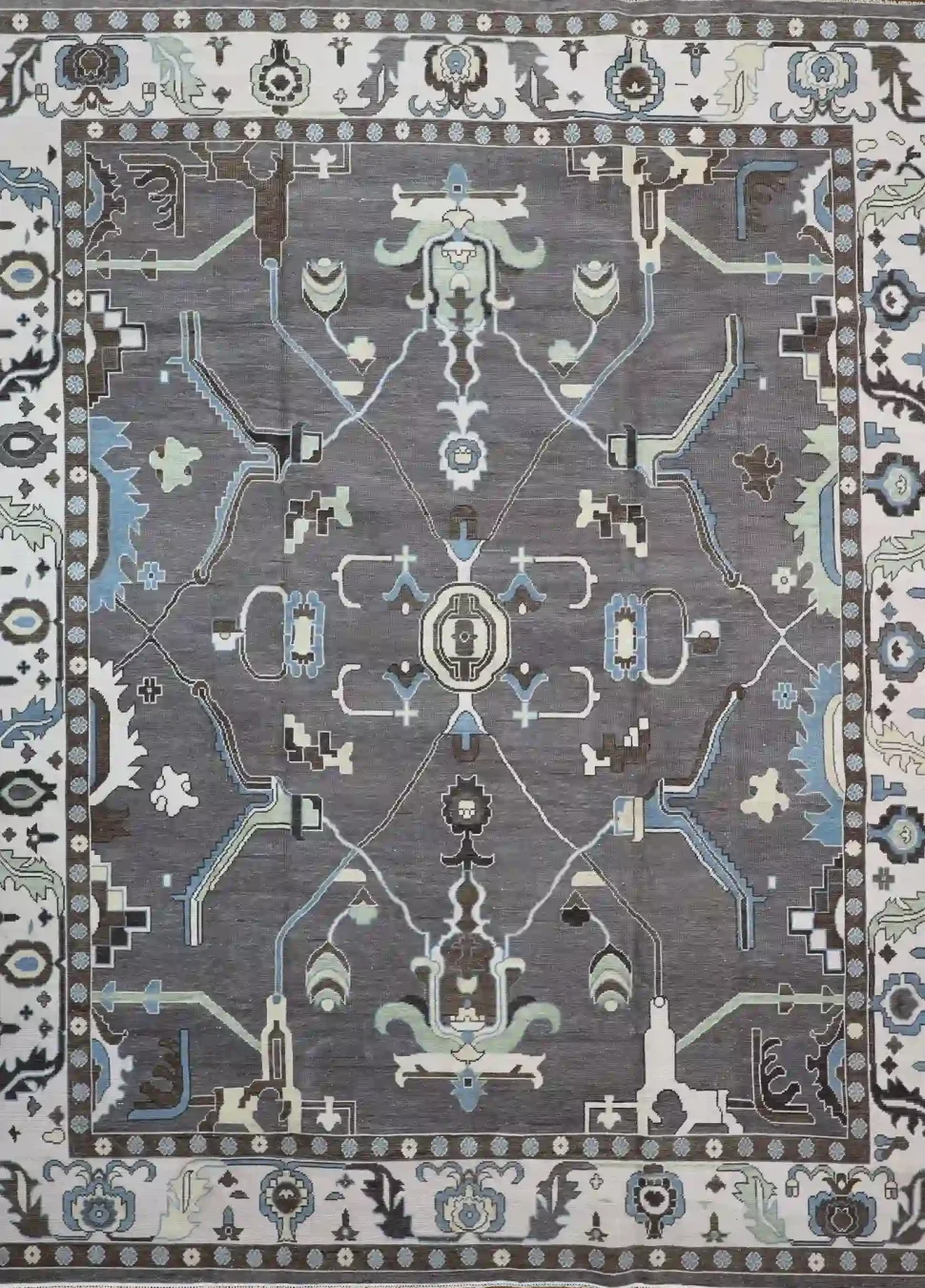
Agra production typically uses fine wool piles on cotton foundations, creating durable pieces suitable for floor use. The designs often feature traditional Mughal patterns: elaborate floral medallions, hunting scenes, garden carpets, and all-over patterns inspired by classical precedents. The color palettes favor the rich reds, deep blues, and warm ivories characteristic of Mughal taste.
One distinctive Agra type features relatively geometric designs quite different from the curvilinear Persian aesthetic. These pieces display large-scale geometric medallions with angular, almost crystalline forms a design approach that proved particularly popular with Western buyers during the 19th-20th centuries.
Agra workshops adapted effectively to changing markets, producing pieces for both traditional Indian buyers and increasingly important European and American customers. This commercial flexibility helped Agra maintain production when other centers declined, though it sometimes encouraged design compromises to meet foreign preferences.
Jaipur: Color and Commercial Success
Jaipur, capital of Rajasthan, developed a thriving carpet industry during the late 19th-early 20th centuries. Jaipur carpets typically feature bold colors, large-scale designs, and sturdy construction that proved popular in Western markets.
The designs often incorporate Persian-inspired floral patterns but rendered with Indian exuberance more flowers, brighter colors, and bolder compositions than typical Persian pieces. The color palettes favor strong contrasts and saturated tones: bright reds, vibrant blues, rich greens, and golden yellows.
Jaipur production became particularly important during the colonial period when British and other European buyers sought oriental carpets. Jaipur workshops proved adept at understanding Western preferences and creating pieces that appealed to those markets while maintaining good quality and handmade character.
Dhurries: Flatweave Traditions
Alongside pile carpets, India developed rich flatweave traditions called dhurries. These cotton textiles, created on simple pit looms, served everyday purposes in Indian homes for centuries before gaining international recognition.
Traditional dhurries feature geometric patterns created through color changes in the weaving rather than pile variations. The designs range from simple stripes to complex geometric compositions. Natural cotton creates cream backgrounds while dyed cotton provides color accents traditionally indigo blues, madder reds, and turmeric yellows.
Dhurries served multiple functions: floor coverings, sleeping surfaces, wraps, and covers for various household items. Their light weight and durability made them ideal for India’s climate and practical for households across economic levels. The finest examples, created for wealthy families, achieved considerable sophistication despite humble materials.
In recent decades, dhurries have gained international popularity for their casual aesthetic, natural materials, and affordability compared to pile carpets. Contemporary production includes both traditional designs and modern interpretations suitable for Western interiors.

The Colonial Period: British Influence and Commercial Transformation
British colonial rule in India (roughly 1757-1947) profoundly impacted carpet production, creating both opportunities and challenges that transformed the tradition.
The Rise of Export Production
British merchants recognized commercial opportunities in Indian carpets. They established trading relationships, provided capital for expanded production, and connected Indian weavers with European and American markets. This export orientation became increasingly important as traditional Indian patronage declined with the Mughal Empire’s collapse.
The most successful export category included “Indo-Persian” carpets pieces that combined Persian design sensibilities with Indian production. European and American buyers familiar with Persian carpets’ prestige but unable to afford the finest Persian pieces found Indian carpets appealing alternatives. They offered similar aesthetics at lower prices due to India’s cheaper labor costs.
This commercial success supported expanded production and employment for thousands of weavers. However, it also began shifting the tradition from artistic expression toward commercial production. Workshops increasingly produced pieces designed for foreign tastes rather than Indian preferences, sometimes compromising traditional standards to meet price points.
Prisons and Carpet Production
The British colonial administration established unusual programs teaching carpet weaving to prison inmates. These prison workshops produced considerable quantities of carpets, ostensibly providing inmates with useful skills while generating revenue for the prison system.
Prison production achieved mixed results. Some facilities maintained high quality standards, creating excellent pieces. Others prioritized quantity over quality, producing mediocre commercial work. The practice raised ethical questions about using prison labor for commercial production, though it did train weavers who sometimes continued the craft after release.
The most famous prison workshops operated in Agra, Amritsar, and Yerwada (near Pune). Pieces from these facilities sometimes bear stamps or markings identifying prison origin, a factor that affects collectability today in complex ways.
Jails and Design Innovation
Interestingly, prison workshops sometimes fostered design innovation. Master designers employed by prison systems created new patterns or adapted traditional designs for Western markets. Some of these designs became commercially successful, spreading beyond prison production to wider industry use.
The colonial period also saw the first comprehensive documentation of Indian carpet traditions. British administrators, scholars, and merchants wrote about carpet production, creating historical records that, despite colonial biases, preserved knowledge about late-19th and early-20th century practices.
The 20th Century: Independence, Revival, and Modernization
India’s independence in 1947 and subsequent economic development transformed carpet production while preserving connection to traditional roots.
Post-Independence Challenges
Independence disrupted established patterns. The partition of India and Pakistan in 1947 split traditional production regions. Many Muslim weavers migrated to Pakistan, taking skills and knowledge with them. Economic disruptions and political uncertainties created difficult periods for traditional crafts.
However, the Indian government recognized carpet weaving’s cultural importance and economic potential. Support programs provided training, established quality standards, and helped weavers access international markets. Craft cooperatives organized workers, ensuring fairer compensation and better working conditions than exploitative middlemen had provided.
The post-independence period also saw efforts to revive traditional designs and techniques that commercial pressures had eroded. Scholars documented historical pieces, master weavers were honored, and training programs taught traditional methods alongside commercial production.
Contemporary Production Landscape
Today’s Indian carpet industry represents one of the world’s largest, producing everything from cheap commercial pieces to museum-quality masterworks. The range reflects India’s position serving multiple markets with different quality requirements and price points.
At the highest level, a few workshops and master weavers maintain classical standards, creating pieces comparable to the finest historical examples. These pieces use top-quality materials, achieve high knot densities, employ natural dyes, and follow traditional designs or create sophisticated contemporary interpretations. Such pieces command premium prices from serious collectors and discriminating buyers.
Mid-market production creates good-quality handmade carpets suitable for upscale residential and commercial use. These pieces use decent materials and competent workmanship without achieving museum quality, offering handmade character at more accessible prices.
Lower-end commercial production emphasizes affordability, sometimes compromising quality through synthetic materials, simplified techniques, or machine assistance. While these pieces serve budget-conscious buyers, they represent industrial products rather than traditional crafts.
Innovation Within Tradition
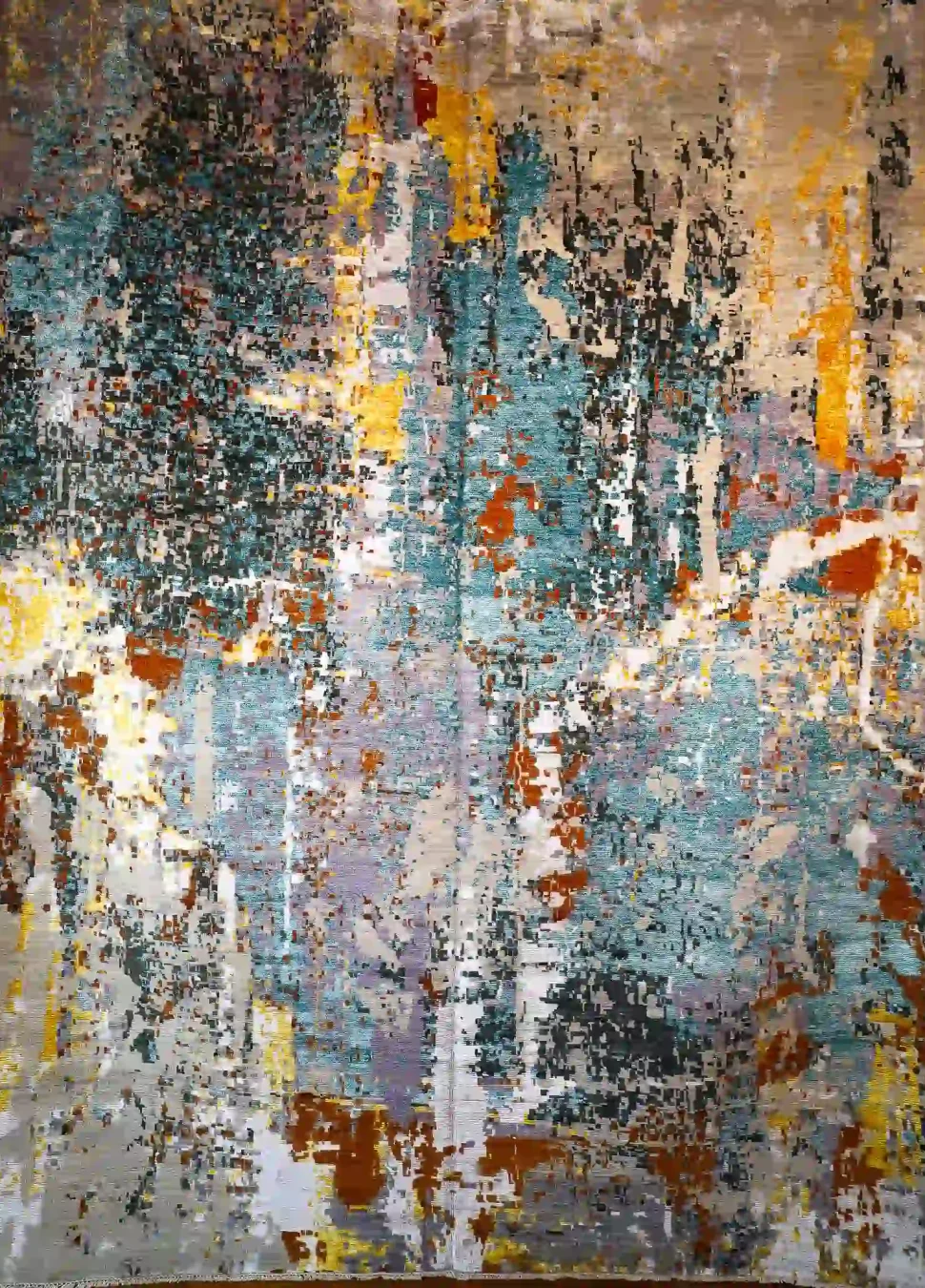
Some contemporary Indian weavers innovate while respecting traditional techniques. They create pieces using classical methods hand-knotting, natural dyes, quality materials but with contemporary designs appealing to modern aesthetics. These might feature abstract patterns, minimalist compositions, or creative color palettes while maintaining technical excellence.
This approach allows traditions to remain vital rather than becoming frozen museum pieces. It also creates economic opportunities for skilled weavers by expanding potential markets beyond traditional buyers to include contemporary design communities.

Indian Rugs in Global Markets: Collecting and Contemporary Appeal
Indian carpets occupy a complex position in global markets, reflecting both their historical significance and contemporary production realities.
The Collector Market
Serious collectors pursue historical Indian carpets from the Mughal period and later eras. The finest examples particularly silk pieces from Kashmir or exceptional Mughal-era carpets with impeccable provenance command six or even seven figures at major auctions. These pieces compete with the finest Persian carpets for collector attention.
19th-century pieces in good condition represent more accessible collecting opportunities, typically ranging from several thousand to tens of thousands of dollars depending on quality, condition, and size. These offer genuine historical significance and often excellent craftsmanship at lower prices than comparable Persian pieces.
Collectors appreciate Indian carpets for their distinctive fusion of Persian technique and Indian aesthetics. The best examples demonstrate extraordinary technical achievement while displaying cultural characteristics that make them unmistakably Indian despite Persian influences.
However, the market also faces challenges. Authentication can be difficult, particularly for pieces from the 19th-early 20th centuries when considerable commercial production occurred. Condition issues common in heavily used older pieces can significantly affect value. The sheer volume of 20th-century commercial production sometimes overshadows appreciation of finer pieces.
Decorative Markets
Beyond serious collectors, Indian carpets serve robust decorative markets. Their generally lower prices compared to Persian equivalents (for comparable quality) make them accessible to buyers seeking oriental carpet aesthetics without top-tier investment.
Interior designers appreciate Indian carpets’ versatility. Traditional designs work in classically styled interiors, while certain types (particularly contemporary pieces and some vintage dhurries) suit modern spaces. The range of styles, colors, and sizes allows designers to find pieces fitting specific projects.
The durability of quality Indian wool carpets makes them practical for residential and commercial use. Unlike delicate silk museum pieces, good wool carpets can handle traffic while maintaining appearance important for buyers who want beauty combined with functionality.
Contemporary Design Applications
Modern Indian production includes pieces specifically designed for contemporary interiors. These might feature minimalist patterns, neutral palettes, or innovative textures while maintaining hand-knotted quality. Such pieces attract buyers who want handmade character without traditional designs that might clash with modern furnishings.
The “Indo-contemporary” category represents growing market segments. These pieces bridge traditional craftsmanship and contemporary aesthetics, honoring weaving heritage while engaging present-day design sensibilities.
Technical Characteristics of Indian Carpet Weaving
Understanding technical aspects helps collectors and enthusiasts appreciate Indian rugs more fully and make informed acquisition decisions.
Knotting Techniques
Indian carpets primarily use the asymmetrical Persian (Senneh) knot, reflecting the Persian origins of the tradition. This knotting technique allows for fine detail and the curvilinear designs characteristic of Indo-Persian aesthetics.
The knot density varies enormously based on quality level. Coarse commercial pieces might contain only 50-80 knots per square inch. Mid-quality pieces typically range from 100-200 KPSI. Fine pieces achieve 250-400 KPSI. The very finest silk carpets from Kashmir can exceed 600-800 KPSI or even higher.
However, knot count alone doesn’t determine quality. Well-executed weaving at moderate density often produces better results than poorly executed high-density work. The evenness of knotting, proper tension, and skillful color changes matter as much as raw knot count.
Materials and Construction
Traditional Indian carpets use various material combinations. All-wool construction (wool pile on wool foundations) creates durable pieces with warm, organic character. Wool pile on cotton foundations perhaps the most common combination provides strength and stability while allowing fine detail. Silk piles on silk foundations produce the most luxurious and delicate pieces.
The quality of materials dramatically affects results. The finest pieces use pashmina (cashmere wool) or high-grade sheep’s wool with natural luster and resilience. Lower-quality production uses inferior wool that lacks character and durability. The same applies to silk: fine silk creates lustrous, durable piles while cheap silk appears dull and wears poorly.
Indian weavers traditionally used hand-spun wool, which creates subtle irregularities contributing to handmade character. Modern commercial production often uses machine-spun wool for uniformity and efficiency, though this sacrifices some traditional quality.
Dyeing Traditions
Historical Indian carpets used entirely natural dyes creating colors that mellowed beautifully with age. Indigo produced blues, madder yielded reds, turmeric created yellows, and various combinations generated intermediate tones. Master dyers understood complex chemistry involving mordants, dye concentrations, and processing techniques.
Synthetic dyes reached India during the late 19th century, initially causing similar quality problems as elsewhere poor lightfastness, bleeding, and harsh colors. However, modern synthetic dyes have improved dramatically. Today’s best synthetic dyes create stable, attractive colors, though many collectors and connoisseurs still prefer natural dyes’ subtle complexity.
Some contemporary producers have revived natural dye traditions, understanding that discerning buyers value this authenticity. Natural-dyed pieces command premium prices, though they require more labor and expertise to produce.

Caring for Indian Carpets: Preservation Best Practices
Proper maintenance protects both beauty and value, extending these textiles’ already impressive lifespans.
Regular Maintenance
Vacuum regularly using suction-only settings, never beater bars that damage hand-knotted construction. Vacuum in the direction of the pile to avoid fiber stress. Frequency depends on traffic weekly for high-use areas, every other week for moderate use.
Rotate carpets every six to twelve months to distribute wear and light exposure evenly. This prevents uneven fading and wear patterns that diminish appearance and value.
Address spills immediately by blotting with clean white cloths. Never rub, which spreads stains and damages fibers. For anything beyond water spills, consult professional cleaners experienced with hand-knotted textiles rather than attempting home treatment.
Professional Care
Professional cleaning every three to five years removes accumulated soil that household vacuuming misses. Choose cleaners experienced specifically with oriental carpets who understand proper techniques for hand-knotted wool and silk.
Quality professional cleaning involves careful inspection, dye testing (ensuring colors won’t bleed during wet cleaning), controlled washing with appropriate pH and temperature, and proper drying preventing mold or mildew. Avoid companies offering cheap, quick cleaning. Proper care requires time and expertise.
For valuable silk pieces or antiques, consider conservation specialists rather than general carpet cleaners. These professionals understand delicate textiles’ special requirements and use appropriate techniques that preserve rather than damage.
Environmental Protection
Control light exposure religiously. Direct sunlight causes irreversible fading, particularly damaging to natural dyes and silk. Use window treatments during peak sunlight, apply UV-filtering film to windows, or position carpets away from direct sun exposure.
Maintain stable humidity levels. Excessive moisture promotes mold growth and fiber degradation. Very low humidity makes fibers brittle. Ideal relative humidity ranges between 40-55%. Use dehumidifiers or humidifiers as needed.
Use quality padding underneath carpets to prevent slipping and provide cushioning. Good padding absorbs impact, reducing foundation stress. It also prevents carpets from sliding on hard floors, which causes abrasion damage.
Storage Considerations
If storing carpets, roll rather than fold to avoid crease damage. Roll pile-side in around acid-free tubes if possible, wrap in acid-free paper or unbleached muslin, and store horizontally in climate-controlled environments.
Ensure carpets are thoroughly clean and completely dry before storage. Soil attracts pests and can cause staining over time. Any moisture promotes mold growth during storage.
Inspect stored carpets annually for pest damage, air them out by unrolling temporarily, and verify storage conditions remain appropriate.
The Future of Indian Carpet Weaving
Looking forward, Indian carpet traditions face both challenges and opportunities shaping the coming decades.
Challenges Threatening Traditional Practices
Competition from machine-made alternatives pressures traditional hand-knotting. Mechanized production creates superficially similar pieces at fractions of the cost, undermining markets for authentic handmade work. Some consumers can’t distinguish machine-made from handmade or don’t value the difference sufficiently to justify price premiums.
Declining numbers of skilled weavers threatens knowledge transmission. Young people in India often pursue modern careers rather than learning labor-intensive traditional crafts. Without new generations learning from master weavers, accumulated expertise risks being lost.
Economic pressures encourage shortcuts that compromise quality. Using synthetic materials instead of natural fibers, employing lower-skilled weavers, or rushing production reduces costs but sacrifices the quality that makes hand-knotted carpets special.
The market suffers from confusion between quality levels. When cheap commercial pieces and fine handmade work both get labeled “Indian rugs,” consumers struggle to understand value differences. This confusion can diminish appreciation for genuinely excellent pieces.
Reasons for Optimism
India’s enormous production capacity and deep weaving traditions create resilience. Unlike some traditions dependent on small geographic areas or limited weaver populations, Indian carpet making spans multiple regions with thousands of skilled workers, a foundation that can sustain the craft even during challenging periods.
Growing global appreciation for authentic handmade goods creates opportunities. Consumers increasingly value items with genuine artisanal heritage, potentially supporting premium pricing for quality traditional work that helps sustain skilled weavers.
Government and institutional support helps preserve traditions. Training programs teach traditional techniques to new generations. Quality certification systems help buyers identify authentic handmade pieces. Export assistance connects weavers with international markets.
Innovation within tradition attracts new markets. Contemporary Indian weavers creating pieces that honor traditional techniques while engaging modern aesthetics expand potential buyers beyond traditional oriental carpet collectors to include contemporary design communities.
Environmental consciousness favors natural materials and traditional production methods over synthetic, industrial alternatives. This sustainability narrative positions traditional carpet weaving advantageously as consumers consider environmental impacts.
Conclusion
The remarkable journey chronicled in Indian rugs history from 16th-century Mughal courts to 21st-century global markets demonstrates a tradition born from cultural fusion and sustained through centuries of artistic evolution. What began as deliberate importation of Persian expertise transformed into something distinctively Indian, a unique synthesis honoring Persian roots while expressing Indian cultural identity, aesthetic preferences, and artistic genius.
Understanding this heritage transforms how we view these carpets. They’re not merely beautiful floor coverings but tangible connections to the Mughal Empire’s architectural and artistic ambitions, examples of cross-cultural exchange producing extraordinary results, and demonstrations of technical mastery requiring years to perfect. Each quality piece represents thousands of hours of skilled labor, design sophistication developed across generations, and materials chosen and prepared with extraordinary care.
The diversity within Indian rugs reflects the subcontinent’s own geographic and cultural variety from Kashmir’s silk refinement to Agra’s Mughal heritage, from Jaipur’s commercial success to humble dhurries serving everyday needs. This range means Indian carpets can satisfy almost any aesthetic preference, budget consideration, or functional requirement while maintaining connections to profound weaving traditions.
For collectors, decorators, and enthusiasts, Indian carpets offer layers of appeal. The finest historical examples rank among the world’s great textile achievements, worthy of museum preservation and serious collecting. Beautiful 19th-20th century pieces provide accessibility while delivering genuine quality and historical connection. Contemporary production proves traditions can remain vital, creating pieces appropriate for modern spaces while respecting time-honored techniques.
The future presents both uncertainties and possibilities. Challenges threatening traditional practices are real and require attention. However, India’s deep weaving heritage, enormous production capacity, and increasing appreciation for handmade quality create foundations for optimism. The tradition that has already survived centuries of change from Mughal courts to colonial disruption to modern markets possesses resilience suggesting it will continue adapting and thriving.
Whether you’re admiring a museum masterpiece from the Mughal golden age, living with a quality contemporary piece, or simply appreciating the artistry these textiles represent, you’re connected to this remarkable tradition. Indian carpets deserve respect not merely as decorative objects but as cultural achievements illuminating human creativity, technical mastery, and the productive fusion of different artistic traditions accomplishments that transcend geographic origins and historical periods, speaking to universal human impulses toward beauty, excellence, and artistic expression.
Frequently Asked Questions
Q: What distinguishes Indian rugs from Persian carpets despite their shared design heritage?
A: While Indian and Persian carpets share fundamental connections, Indian sophisticated carpet weaving began when Mughal emperors imported Persian master weavers in the 16th century; several distinctive characteristics distinguish them. Indian pieces often display more elaborate, abundant floral decoration reflecting Indian aesthetic preferences for richness and exuberance; where Persian carpets might feature restrained floral patterns, Indian versions embrace botanical profusion with greater variety and naturalistic detail. Color palettes differ significantly: Indian carpets tend toward brighter, more saturated colors with bolder contrasts, while Persian pieces often favor more muted, harmonious tones. The naturalism in Indian designs sometimes exceeds Persian stylization flowers and plants rendered with greater botanical accuracy reflecting Mughal miniature painting traditions that emphasized scientific observation of nature. Materials reveal differences too: Indian production made extensive use of pashmina (cashmere wool) and locally sourced silk creating distinctive textures, while Persian weavers used different wool types and silk varieties. Compositional approaches can differ; some Indian carpets display more complex, layered compositions with Indian elements (lotus flowers, indigenous birds, local architectural references) alongside Persian motifs, creating cultural synthesis absent in purely Persian pieces. Technical execution varies: Indian pieces sometimes show slightly looser, more relaxed knotting compared to Persian precision, creating different textural qualities. The cultural context matters fundamentally Indian carpets developed within the religiously diverse Mughal court where Islamic, Hindu, and other traditions coexisted, occasionally producing iconographic mixing impossible in purely Islamic Persian contexts. Market factors also created distinctions: Indian production developed significant export orientation toward European/American buyers earlier than Persian, influencing design evolution toward Western preferences. Despite sharing technical foundations and design languages, these traditions evolved divergently enough that experts can usually distinguish Indian from Persian pieces through the accumulated effect of these differences working together.
Q: Are antique Indian rugs a good investment compared to other types of oriental carpets?
A: Antique Indian rugs can function as legitimate investments, though they operate somewhat differently in the market compared to Persian or Turkish carpets, with distinct advantages and considerations. At the highest level, exceptional Mughal-era pieces (16th-18th centuries) in museum-quality condition command prices rivaling the finest Persian carpets six or seven figures for extraordinary examples with impeccable provenance. These rare pieces demonstrate comparable artistic achievement and technical mastery while being even scarcer than equivalent Persian pieces due to India’s later carpet-weaving start. However, Indian carpets generally trade at discounts compared to equivalent-quality Persian pieces from the same period, reflecting market dynamics where Persian carpets maintain stronger brand recognition and longer collecting history. This creates opportunities for quality Indian pieces that might be relatively undervalued, offering appreciation potential as collectors increasingly recognize their distinct artistic merit. Several factors favor investment prospects: the finest pieces are extraordinarily rare with limited supply that only decreases as pieces wear out or enter permanent museum collections; growing scholarly attention and museum exhibitions elevate awareness and appreciation; strong decorative appeal creates consistent demand from interior designers and design-conscious buyers; and technical quality in the best examples equals or exceeds Persian equivalents while costing less. Challenges include: authentication difficulties, particularly for 19th-early 20th century commercial production periods; condition issues common in utilitarian pieces; market confusion from the enormous range of quality in pieces labeled “Indian rugs”; and smaller collector base compared to Persian carpets affecting liquidity. The most investment-worthy categories include: rare Mughal-era pieces with strong provenance; exceptional Kashmir silk carpets in pristine condition; fine 18th-19th century pieces from prestigious workshops; and unusual pieces with exceptional artistic merit. For most collectors, the soundest approach views Indian carpets as aesthetic investments providing beauty and cultural enrichment first, with financial appreciation as a welcome bonus rather than primary motivation. If seeking pure financial returns, top-tier Persian pieces historically show stronger appreciation, but quality Indian carpets acquired wisely from reputable sources can serve both aesthetic and investment purposes admirably while requiring lower capital outlays than equivalent Persian pieces.
Q: How can I tell if an Indian rug is genuinely handmade versus machine-made?
A: Distinguishing handmade from machine-made Indian carpets requires examining multiple characteristics together. Check the back of the carpet carefully, genuine hand-knotted pieces show the design clearly on both sides (though the back appears flatter and less distinct), with individual knots visible under close examination and slight irregularities in rows and spacing that prove handwork. Machine-made pieces display mechanical uniformity with perfectly consistent rows, and the back often shows a different appearance than the front with a canvas-like backing or latex/adhesive visible. Examine the fringe: in authentic hand-knotted carpets, the fringe consists of warp threads and actual structural elements of the carpet extending beyond the weaving; machine-made pieces have fringe sewn on afterward, visible when you examine where the fringe attaches to the carpet body. Feel the carpet carefully: hand-knotted pieces feel more substantial and flexible, bending naturally in any direction, while machine-made carpets often feel stiffer or more rigid due to latex backing or industrial construction. Look for irregularities that prove handwork: slightly uneven edges, minor variations in pattern (especially in borders where weavers sometimes adjusted to make patterns meet), subtle color variations (abrash) from different dye batches, and pile height variations. Machine-made pieces display mechanical perfection that handwork never achieves. Check pattern complexity: true hand-knotted pieces can execute extremely intricate curvilinear designs with fine detail; machine limitations mean very complex patterns often indicate handwork, though simple geometric patterns can be either. Examine pile construction: hand-knotted pile emerges from individual knots you can see and feel; machine tufting creates loops that might be cut or remain looped but attach differently than hand knots. Weight provides clues: hand-knotted carpets feel heavier than similarly sized machine-made pieces due to denser construction. For expensive purchases, request certification from reputable dealers or consider professional authentication, as the market includes sophisticated machine-made pieces designed to mimic handmade appearance. The combination of all these factors, rather than any single indicator, provides reliable determination of handmade versus machine construction.
Q: What are dhurries and how do they differ from traditional Indian pile carpets?
A: Dhurries represent a distinct Indian textile tradition quite different from pile carpets despite both being floor coverings. Dhurries are flatweave textiles created on simple pit looms using cotton (traditionally) or sometimes wool, while pile carpets are hand-knotted on more complex looms with wool or silk pile creating fuzzy, textured surfaces. The construction differs fundamentally: dhurries use basic weaving techniques similar to fabric production, creating flat textiles through over-and-under interlacing of warp and weft threads; pile carpets use knotting techniques where individual yarn pieces are tied to create raised pile surfaces. This construction difference creates entirely different aesthetic and functional characteristics. Dhurries are thinner, lighter weight, and more flexible than pile carpets, making them easier to move, clean, and store. They typically feature geometric patterns created through color changes in the weaving (weft threads in different colors creating patterns against warp) rather than the elaborate curvilinear designs possible in pile carpets where individual knots allow fine detail. Traditional dhurries use natural cotton creating cream backgrounds with colored geometric patterns, while pile carpets use wool or silk with broader color palettes and more complex designs. Culturally and historically, dhurries served as everyday textiles in Indian homes across economic levels, floor coverings, sleeping surfaces, wraps, and multi-purpose household items, while fine pile carpets represented luxury goods made for wealthy patrons or export markets. Dhurries were indigenous Indian traditions predating Mughal carpet weaving, while sophisticated pile carpet production came with Persian influence in the 16th century. Price-wise, dhurries are generally far more affordable than comparable-sized pile carpets due to simpler construction requiring less labor and materials. Dhurries suit different aesthetic purposes: their casual, relaxed appearance works in informal settings and contemporary interiors, while pile carpets provide formal elegance and luxury. Maintenance differs too: dhurries can sometimes be washed more easily than pile carpets, though fine antique examples require careful professional cleaning like pile carpets. Contemporary production includes both traditional dhurries and innovative contemporary interpretations, while also producing “dhurrie-style” pieces using synthetic materials or machine production. Both traditions deserve appreciation as important parts of Indian textile heritage, each serving distinct purposes and appealing to different aesthetic preferences.
Q: Why did Indian carpet weaving start so much later than Persian or Turkish traditions?
A: The relatively late emergence of sophisticated Indian carpet weaving (16th century compared to Persian/Turkish traditions dating back centuries or millennia earlier) reflects specific historical, cultural, and economic circumstances rather than any lack of textile sophistication in India; the subcontinent had extraordinarily advanced textile traditions in other forms for millennia. Several interconnected factors explain this timing. India possessed rich indigenous textile traditions focused on different forms: elaborate woven silks, cotton textiles (Indian cotton cloth was traded worldwide), embroidered fabrics, and printed textiles (like chintz) that fulfilled decorative and functional needs that carpets served elsewhere. The climate in much of India hot and humid in many regions made thick pile carpets less necessary than in Persia’s harsher continental climate or Turkish Anatolia’s cold winters; functional needs that drove carpet development elsewhere didn’t exist as strongly in India. Culturally, Indian interior design traditions emphasized different elements: elaborate wooden carved furniture, architectural decoration, painted walls and ceilings, and the various textile forms mentioned above rather than floor carpets. The introduction of sophisticated pile carpet weaving came with the Mughal Empire (established 1526), whose rulers descended from Central Asian Turco-Mongol dynasties familiar with Persian cultural traditions including carpet appreciation. The Mughals, particularly Emperor Akbar (1556-1605), deliberately imported Persian master weavers to establish workshops creating carpets matching their architectural and decorative ambitions; this was conscious cultural importation rather than organic indigenous development. The Mughal court’s wealth and ambition provided resources to establish sophisticated production that might not have emerged otherwise. Once established with imperial patronage, the tradition flourished and spread, developing distinctively Indian characteristics while maintaining Persian technical foundations. Interestingly, the late start meant Indian production could immediately achieve technical sophistication rather than evolving gradually; they learned from centuries of Persian refinement, jumping directly to advanced techniques. The late emergence doesn’t indicate any cultural or technical inferiority; rather, it reflects different historical trajectories, climate conditions, cultural preferences, and the specific circumstances of Mughal rule creating opportunities for carpet weaving’s introduction and rapid development. Once established, Indian weaving proved extraordinarily successful, eventually creating some of the world’s finest carpets and becoming one of the largest carpet-producing regions globally.
Identifying Authentic Antique Indian Rugs
EXCELLENTTrustindex verifies that the original source of the review is Google. I feel fortunate that we found Surena Rugs. We happened by after visiting a number of other rug stores, none of which had what we wanted in terms of size, color, style and price. Surena didn't have it either, but what set them apart was that Faye listened very carefully as we described our criteria and said that she would do her best to find a suitable solution. Not long after, she had two beautiful rugs for us to choose from, both of which worked well and were great values. We were very pleased with the entire process, and, Faye was wonderful to work with. Can't recommend them enough.Posted onTrustindex verifies that the original source of the review is Google. Faye was wonderful to work with. She has beautiful rugs and was patient in helping me find just the right ones for my space! Could not be happier with the service and quality of the rugs at Surena.Posted onTrustindex verifies that the original source of the review is Google. Faye is a delight to work with and has an amazing selection of rugs. I would 100% recommend Surena Rugs to anyone looking for beautiful rugs.Posted onTrustindex verifies that the original source of the review is Google. Wonderful establishment, kind and knowledgeable owner, beautiful quality rugs. A+, strongly recommendedPosted onTrustindex verifies that the original source of the review is Google. As an interior designer, who has worked with this family for many years , I can say Surena Rugs is reputable and dependable, with excellent quality and pricing. They offer a wide selection of antique rugs, as well as the beautiful light oushak rugs we are seeing in the market today. Highly recommended.Posted onTrustindex verifies that the original source of the review is Google. Three years ago I was in Atlanta and bought a New Zealand hand-knotted wool rug for my dining room. Moe, the owner of Surena Rugs, was very kind and patient as I was choosing the perfect rug for my home. I had the rug shipped to me (I live in Northern California). It arrived promptly and the rug is perfect in my dining room. After not being able to go to Atlanta and our most recent trip being cancelled, I reached out to Surena Rugs to find a runner that would complement the dining room rug. Faye, the other owner of Surena Rugs, was so helpful. She went beyond my expectations to help me. I explained to her what I wanted and sent her a photo of my dining room rug. After looking at rugs at her showroom, she sent me a photo of the runner she thought would work. The rug looked perfect. Faye shipped the rug to me, it arrived and is absolutely perfect! I highly recommend Surena Rugs. The craftsmanship and quality of the rugs are impeccable.What is even more special is the excellent service you will receive when looking and purchasing the perfect rug(s) for your home.Posted onTrustindex verifies that the original source of the review is Google. Best fine rug shopping! I purchase a very large handmade rug and they were very patient and accommodating me in the narrowing down, selection process. The rug was a great value and reasonable price and I get lots of compliments on it. It has held up very well over the last 18 months - we will have the rug for many many years to come. I highly recommend checking out their selection of rugs and customer experience! Will not disappoint!!!Posted onTrustindex verifies that the original source of the review is Google. I highly recommend SURENA rugs! I found the perfect rug (size, color, look) and Faye went to great lengths to make sure I found the one! Thank you Faye + team!! ❤️Posted onTrustindex verifies that the original source of the review is Google. Surena Rugs has the best collection! Faye has great taste and is there to help you pick the perfect rug to match your home. Highly recommend!Posted onTrustindex verifies that the original source of the review is Google. What an amazing store, the owner is very friendly and knowledgeable. Me and my wife came to buy a rug from here and we got an amazing fair price compared to other places! Highly recommend if you’re looking for a great quality, old or new rug!Verified by TrustindexTrustindex verified badge is the Universal Symbol of Trust. Only the greatest companies can get the verified badge who has a review score above 4.5, based on customer reviews over the past 12 months. Read more
Surena Rugs is a trusted provider of high-quality Indian rugs in the United States. With over two decades of dedicated experience in the rug industry, we take pride in offering carefully selected rugs that combine timeless craftsmanship, durability, and elegant design. Our commitment to quality and customer satisfaction has earned us a 5-star rating on Google from happy customers nationwide. Whether you’re looking for a statement piece or a subtle addition to your space, we invite you to explore our collection and experience the craftsmanship that sets Surena Rugs apart.