The Refined Evolution of Nain Rugs History: From Desert Town to Persian Weaving Excellence
The remarkable story of Nain rugs history represents one of the most fascinating chapters in Persian carpet weaving, a tradition that emerged relatively recently compared to ancient weaving centers, yet achieved extraordinary refinement and prestige within mere decades. These exquisite carpets, originating from the small desert town of Nain in central Iran, embody a unique aesthetic characterized by ivory and pale blue color palettes, exceptionally fine knotting that rivals the world’s best, and delicate floral patterns rendered with almost painterly precision. Unlike most Persian rug types with centuries-old traditions, Nain carpets emerged in the early-to-mid 20th century when the town’s traditional textile industry collapsed and enterprising weavers transformed their skills to create a new type of carpet that would capture international acclaim. Understanding the evolution of these magnificent textiles reveals not just a story of craftsmanship and entrepreneurship, but a testament to human adaptability, artistic vision, and the pursuit of perfection that characterizes the finest Persian weaving traditions.
The Geographic and Cultural Context of Persian Nain Rugs History
To understand Persian Nain rugs history, one must first appreciate the unique characteristics of the town where this distinctive tradition emerged. Nain (also spelled Na’in or Naein) is a small oasis city located in Isfahan Province in central Iran, approximately 140 kilometers east of the historic city of Isfahan. Situated on the edge of Iran’s vast central desert, Nain developed as a crucial stop along ancient caravan routes connecting Isfahan with eastern regions.
The town’s history extends back over a thousand years, with architectural monuments including the Jame Mosque of Nain (dating to the 10th century) testifying to its historical importance. Despite this ancient heritage, Nain remained relatively small and isolated, its economy sustained by agriculture made possible by underground water channels (qanats) and by textile production serving regional markets rather than international trade.
The population of Nain has been predominantly ethnically Persian, maintaining Persian cultural traditions and speaking Farsi. This cultural homogeneity contributed to the consistent aesthetic character that would later define Nain carpets. The town’s proximity to Isfahanone of Persia’s greatest artistic and cultural centers meant that Nain craftspeople absorbed influences from Isfahan’s sophisticated traditions while developing their own distinctive expressions.
Historically, Nain’s primary textile industry involved producing “abayas”, traditional cloaks worn throughout the Middle East. This centuries old tradition employed skilled weavers working on horizontal looms, creating lightweight wool fabrics of fine quality. The technical skills developed through abaya production, fine weaving, careful attention to material quality, precise execution would prove crucial when the town’s weavers eventually turned to carpet production.
The geographic isolation of Nain, while limiting its historical prominence, also preserved traditional skills and created a close-knit community where knowledge transmission occurred naturally within families and neighborhoods. When economic circumstances forced adaptation, this social structure enabled rapid collective response, with the entire community transitioning together from abaya production to carpet weaving.
The desert environment surrounding Nain influenced both the practical and aesthetic aspects of the weaving tradition that would emerge. The harsh climate created appreciation for delicacy and refinement in contrast to the stark landscape. The light quality of the desert bright, clear, unforgiving may have influenced the preference for pale, luminous colors that became Nain’s signature. The need for economic survival in a challenging environment created entrepreneurial pragmatism alongside traditional craftsmanship.
The Birth and Development of Nain Carpet Weaving

Unlike ancient weaving centers with traditions stretching back centuries, Nain’s carpet production began remarkably recently, making it possible to trace its development with unusual precision and detail.
The Crisis That Sparked Innovation (1920s-1930s)
The genesis of Nain carpet weaving lies in the economic crisis. During the 1920s and 1930s, Nain’s traditional abaya industry began collapsing under pressure from cheaper machine-made textiles and changing fashion preferences. The skills that had sustained the town for generations suddenly had no market, creating an economic crisis that threatened Nain’s viability.
Faced with this challenge, forward-thinking craftspeople and entrepreneurs recognized that their fine weaving skills could be adapted to the carpet production field where handwork still commanded value and where Persian carpets enjoyed strong international demand. The transition wasn’t automatic or easy; carpet weaving required different techniques, tools, and knowledge than abaya production. However, the fundamental skills of fine weaving, material preparation, and pattern executionwere transferable.
The key figure in Nain’s transition to carpet weaving was Fatollah Haghighi, often credited as the father of Nain carpet production. In the 1920s-1930s, Haghighi and other pioneering craftspeople began experimenting with carpet production, studying examples from established centers like Isfahan and Kashan, adapting techniques to their own capabilities, and developing designs that would distinguish Nain work from established traditions.
The Formative Period (1940s-1950s)
The 1940s and 1950s represent the formative period when Nain’s distinctive aesthetic crystallized. Rather than simply copying established Persian types, Nain weavers developed a unique identity characterized by several distinctive features: extremely fine knotting (even by Persian standards), color palettes emphasizing ivory, pale blue, and soft earth tones rather than traditional reds, delicate floral patterns with refined, almost lace-like quality, and the incorporation of silk for highlights and special effects.
This distinctive aesthetic reflected both practical considerations and artistic vision. The fine knotting showcased the technical skills Nain weavers possessed from their abaya background. The pale color palettes differentiated Nain work from the red-dominated traditional Persian types, creating instant visual distinction. The delicate patterns suited Western decorating tastes in the mid-20th century, when lighter, more refined aesthetics were gaining favor over Victorian heaviness.
The decision to use silk highlights proved particularly significant. Silk adds luster and allows even finer detail in designs, creating visual richness that justified premium pricing. The silk also provided tactile variation; the contrast between silk and wool areas creates subtle texture that enhances visual interest. This innovation became so associated with Nain that the amount of silk content became a quality indicator.
During this period, Nain established the quality classification system that continues today. Nain rugs are graded as “6-la,” “9-la,” or “4-la” based on the number of threads (la) used in the warp; fewer threads means finer, more expensive work. This classification system provided clear quality hierarchies that helped market Nain carpets, allowing buyers to understand what they were purchasing.
International Recognition and Market Success (1960s-1970s)
By the 1960s-1970s, Nain carpets had achieved significant international recognition. The combination of exceptional technical quality, distinctive aesthetic, and effective marketing made Nain one of the most prestigious Persian carpet types despite its recent origins. Western buyers, particularly in Europe and America, embraced Nain’s refined aesthetic, which suited contemporary interior design trends favoring lighter, more subtle color palettes.
This market success validated Nain’s distinctive approach and encouraged continued quality focus. Unlike some traditional centers where commercial pressures led to corner-cutting, Nain maintained rigorous standards, understanding that reputation for excellence justified premium pricing. The town’s relatively small scale and concentrated production meant quality control was easier to maintain than in larger, more diffuse weaving centers.
The period also saw the emergence of recognized master weavers and workshop families whose names became associated with the highest quality. Haghighi workshops continued leading Nain production, while other families established their own reputations for excellence. This reputation system helped consumers navigate quality variations and provided incentives for maintaining standards.
Contemporary Production and Continuing Evolution
Today, Nain remains an active weaving center, producing carpets that continue the traditions established during the formative decades. Contemporary Nain production ranges from exceptional pieces maintaining the highest traditional standards to more commercial work targeting different market segments. The challenge, as with all traditional crafts, is maintaining quality and authenticity in the face of commercial pressures and changing market conditions.
Modern Nain weavers face competition from cheaper alternatives, machine-made copies, lower-quality hand-knotted pieces from other regions, and the general market preference for less expensive options. However, the finest Nain workshops continue producing extraordinary carpets that justify their premium prices through exceptional quality, maintaining the reputation Nain built over the past century.
The digital age has brought new challenges and opportunities. Online sales allow direct access to global markets but also create authenticity and quality assessment challenges. Social media enables craftspeople to share their work directly with consumers, building appreciation and understanding, but also facilitates misrepresentation and fraud. Navigating these modern realities while maintaining traditional standards defines contemporary Nain production.
Understanding Nain Rug Meaning: Design Elements and Aesthetic Philosophy
The Nain rug meaning extends beyond simple pattern descriptions to encompass the aesthetic philosophy and cultural values these carpets embody. Understanding what makes Nain designs distinctive reveals the unique vision that guided this tradition’s development.
The Signature Nain Color Palette
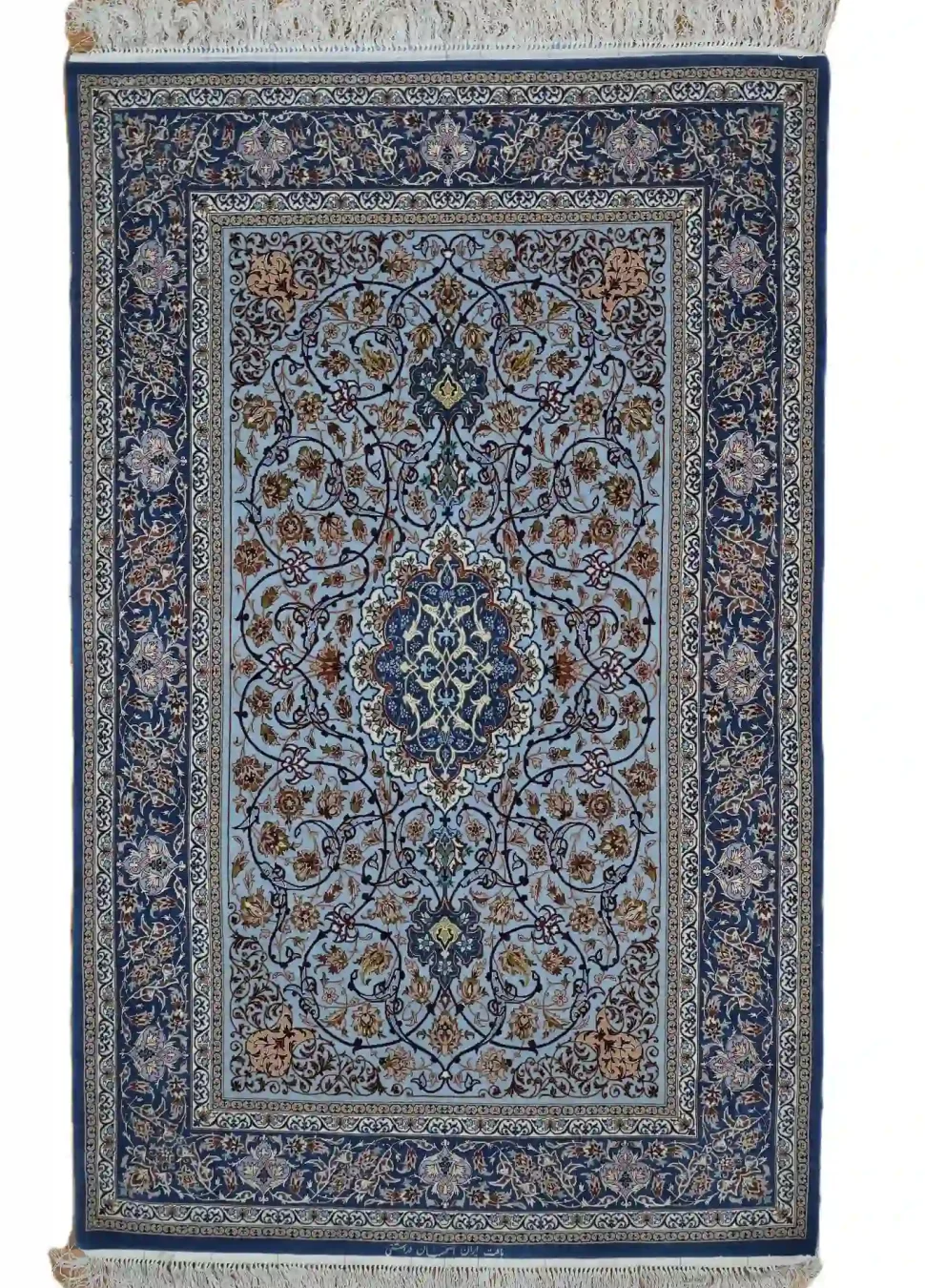
Perhaps the most immediately recognizable aspect of Nain rugs is their distinctive color palette. Unlike traditional Persian types dominated by rich reds and deep blues, Nain carpets favor soft, luminous colors: ivory or cream backgrounds providing the fundamental base, pale blue (often described as “Nain blue” a soft, slightly gray-tinged blue quite different from bright royal blue, soft earth tones including beige, camel, and warm sand colors, subtle greens in soft sage or celadon tones, and minimal use of traditional red, if present at all.
This palette creates an entirely different emotional effect than traditional Persian color schemes. Where red-based rugs create warmth and richness, ivory-based Nain carpets project serenity, lightness, and sophisticated restraint. The effect is contemplative rather than passionate, refined rather than exuberant. This aesthetic perfectly suited mid-century Western tastes and continues appealing to contemporary preferences for lighter, calmer interiors.
The use of silk for highlights adds another dimension to the color experience. Silk catches and reflects light differently than wool, creating subtle luminosity that changes with viewing angle and lighting conditions. The contrast between matte wool and lustrous silk areas adds depth and visual interest without introducing additional colors.
Classic Nain Design Patterns
Nain rug patterns draw from traditional Persian design vocabulary but interpret these elements with distinctive refinement and delicacy. The most common format is the medallion and corner layout, but executed with Nain’s characteristic lightness. Central medallions in Nain rugs are typically delicate and intricate rather than bold, featuring elaborate arabesques and floral elements rendered with almost lace-like fineness.
The field surrounding the medallion receives careful attention, filled with graceful floral sprays, delicate vine scrolls, and sophisticated botanical elements. Unlike some Persian types where field patterns create dense, crowded effects, Nain designs maintain breathing room, allowing the eye to appreciate individual elements. This spaciousness contributes to the serene, uncluttered feeling characteristic of the Nain aesthetic.
The Shah Abbas design featuring elaborate palmettes, vine scrolls, and cloud bands in repeating patterns appears frequently in Nain work. This classical Persian motif receives Nain’s signature delicate treatment, with the elements rendered in fine detail against pale grounds. The combination of traditional pattern with refined execution and distinctive colors creates something simultaneously familiar and distinctive.
Floral elements in Nain designs show remarkable precision and naturalism within the constraints of knotted construction. Roses, lotus flowers, palmettes, and other botanical motifs are rendered with careful attention to form and proportion. The fine knotting enables this detailed execution, allowing curves and details impossible with coarser weaving.
Border Treatments and Framing Elements
Nain borders complement the refined field designs with appropriate delicacy. The main border typically features scrolling vines bearing elaborate flowers, rendered with the same fine detail as field patterns. Multiple guard stripes, often three or more narrow bands flanking the main border create layered framing that adds sophistication without visual weight.
The proportions of Nain borders demonstrate sophisticated design sensibility. The borders are substantial enough to frame the field strongly but not so wide as to overwhelm the delicate interior designs. This balance requires careful planning and reflects the aesthetic refinement characterizing the best Nain work.
Color use in borders typically maintains the overall palette harmony. Borders might reverse the field colors a pale border on an ivory field, for instance or use complementary tones from the palette. The effect is unified and harmonious rather than contrasting and dramatic, reinforcing the serene, refined character of Nain aesthetic.
The Quality Classifications: Understanding the “La” System
A distinctive aspect of Nain rug meaning involves understanding the quality classification system. Nain rugs are traditionally graded as 4-la, 6-la, or 9-la based on the thickness of the warp threads] fewer “la” indicates finer threads, resulting in finer, denser knotting and higher quality.
4-la Nain represents the finest quality, with extremely fine warps allowing knot densities of 400-700+ knots per square inch. These exceptional pieces show extraordinary detail and refinement, commanding premium prices. The fineness enables almost photographic rendering of delicate patterns.
6-la Nain represents the standard quality most commonly encountered, with knot densities typically ranging from 250-400 knots per square inch. These are still very fine rugs by any reasonable standard, showing excellent detail and craftsmanship at more moderate pricing than 4-la examples.
9-la Nain represents relatively coarser work (though still fine by general standards), typically ranging from 150-250 knots per square inch. These pieces maintain the Nain aesthetic but with somewhat simpler designs and less extreme refinement, offering the Nain look at more accessible prices.
Understanding this classification system helps buyers assess quality and value, recognizing that the la designation provides objective information about technical fineness that significantly affects both appearance and price.
Assessing Nain Rug Value: Factors That Determine Worth

Understanding Nain rug value requires examining multiple factors that collectively determine market price and investment potential. The relatively recent origin of Nain production means age plays a different role than with ancient weaving traditions, while technical quality and condition take on heightened importance.
Technical Quality and the La System
The la classification provides a starting point for value assessment. 4-la examples command significant premiums over 6-la pieces, which in turn are more valuable than 9-la work. However, this system alone doesn’t determine value] execution quality within each classification varies significantly.
Knot density, while related to la classification, deserves independent assessment. Within the 6-la category, for instance, pieces might range from 250-400 knots per square inch. Higher density generally indicates superior work, enabling finer detail and more refined execution. However, density must be regular and precise] sloppy work at high density is inferior to careful work at moderate density.
The wool quality dramatically affects appearance, durability, and value. Fine Nain rugs use exceptional wool[ fine, lustrous, soft, and resilient. This wool creates smooth, elegant surfaces that complement the delicate designs. Inferior wool coarse, dry, or harsh compromises appearance regardless of design or knotting fineness.
Silk content and quality significantly impact value. Genuine silk highlights add luster and value, but the amount and quality matter. Generous silk content with high-quality silk commands premiums, while sparse or inferior silk adds less value. Importantly, mercerized cotton is sometimes passed off as silk genuine silk can be verified through burn tests or microscopic examination if substantial money is involved.
Design Quality and Execution
Beyond technical factors, design quality separates exceptional Nain rugs from ordinary examples. Superior pieces show sophisticated, well-balanced designs with harmonious proportions, refined drawing with precise execution of delicate elements, and color palettes that demonstrate sophisticated chromatic sensibility. Even technically fine rugs with mediocre designs have limited value compared to pieces where technical excellence serves exceptional artistic vision.
The drawing quality and how precisely and gracefully patterns are rendered reveals the skill level of both designer and weaver. Fine Nain rugs show confident, fluid execution of curvilinear forms, with curves that flow smoothly and elements that relate harmoniously. Inferior examples might show awkward drawing, poorly balanced compositions, or muddy pattern definition.
Age and Historical Context
Age affects Nain rug value differently than with ancient traditions. Since Nain production began in the 1920s-1940s, even the oldest examples are less than 100 years old semi-antique rather than truly antique. However, early Nain pieces from the formative decades (1940s-1960s) command premiums as historical documents of the tradition’s development and as products of the pioneering generation that established Nain’s standards.
Pre-1979 Revolution pieces have special status, representing production before the major political and social changes that transformed Iran. These pieces often show exceptional quality, as the period before the revolution represented peak traditional production before subsequent disruptions.
Contemporary Nain production (last 20-30 years) can be excellent but lacks the patina and historical significance of earlier pieces. However, the best contemporary work from recognized workshops can be quite valuable, as it represents the continuation of tradition and will itself become vintage and antique in coming decades.
Condition Assessment
Condition profoundly affects value, perhaps more so than with some other Persian types due to Nain’s refined aesthetic. The delicate colors and fine pile show wear more obviously than bold tribal rugs, making conditions especially crucial for maintaining visual appeal and value.
Key condition factors include pile condition full pile versus worn areas even moderate wear affects delicate Nain designs significantly, color condition (pale colors should remain luminous, not dingy or yellowed, structural integrity the fine construction must remain sound without weak areas or foundation damage, and silk condition (silk areas should retain luster and not show excessive wear or damage.
For valuable Nain rugs, pristine condition commands significant premiums; the difference between excellent and very good condition might be 30-50% of value. However, some age-appropriate wear is acceptable and expected in genuinely older pieces. The key is that wear should be even and the rug should retain visual appeal despite age.
Market Factors and Pricing
Current market dynamics significantly affect Nain rug value. The pale, refined aesthetic of Nain carpets aligns well with contemporary decorating preferences, supporting strong demand. This favorable positioning means quality Nain rugs often command healthy prices compared to less fashionable types of comparable age and quality.
Size affects value in predictable ways. Room-size carpets approximately 8×10 to 9×12 feet) see strongest demand for decorating purposes. Smaller accent sizes are more affordable and easier to place. Large oversize pieces command premiums when quality merits, though finding appropriate spaces somewhat limits the market.
Approximate value ranges for Nain rugs: exceptional 4-la pieces from recognized workshops in excellent condition: $15,000-$50,000+ for room sizes; quality 6-la examples from good workshops: $5,000-$15,000 for room sizes; 9-la pieces or lesser quality: $2,000-$6,000 for room sizes; contemporary quality production: $2,000-$10,000 depending on quality and size.
The Cultural Significance and Philosophy Behind Persian Nain Rugs History

Beyond their practical and aesthetic qualities, Persian Nain rugs history embodies important cultural narratives about adaptation, entrepreneurship, and the continuing vitality of traditional crafts in the modern world.
A Story of Adaptive Innovation
Perhaps the most significant aspect of Nain rugs history is what it demonstrates about cultural and economic adaptation. When their traditional industry collapsed, Nain craftspeople didn’t simply abandon their heritage or resign themselves to economic decline. Instead, they adapted their skills to new purposes, creating something genuinely innovative while honoring craft traditions.
This adaptive response shows how traditional crafts can survive and thrive by evolving intelligently rather than remaining frozen in unchanging forms. Nain weavers didn’t simply copy existing carpet types but created something distinctive that reflected their particular skills, vision, and market understanding. This entrepreneurial creativity alongside traditional craftsmanship offers lessons for other traditional crafts facing modern challenges.
The Pursuit of Technical Excellence
Nain’s focus on extreme technical refinement reflects deeply-held cultural values about craftsmanship and quality. In a market that could reward shortcuts and cost-cutting, Nain maintained rigorous standards, understanding that reputation for excellence provided more sustainable competitive advantage than price competition.
This commitment to quality requires sacrificing the patient, precise work necessary for 4-la quality means lower productivity and higher costs. That Nain weavers and workshops made this choice speaks to values beyond mere commercial calculation. There’s pride in creating exceptional work, satisfaction in mastery, and belief that true quality finds appreciation and reward.
Gender Dynamics in Nain Production
Like most Persian carpet production, Nain weaving is predominantly women’s work. Women perform the actual knotting, the patient, precise, demanding work that creates the finished carpets. This gender division reflects traditional social patterns, with women’s skilled labor essential to production but often controlled and managed by male family members or employers.
However, the economic importance of women’s weaving work shouldn’t be underestimated. For many Nain families, income from carpet production provided essential economic support, with women’s skills at the loom determining family prosperity. The technical excellence of Nain rugs demonstrates these women’s extraordinary capabilities, even if social recognition remained limited.
Nain in Persian Cultural Identity
Despite its recent origin, Nain has become firmly established in Persian cultural identity as representing a particular aesthetic and quality standard. When Iranians speak of Nain carpets, they invoke associations with refinement, excellence, and sophisticated taste. This cultural positioning demonstrates how traditions can establish themselves remarkably quickly when they resonate with cultural values and aesthetic sensibilities.
The pale, serene beauty of Nain rugs represents one expression of Persian aesthetic different from the passionate exuberance of tribal work or the luxurious complexity of Isfahan pieces, but equally valid and deeply Persian. This diversity within Persian carpet traditions reflects the cultural richness and diversity of Iran itself.
Nain’s Relationship to Isfahan
Geographically and culturally, Nain exists somewhat in Isfahan’s shadow, the small desert town versus the great historical capital, recent tradition versus ancient heritage. However, this relationship proved more synergistic than competitive. Nain absorbed Isfahan’s artistic sophistication while developing its own identity, and Isfahan’s prestige helped elevate Persian carpets generally, creating markets Nain could access with distinctive offerings.
The connection also facilitated knowledge transfer. When Nain weavers needed to learn carpet production quickly, proximity to Isfahan provided access to examples, expertise, and materials. This geographic advantage accelerated Nain’s development and helped establish quality standards appropriate for prestigious Persian production.

Collecting, Decorating, and Maintaining Nain Carpets Today
For contemporary collectors, decorators, and homeowners, Nain rugs offer exceptional opportunities combining refined beauty, technical excellence, and contemporary relevance.
Building a Nain Collection
Collectors approaching Nain rugs have several strategic options. Period-focused collecting might pursue examples from different phases of Nain’s development, early pieces from the 1940s-1950s formative period, classic examples from the 1960s-1970s peak period, and contemporary pieces from recognized workshops. This approach documents the tradition’s evolution and appreciation of how Nain weaving developed.
Quality-focused collecting pursues the finest examples regardless of age seeking exceptional 4-la pieces with superior silk content, masterful execution, and pristine condition. This approach prioritizes aesthetic and technical excellence over historical comprehensiveness.
Workshop-focused collecting might pursue pieces from particular master weavers or family workshops, building collections that represent individual artistic visions within the broader Nain tradition. Major workshops including Haghighi, Tuteshk, and others have distinctive characteristics that specialists recognize and value.
Interior Design Applications
Nain rugs’ refined aesthetic makes them exceptionally versatile in interior design. Their pale colors brighten spaces and make rooms feel larger and more open, particularly valuable in smaller spaces or rooms with limited natural light. The sophisticated patterns add visual interest without overwhelming, creating elegant foundations for diverse decorating schemes.
In traditional interiors, Nain carpets provide expected refinement with appropriate elegance, complementing formal furniture and architectural details. The classical Persian patterns suit traditional aesthetics while the pale colors prevent heaviness that darker traditional carpets might create.
Contemporary and minimalist interiors benefit enormously from Nain rugs. The refined patterns read as sophisticated texture from distance while providing visual interest on closer inspection. The pale colors coordinate effortlessly with contemporary palettes dominated by whites, grays, and natural tones. Designers increasingly use fine Nain pieces in modern contexts, creating sophisticated layering between traditional craft and contemporary design.
The delicate appearance of Nain rugs might suggest fragility, but quality examples are quite durable. The fine construction and excellent materials mean they withstand normal residential use well, though they’re perhaps better suited to living rooms, bedrooms, and dining rooms than highest-traffic entries or hallways where heavier carpets might be more practical.
Proper Care and Maintenance
Nain rugs require gentle care appropriate to their refined construction and pale colors. Regular vacuuming using suction without beater bars removes surface dirt without damaging the fine pile. The delicate silk areas require particular gentleness; excessive mechanical stress can damage silk fibers.
Rotation every six months ensures even wear and light exposure, crucial for pale colors that might show fading or yellowing if unevenly exposed. Using quality rug pads designed for hand-knotted rugs protects both carpet and floor while preventing slipping and providing cushioning that reduces wear.
Spill response is particularly important for pale Nain colors. Address any spills immediately by blotting never rubbing with clean white cloths. The pale backgrounds show stains more readily than darker carpets, making prompt attention essential. For stubborn stains, professional help is better than aggressive home treatment that might cause more harm.
Professional cleaning by specialists experienced with fine Persian rugs maintains condition and appearance. The pale colors, silk content, and fine construction require gentle, appropriate treatment not aggressive methods suitable for coarser tribal rugs. Cleaning every 3-5 years for normal use maintains freshness while the silk areas may benefit from professional attention more frequently to maintain luster.
Sunlight protection is particularly crucial for Nain rugs. The pale colors can fade or yellow with excessive sun exposure, and silk is particularly sensitive to UV damage. Use window treatments, UV-filtering glass, or strategic placement to minimize direct sun exposure.
For storage, roll Nain rugs with pile facing inward around acid-free tubes, wrap in clean cotton fabric, and store in climate-controlled spaces away from moisture, temperature extremes, and pests. The silk content makes moth prevention particularly important, regular inspection and prompt treatment if infestation occurs protects these valuable textiles.
Conclusion: The Continuing Story of Nain Rugs History
The journey through Nain rugs history reveals a tradition that, despite its recent origins, has achieved genuine excellence and earned its place among the world’s finest carpets. From economic crisis and adaptive innovation to international recognition and enduring prestige, Nain’s story demonstrates how traditional crafts can evolve, thrive, and maintain relevance in the modern world.
What makes Persian Nain rugs history particularly significant is its message about human creativity and resilience. When circumstances demanded change, Nain craftspeople responded with vision and determination, creating something genuinely innovative while honoring craft traditions. The resulting carpets of exceptional refinement combining technical mastery with distinctive beauty validated this bold response and secured Nain’s position in Persian weaving heritage.
Understanding the Nain rug meaning extends beyond recognizing patterns or assessing quality to appreciating the aesthetic philosophy these carpets embody. The preference for pale, luminous colors reflects particular sensibilities about beauty and tranquility. The commitment to extreme technical refinement demonstrates values about excellence and craftsmanship. The delicate patterns rendered with almost painterly precision show artistic sensibility alongside weaving skill.
Assessing Nain rug value requires considering the multiple factors that determine worth technical fineness indicated by la classification, design quality and execution, materials including silk content, condition especially crucial for pale colors, age and historical context, and current market dynamics. Understanding these factors enables informed decisions about acquisition, care, and appreciation of these refined textiles.
As we look to the future, Nain rugs history continues unfolding. Contemporary production maintains the tradition, with the finest workshops upholding the standards established during the formative decades. Earlier pieces are aging into genuine antiques, potentially appreciating significantly as they become scarcer. The aesthetic remains remarkably relevant to contemporary tastes, supporting continued demand and production viability.
For anyone considering a Nain rug whether as collector, decorator, or simply someone wanting a beautiful textile for their home these refined carpets offer exceptional opportunities. They combine proven quality and distinctive beauty with contemporary relevance, technical excellence with practical utility, and investment potential with daily aesthetic pleasure. A fine Nain rug brings serenity, elegance, and sophisticated refinement to any space it graces, serving as a daily reminder of the beauty that human skill, patience, and artistic vision can create.
The story of Nain ultimately celebrates human capacity for adaptation, innovation, and excellence. When traditional livelihoods disappeared, Nain’s craftspeople created new possibilities while honoring their heritage. The magnificent carpets they produced—and continue producing stand as tangible evidence that traditional crafts need not be static museum pieces but can evolve, adapt, and thrive while maintaining the essential values of quality, beauty, and skilled craftsmanship that give them meaning and worth.
Frequently Asked Questions About Nain Rugs
What makes Nain rugs different from other Persian rugs?
Nain rugs are distinguished from other Persian carpets by several unique characteristics. Unlike traditional Persian types dominated by rich red fields, Nain rugs feature distinctive pale color palettes ivory or cream backgrounds with soft blues, earth tones, and minimal traditional red. The aesthetic is serene and refined rather than warm and exuberant. Technically, Nain rugs are among the finest Persian carpets, with quality examples (particularly 4-la and 6-la grades) featuring 250-700+ knots per square inch rivaling the world’s finest weaving. The incorporation of silk for highlights and special effects is characteristic, creating lustrous contrast against wool areas. Design-wise, Nain favors delicate, almost lace-like floral patterns with graceful execution rather than bold geometric or densely ornate styles. Historically, Nain represents a relatively recent tradition (beginning 1920s-1940s) compared to ancient centers like Tabriz or Kashan, yet achieved remarkable excellence rapidly. The tradition emerged from economic adaptation when Nain’s abaya textile industry collapsed, demonstrating how traditional skills can transform to create something genuinely innovative. The overall Nain aesthetic projects sophisticated restraint and refinement particularly suited to contemporary interiors, explaining their strong popularity in modern decorating despite their traditional Persian heritage.
How can I tell what quality grade my Nain rug is (4-la, 6-la, or 9-la)?
Determining a Nain rug’s quality grade requires examining the foundation structure, though this can be challenging for non-experts. The “la” system refers to the number of threads used in the warp; fewer threads mean finer, higher-quality work. To assess grade, examine the back of the rug carefully, counting the warp threads visible within a small measured space (typically one centimeter). 4-la rugs show the finest warps with the most knots per inch (typically 400-700+ knots per square inch), creating extremely dense, smooth backs. 6-la rugs show moderate fineness typically 250-400 knots per square inch, still very fine by general standards. 9-la rugs show relatively coarser work 150-250 knots per square inch), though still finer than many Persian types. Practically, most buyers rely on dealer expertise and documentation rather than attempting field assessment. Reputable dealers should provide quality grade information. The visual appearance also provides clues 4-la pieces show extraordinary detail and refinement in pattern execution, while 9-la pieces have somewhat simpler, less detailed designs. Feel can help too. 4-la pieces feel incredibly dense and fine, while 9-la pieces feel slightly coarser and more flexible. For valuable pieces, professional appraisal by Persian rug specialists provides reliable grade determination. The grade significantly affects value: 4-la pieces command substantial premiums over 6-la, which are more valuable than 9-la. Understanding the grade helps assess whether pricing is appropriate and indicates the level of technical excellence and detail you can expect.
Are Nain rugs a good investment and what determines their value?
Nain rugs can be excellent investments when purchased wisely, combining aesthetic appeal, technical excellence, and strong market demand. Several factors support investment potential: exceptional technical quality with some of the finest knotting in Persian weaving, distinctive aesthetic that aligns well with contemporary decorating preferences for lighter colors and refined patterns, established reputation and recognition in the market, proven durability despite refined appearance, and relatively recent tradition meaning even the oldest examples are less than 100 years old with more still aging into antique status. Value determinants include la grade (4-la most valuable, 6-la standard, 9-la less valuable), knot density within grade category, silk content and quality (generous genuine silk adds significant value), design quality and execution sophistication, condition (pristine examples command premiums, pale colors show wear prominently), age (early pieces from 1940s-1960s most valuable historically), size (room sizes most desirable), workshop attribution (recognized masters command premiums), and current market alignment with decorating trends. Approximate values: exceptional 4-la pieces from recognized workshops $15,000-$50,000+, quality 6-la examples $5,000-$15,000, 9-la or lesser pieces $2,000-$6,000. Fine early Nain rugs have appreciated consistently, particularly as the refined aesthetic remains popular. However, investment success requires buying quality exceptional pieces appreciated while ordinary commercial work may barely keep pace with inflation. Work with reputable dealers, prioritize conditions, maintain documentation, and provide proper care. That said, buy primarily for beauty and utility with investment appreciation considered a fortunate bonus rather than the primary motivation.
When did Nain rugs originate and what is their history?
Nain rugs have a remarkably recent and well-documented history compared to most Persian carpet types. The tradition began in the 1920s-1930s when Nain’s traditional abaya (cloak) textile industry collapsed due to competition from machine-made textiles and changing fashions. Faced with the economic crisis, forward-thinking craftspeople led by figures like Fatollah Haghighi adapted their fine weaving skills to carpet production. The transition required learning new techniques and developing designs that would distinguish Nain work from established centers. During the formative period (1940s-1950s), Nain’s distinctive aesthetic crystallized extremely fine knotting, pale color palettes emphasizing ivory and soft blues, delicate floral patterns, and silk highlights. Rather than simply copying existing types, Nain created something genuinely innovative while honoring Persian design traditions. By the 1960s-1970s, Nain achieved international recognition, with Western markets particularly embracing the refined aesthetic. The combination of exceptional quality, distinctive appearance, and effective marketing made Nain one of the most prestigious Persian types despite recent origins. Today, Nain remains an active weaving center, with the finest workshops maintaining the high standards established during the formative decades. This history demonstrates how traditional crafts can adapt and innovate successfully, creating new traditions that achieve genuine excellence and earn legitimate places within established heritage. The relative youth of Nain production means even the oldest examples are semi-antique rather than truly antique, though they command respect and value based on quality and aesthetic merit rather than extreme age.
How should I care for and clean my Nain rug to preserve its value?
Caring for Nain rugs requires gentle treatment appropriate to their refined construction, pale colors, and silk content. For routine maintenance, vacuum weekly using suction only without beater bars the fine pile and silk areas are vulnerable to mechanical stress. Vacuum gently and avoid excessive friction on silk areas. Vacuum the back occasionally to remove embedded dirt. Rotate your rug every six months (180 degrees) to ensure even wear and light exposure crucial for pale colors that might fade or yellow unevenly. Use quality rug pads designed for fine hand-knotted rugs to prevent slipping, provide cushioning, protect from abrasion, and allow air circulation. Address spills immediately by blotting with clean white cloths never rub, which spreads stains. Pale backgrounds show stains prominently, making prompt attention essential. For stubborn stains, consult professionals rather than attempting aggressive treatment. Professional cleaning by specialists experienced with fine Persian rugs and silk carpets every 3-5 years maintains appearance and condition. Never use carpet-cleaning machines, steam cleaners, or general services. The pale colors, fine pile, silk content, and cotton foundations require gentle, appropriate treatment. Protect aggressively from direct sunlight, which fades pale colors and damages silk use UV-filtering window treatments in bright areas. Keep humidity moderate (40-60%) and temperature stable. Avoid heavy furniture that crushes fine piles. For storage, roll with pile inward around acid-free tubes, wrap in clean cotton fabric, and store in climate-controlled spaces. Inspect regularly for moth damage, particularly important given wool and silk content. With proper care, quality Nain rugs can survive for generations while maintaining their distinctive pale beauty and silk luster, preserving both aesthetic appeal and investment value.
The Origins of Nain Rugs
EXCELLENTTrustindex verifies that the original source of the review is Google. I feel fortunate that we found Surena Rugs. We happened by after visiting a number of other rug stores, none of which had what we wanted in terms of size, color, style and price. Surena didn't have it either, but what set them apart was that Faye listened very carefully as we described our criteria and said that she would do her best to find a suitable solution. Not long after, she had two beautiful rugs for us to choose from, both of which worked well and were great values. We were very pleased with the entire process, and, Faye was wonderful to work with. Can't recommend them enough.Posted onTrustindex verifies that the original source of the review is Google. Faye was wonderful to work with. She has beautiful rugs and was patient in helping me find just the right ones for my space! Could not be happier with the service and quality of the rugs at Surena.Posted onTrustindex verifies that the original source of the review is Google. Faye is a delight to work with and has an amazing selection of rugs. I would 100% recommend Surena Rugs to anyone looking for beautiful rugs.Posted onTrustindex verifies that the original source of the review is Google. Wonderful establishment, kind and knowledgeable owner, beautiful quality rugs. A+, strongly recommendedPosted onTrustindex verifies that the original source of the review is Google. As an interior designer, who has worked with this family for many years , I can say Surena Rugs is reputable and dependable, with excellent quality and pricing. They offer a wide selection of antique rugs, as well as the beautiful light oushak rugs we are seeing in the market today. Highly recommended.Posted onTrustindex verifies that the original source of the review is Google. Three years ago I was in Atlanta and bought a New Zealand hand-knotted wool rug for my dining room. Moe, the owner of Surena Rugs, was very kind and patient as I was choosing the perfect rug for my home. I had the rug shipped to me (I live in Northern California). It arrived promptly and the rug is perfect in my dining room. After not being able to go to Atlanta and our most recent trip being cancelled, I reached out to Surena Rugs to find a runner that would complement the dining room rug. Faye, the other owner of Surena Rugs, was so helpful. She went beyond my expectations to help me. I explained to her what I wanted and sent her a photo of my dining room rug. After looking at rugs at her showroom, she sent me a photo of the runner she thought would work. The rug looked perfect. Faye shipped the rug to me, it arrived and is absolutely perfect! I highly recommend Surena Rugs. The craftsmanship and quality of the rugs are impeccable.What is even more special is the excellent service you will receive when looking and purchasing the perfect rug(s) for your home.Posted onTrustindex verifies that the original source of the review is Google. Best fine rug shopping! I purchase a very large handmade rug and they were very patient and accommodating me in the narrowing down, selection process. The rug was a great value and reasonable price and I get lots of compliments on it. It has held up very well over the last 18 months - we will have the rug for many many years to come. I highly recommend checking out their selection of rugs and customer experience! Will not disappoint!!!Posted onTrustindex verifies that the original source of the review is Google. I highly recommend SURENA rugs! I found the perfect rug (size, color, look) and Faye went to great lengths to make sure I found the one! Thank you Faye + team!! ❤️Posted onTrustindex verifies that the original source of the review is Google. Surena Rugs has the best collection! Faye has great taste and is there to help you pick the perfect rug to match your home. Highly recommend!Posted onTrustindex verifies that the original source of the review is Google. What an amazing store, the owner is very friendly and knowledgeable. Me and my wife came to buy a rug from here and we got an amazing fair price compared to other places! Highly recommend if you’re looking for a great quality, old or new rug!Verified by TrustindexTrustindex verified badge is the Universal Symbol of Trust. Only the greatest companies can get the verified badge who has a review score above 4.5, based on customer reviews over the past 12 months. Get a Quote
Surena Rugs is a trusted provider of high-quality Nain rugs in the United States. With over two decades of dedicated experience in the rug industry, we take pride in offering carefully selected rugs that combine timeless craftsmanship, durability, and elegant design. Our commitment to quality and customer satisfaction has earned us a 5-star rating on Google from happy customers nationwide. Whether you’re looking for a statement piece or a subtle addition to your space, we invite you to explore our collection and experience the craftsmanship that sets Surena Rugs apart.