

Antique Rug Cleaning Atlanta: Preserve Value & Heritage
Look, I’ve been in the luxury rug business for over 15 years. I’ve seen museum-quality pieces ruined by carpet cleaners who treated them like wall-to-wall carpeting. The smell of bleach hitting natural dyes still makes my stomach turn.
Real talk: Antique rug cleaning isn’t regular rug cleaning. These pieces require conservation-level care, not steam cleaning. One wrong chemical and you’ve turned a $50,000 Heriz into expensive floor art.
Why Antique Rug Cleaning Requires Special Care
Most people don’t understand what makes antique rugs different. It’s not just age — it’s the materials, dyes, and construction techniques that stopped being used decades ago.
Natural dyes from madder root, cochineal insects, and pomegranate skins react completely differently to cleaning solutions than modern synthetic dyes. I learned this the hard way when I first started. A client brought me a 19th-century Kashan with wine damage. The previous cleaner had used standard spot removal techniques and turned the deep reds into muddy browns.
The foundation materials matter too. Antique rugs often use wool that’s been processed differently, cotton warps that have aged and become brittle, and silk highlights that can dissolve under the wrong conditions.
Here’s what most cleaners miss: You’re not just removing stains — you’re preserving cultural heritage. These pieces survived wars, migrations, and generations of use. They deserve respect, not aggressive chemical treatments.
The appraisal implications are serious. A properly maintained antique rug appreciates in value. But cleaning damage? That’s permanent depreciation. I’ve seen $100,000 estate pieces become $5,000 decorative rugs because someone used the wrong pH solution.
The Science of Safe Stain Removal
Professional antique rug stain removal follows conservation principles, not carpet cleaning protocols. We’re talking about controlled micro-environments, pH monitoring, and fiber-specific treatments.
First, we test everything. Not just a corner — we test each color separately because antique rugs often have 15-20 different dye sources. That beautiful abrash effect (the subtle color variations) happens because each batch of wool absorbed dyes differently.
The cleaning solutions we use would seem ridiculously mild to a regular carpet cleaner. We’re talking about deionized water, gentle surfactants at concentrations that wouldn’t clean your kitchen counter effectively. But that’s the point — we’re removing contamination while preserving the original materials.
Temperature control is critical. Heat speeds up chemical reactions, which sounds good until you realize it also speeds up dye migration and fiber degradation. Everything happens at room temperature or below.
I remember working on a Civil War-era ingrain carpet where the family had tried to remove a coffee stain with hot water. The heat had caused the original sizing to reactivate, creating a sticky mess that attracted more dirt. It took us three weeks of gentle treatments to stabilize the fibers.
Wine Stain Emergency Protocol
Wine stains on antique rugs are heart-stopping moments. But panic leads to permanent damage. Here’s what actually works — and what destroys value.
The immediate response matters most. Don’t rub, don’t scrub, don’t pour anything on it. Blot with clean, white cotton cloth to absorb excess liquid. That’s it. Stop there.
Red wine contains tannins and anthocyanins — the same compounds that make antique dyes colorfast. This means wine can actually bond with natural dyes, creating permanent color changes if treated incorrectly.
I worked with a collector in Buckhead whose 1890s Serapi had suffered a Cabernet accident during a dinner party. The host had immediately poured white wine on it (old wives’ tale), followed by club soda, then salt. Each treatment drove the stain deeper into the pile and foundation.
Professional wine stain removal on antiques involves chelating agents that break the molecular bonds between tannins and wool proteins. We work in controlled sections, monitoring pH and using microscopic amounts of solution. The process can take days, not hours.
The key is understanding the rug’s history. Persian rugs from the 1920s used different mordants than those from the 1890s. Kerman rugs have different silk content than Tabriz pieces. Each requires customized treatment protocols.
Coffee Stain Professional Solutions
Coffee stains look simpler than wine, but they’re actually more complex on antique textiles. Coffee contains oils, acids, and proteins that each require different removal approaches.
The biggest mistake people make is using alkaline cleaners on coffee stains. Coffee is acidic, so the natural instinct is to neutralize with base solutions. But alkaline conditions can cause natural dyes to shift colors permanently.
We use enzymatic treatments that break down the protein components first, followed by careful oil extraction and finally acid neutralization. The whole process happens under controlled humidity to prevent fiber swelling.
Last year, I treated a museum-quality Bidjar that had been damaged when a curator spilled espresso during a photography session. The coffee had been sitting for six hours before they called us. The oils had penetrated deep into the lanolin-rich wool.
That job required micro-sectioning — treating individual warp threads to prevent the stain from spreading. We used ultrasonic cleaning baths and spent two months on a stain the size of a quarter. But we saved a piece that auction houses valued at $180,000.
What makes coffee particularly tricky on antiques is the interaction with metal mordants used in traditional dyeing. Iron mordants can react with coffee’s tannic acids to create permanent black marks. That’s why immediate professional intervention is crucial.
Choosing the Right Atlanta Specialist
Not all rug cleaners understand antiques. Most don’t. I’m going to be blunt here — the guy who cleans your office carpets should never touch your grandmother’s Isfahan.
Look for conservation credentials, not carpet cleaning certifications. We’re talking about training from institutions like the Smithsonian Conservation Institute or the International Institute for Conservation.
Ask about their testing protocols. A real antique specialist will spend more time testing than cleaning. They should show you documentation of pH levels, colorfastness results, and structural assessments before any treatment begins.
Insurance matters, but not the way you think. Standard liability coverage won’t replace a destroyed antique. Look for fine arts coverage that understands replacement values for irreplaceable pieces.
I’ve seen too many disasters from cleaners who claimed expertise they didn’t have. One Atlanta company used steam cleaning on a 19th-century Sultanabad, causing the natural dyes to run and creating a rainbow effect across the field. The rug was a total loss.
The right specialist will also understand the historical significance of your piece. They should be able to identify the weaving region, approximate age, and construction techniques just by examination.
Understanding the Investment
Professional antique rug cleaning isn’t cheap. But it’s a lot less expensive than replacing an irreplaceable heirloom or watching your investment depreciate from neglect.
Expect to pay $15-50 per square foot for proper conservation cleaning, depending on the rug’s condition and complexity. A wine stain removal might add $500-2000 to that base price.
But here’s the real math: A properly maintained antique rug appreciates 3-7% annually. Neglected pieces depreciate or plateau in value. The cleaning cost is insurance for your investment.
I worked with an estate attorney whose client inherited a collection of antique Indian Agra rugs. The family had been walking on them for 30 years without professional cleaning. The accumulated soiling had caused permanent abrasion damage that reduced the collection’s value by $200,000.
Time factors into cost too. Emergency treatments cost more because they require immediate attention and extended monitoring. Plan for maintenance cleaning every 3-5 years, depending on use and environment.
Geographic location affects pricing. Atlanta has several qualified specialists, which keeps costs competitive. But shipping to New York or Washington conservation labs can double your total investment.
Real Results We’ve Delivered
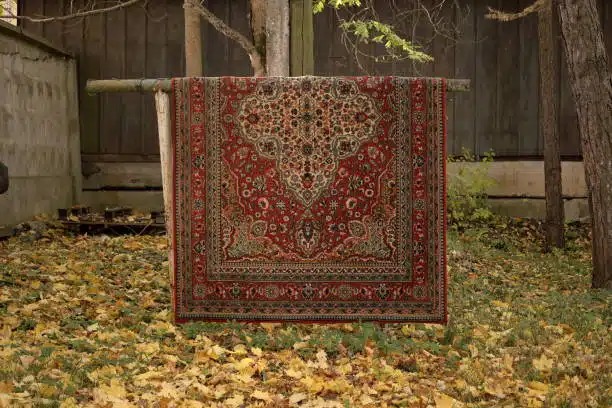
Last spring, a family contacted Surena Rugs about their great-grandfather’s Persian Serapi rug that had suffered multiple stains during a family reunion. Red wine, coffee, and what appeared to be chocolate had created a constellation of damage across the central medallion.
The rug was a 12×15 piece from the 1880s, hand-knotted with natural dyes and fine Highland wool. The family had received estimates from three carpet cleaners ranging from $800-1500, but none of them understood they were looking at a museum-quality antique worth over $150,000.
Our assessment revealed the complexity of the challenge. The wine stain had reacted with iron mordants in the deep blue field, creating purple haloing. The coffee had penetrated through to the cotton foundation. The chocolate contained modern synthetic components that had created an oily barrier preventing moisture evaporation.
The restoration took six weeks. We started with detailed photography and pH mapping of each damaged area. The chocolate required enzymatic pre-treatment followed by controlled solvent extraction. The coffee needed protein dissolution and careful acid neutralization. The wine required chelation therapy to separate the tannin bonds.
The results spoke for themselves. Not only did we remove all visible staining, but we restored the original color intensity that had been dulled by years of accumulated soiling. The family’s insurance appraisal increased by $40,000 after the cleaning.
More importantly, we preserved a piece of family history that had been made by master weavers in Heriz over 140 years ago. That’s not just cleaning — that’s conservation.
The $150,000 Persian Serapi Recovery
The damage looked devastating when the family first brought it in. Multiple stains across the central field of what turned out to be a museum-quality 1880s Serapi. Previous cleaners had quoted basic carpet cleaning prices, not understanding they were looking at a six-figure antique.
The Challenge: Wine, coffee, and chocolate stains on natural dyes over 140 years old. Each stain required completely different treatment protocols, and any mistake would permanently damage an irreplaceable heirloom.
Our Approach: Six weeks of conservation-level care. pH mapping, enzymatic pre-treatments, controlled solvent extraction, and chelation therapy. We treated each damaged area as a separate micro-environment.
The Results: Complete stain removal plus restoration of original color intensity. The family’s insurance appraisal increased by $40,000 after treatment. More importantly, we preserved 140 years of weaving mastery for future generations.
Frequently Asked Questions
How Do You Remove Wine Stains from an Antique Rug Without Ruining It?
Wine stain removal on antiques requires understanding the chemistry between tannins and natural dyes. We use chelating agents to break molecular bonds without disturbing original colors. Never use white wine, club soda, or salt — these drive stains deeper and can cause permanent color shifts. Professional treatment involves pH monitoring and controlled micro-environments over several days.
Can Coffee Stains on Antique Rugs Be Fully Removed by Professionals?
Yes, but coffee stains are complex because they contain oils, acids, and proteins that each require different removal approaches. We start with enzymatic treatments for proteins, followed by oil extraction and careful acid neutralization. The key is avoiding alkaline cleaners that can shift natural dye colors permanently. Success depends on immediate professional intervention and proper conservation techniques.
What Is the Safest Rug Stain Removal Method for Antique and Delicate Rugs?
Conservation-level cleaning using deionized water, gentle surfactants, and room temperature or below processing. We test every color separately and work in controlled sections with pH monitoring. The process takes weeks, not hours, because we’re preserving cultural heritage, not just removing stains. Avoid steam cleaning, high-pH solutions, and anyone who promises same-day results.
How Much Does Antique Rug Stain Removal Cost in Atlanta?
Professional conservation cleaning runs $15-50 per square foot, with complex stain removal adding $500-2000 depending on the damage. This seems expensive until you consider that proper maintenance preserves investment value and prevents permanent depreciation. A $200,000 antique rug damaged by incorrect cleaning becomes worthless — the professional treatment cost is insurance for your heirloom.
How Do I Find a Trusted Antique Rug Cleaning Expert Near Me in Atlanta?
Look for conservation credentials from institutions like the Smithsonian, not carpet cleaning certifications. Ask about testing protocols — real specialists spend more time testing than cleaning. Verify fine arts insurance coverage, not just standard liability. The right expert should identify your rug’s origin, age, and construction techniques by examination alone. Avoid anyone promising same-day results or using steam cleaning equipment.
Protecting Your Heritage Investment
Look, antique rugs aren’t just floor coverings — they’re cultural artifacts that deserve conservation-level care. The smell of natural wool mixed with centuries-old lanolin, the feel of hand-spun fibers under your fingers — these sensory details tell you you’re touching history.
Every stain is an emergency when it happens on an irreplaceable antique. But panic leads to permanent damage. The most important thing you can do is stop, breathe, and call professionals who understand what they’re looking at.
If you’re dealing with stains on antique or heirloom rugs in Atlanta, don’t trust this work to regular carpet cleaners. At Surena Rugs, we’ve been preserving textile heritage for over a decade. We understand that we’re not just removing stains — we’re protecting family history and investment value.
Your next steps:
- Document any damage with photos before attempting DIY solutions
- Blot (don’t rub) fresh stains with white cotton cloth
- Contact conservation specialists immediately for professional assessment
- Ask about testing protocols and insurance coverage before any treatment
Remember, these pieces survived wars, migrations, and generations of use. With proper care, they’ll survive whatever accidents modern life throws at them. Your great-grandchildren deserve to inherit the same beauty that’s been passed down to you.
Ready to protect your investment? Our cleaning service specialists are standing by to help preserve your family’s textile heritage.
