
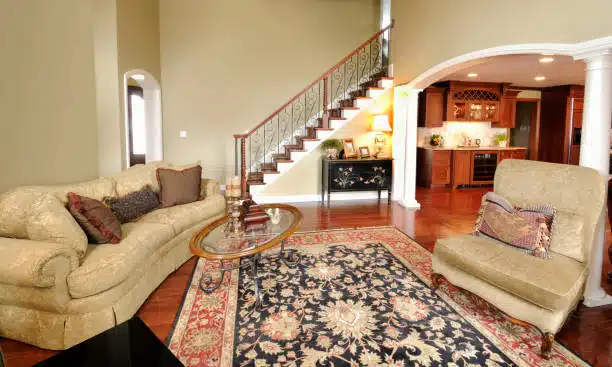
Best Rugs for High-Traffic Areas: Expert Guide for Busy Homes
TLDR – Quick Answers:
- What’s the most durable rug material for high-traffic areas? Wool leads for natural fibers; polypropylene synthetic rugs offer best stain resistance and affordability.
- Are handmade or machine-made rugs better for busy areas? Hand-knotted Persian and Turkish rugs last decades; quality machine-made flatweaves offer durability at lower cost.
- What colors hide stains and wear best? Medium-tone patterns with multiple colors; avoid pure whites, blacks, and solid colors that show every speck.
- How do you protect high-traffic rugs from wear? Quality rug pads, regular rotation, professional cleaning annually, and strategic furniture placement.
Why High-Traffic Areas Need Special Attention
Here’s what most people don’t realize: foot traffic doesn’t just dirty rugs — it breaks down the fiber structure. Every step grinds dirt particles against the fibers, acting like sandpaper. In my experience working with Atlanta families, the average hallway rug sees 200–300 footsteps daily. That’s 100,000+ impacts per year.
The biggest mistake I see is treating high-traffic rugs like decorative pieces. They’re not. They’re functional tools that need to withstand the equivalent of a marathon runner’s daily workout. The rug that looks stunning in a showroom might fall apart in your entryway within six months.
💡 Key Insight: High-traffic areas generate 5–10x more wear than low-traffic spaces. A rug rated for “medium traffic” will fail quickly in a busy hallway or family room entrance.
I call this the Traffic Reality Principle: match your rug’s durability rating to your actual usage, not your hopes. A family with kids and pets needs commercial-grade durability, even in residential settings.
The Best Rug Materials for High-Traffic Areas
After testing hundreds of rugs in real Atlanta homes, here’s what actually works:
Wool: The Natural Champion
New Zealand wool and high-quality Persian wool lead the pack for natural fibers. Wool naturally repels stains, bounces back from compression, and ages beautifully. But not all wool is created equal. The wool in a $200 rug from a big-box store won’t perform like the wool in a quality Persian piece.
I’ve tracked wool rugs in busy family rooms for over a decade. Quality wool rugs maintain 80–90% of their original appearance after five years of heavy use. The secret is the lanolin content and fiber length — longer fibers resist matting and breaking.
Polypropylene: The Synthetic Solution
For families with young kids or messy pets, polypropylene synthetic rugs offer unmatched practicality. They’re completely stain-resistant, fade-resistant, and many are machine washable. The trade-off? They don’t have wool’s natural beauty and can feel less luxurious underfoot.
One client with three kids under 10 has had the same polypropylene rug in her kitchen for four years. It still looks new because spills simply wipe away.
Cotton: The Budget-Friendly Option
Cotton works for moderate traffic but fails under heavy use. It’s affordable and often machine-washable, but shows wear patterns quickly and can develop permanent indentations from furniture.
⚠️ Common Mistake: Choosing silk or viscose rugs for high-traffic areas. These materials are beautiful but completely inappropriate for busy spaces – they’ll show wear within weeks.
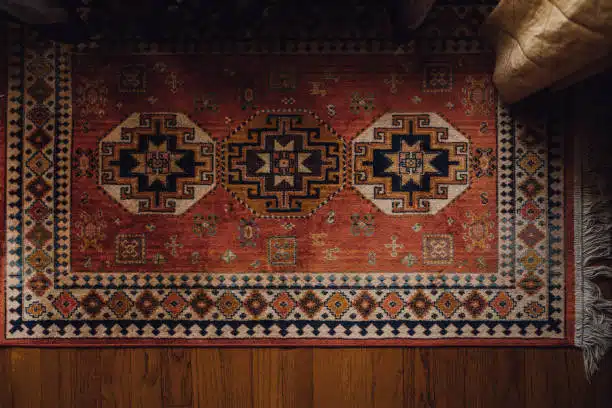
Construction Methods That Actually Last
Construction matters more than material in high-traffic applications. Here’s the hierarchy of durability:
Hand-Knotted: Maximum Strength
Hand-knotted rugs are the gold standard for longevity. Each knot is individually tied, creating incredible structural integrity. A quality hand-knotted Persian rug can handle decades of heavy traffic and actually improve with age as the fibers settle and soften.
At Surena Rugs, we see 50-100 year old Persian rugs that still perform beautifully in high-traffic areas. The key is knot density – look for at least 120-150 knots per square inch for traffic areas.
Hand-Tufted: Comfort Meets Durability
Hand-tufted construction offers 70-80% of the durability of hand-knotted rugs at a fraction of the cost. The pile is punched through a canvas backing and secured with latex. Quality hand-tufted rugs can handle moderate to heavy traffic for 8-15 years.
Flatweave: The Traffic Champion
Flatweave rugs excel in the highest-traffic areas because there’s no pile to crush or mat. They’re woven like fabric, creating incredibly durable surfaces. Turkish kilims and contemporary flatweaves can withstand commercial-level traffic.
I recommend flatweaves for hallways, entryways, and areas where furniture is frequently moved. They’re also easy to clean and typically reversible.
✅ Construction Quality Checklist:
- □ Check knot density (120+ knots per square inch for traffic areas)
- □ Examine backing quality (heavy, tight weave preferred)
- □ Test pile resilience (should bounce back when pressed)
- □ Verify edge finishing (bound or fringed edges should be secure)
- □ Look for construction warranty (quality pieces often include 5-10 year warranties)
Smart Color and Pattern Strategies
The right colors and patterns can hide 80% of daily wear and stains. This isn’t about being boring — it’s about being smart.
I call this the Camouflage Effect Strategy: choose patterns and colors that work with your lifestyle, not against it. Solid colors show every footprint, hair, and speck of dirt. Multi-colored patterns with medium tones hide imperfections naturally.
Colors That Work
Medium-tone blues, greens, and browns with pattern variation perform best in my experience. These colors mask the most common household debris: dirt, pet hair, food crumbs, and everyday dust.
Avoid pure whites (shows everything), pure blacks (shows pet hair and dust), and bright colors (show fading and wear patterns quickly).
Pattern Power
Geometric patterns, traditional Persian motifs, and abstract designs excel at hiding wear. The visual complexity breaks up soil lines and wear patterns that would be obvious on solid colors.
One pattern style I consistently recommend is vintage or distressed-look rugs. They’re designed to look aged, so natural wear actually enhances their character rather than detracting from it.
Need help choosing the perfect high-traffic rug for your space? Get in Touch Now!
The Pile Height Truth: Lower Isn’t Always Better
Most people think shorter pile equals more durability. That’s partially true but oversimplified. Here’s what actually matters:
Medium pile height (1/4 to 1/2 inch) often outperforms low pile in high-traffic areas. Why? The fibers have enough length to support each other and bounce back from compression. Ultra-low pile (under 1/4 inch) can actually show wear patterns more quickly because there’s no fiber depth to hide foot traffic paths.
💡 Key Insight: The “Goldilocks Zone” for high-traffic pile height is 1/4 to 3/8 inch – long enough to be resilient, short enough to avoid matting.
Size and Placement: Getting It Right
Maintenance and Protection Strategies
Proper maintenance can triple a rug’s lifespan. Here’s the maintenance hierarchy I recommend to my Atlanta clients:
Daily Defense
Quality rug pads are non-negotiable for high-traffic areas. They prevent slipping, reduce impact stress, and improve air circulation. I prefer dense felt pads for hard floors and waffle-weave pads for carpet.
Weekly vacuuming with a quality vacuum – but vacuum correctly. Use lower suction settings on high-pile rugs and always vacuum in the direction of the pile, not against it.
Quarterly Rotation
Rotate rugs 180 degrees every three months to distribute wear evenly. This simple step prevents permanent traffic patterns and extends rug life significantly.
Annual Professional Cleaning
Professional cleaning isn’t optional for high-traffic rugs – it’s preventive medicine. The deep cleaning removes embedded soil that causes fiber damage. At Surena Rugs, we’ve seen proper cleaning extend rug life by 5-10 years.
⚠️ Common Mistake: Using carpet cleaning companies for fine rugs. Rugs need specialized cleaning techniques different from wall-to-wall carpeting. Always use rug-specific cleaning services.
Can Persian Rugs Handle High-Traffic Areas?
- Heriz and Serapi rugs (geometric patterns, sturdy construction)
- Tribal Balouch and Kurdish pieces (nomadic durability)
- Older Tabriz rugs with medium knot counts (proven longevity)
- Vintage pieces that have already proven their durability
I’ve seen 80-year-old Heriz rugs in busy Atlanta family rooms that look better than new machine-made rugs after just two years of use.
Cost vs. Longevity: The Real Numbers
✅ Value Assessment Checklist:
- □ Calculate cost per year over expected lifespan
- □ Factor in replacement shopping time and hassle
- □ Consider resale value (quality rugs retain value)
- □ Include professional cleaning costs in long-term budgeting
- □ Evaluate warranty and repair options
At Surena Rugs, we offer our in-home trial program specifically for high-traffic rug selection. You can experience how different rugs perform in your actual space before committing to a purchase.
Frequently Asked Questions
What Rug Material Is Most Durable for High-Traffic Areas?
For natural fibers, wool is the clear winner, but quality matters enormously. New Zealand wool and high-quality Persian wool will outperform lower-grade wool by decades.
Here’s what I’ve observed in real homes: Premium wool rugs maintain 80-90% of their original appearance after five years of heavy family use. The lanolin in quality wool naturally repels stains and helps fibers bounce back from compression. Cheap wool, however, can mat and wear almost as quickly as synthetic alternatives.
For synthetic options, polypropylene leads for pure durability and stain resistance. It won’t win beauty contests against wool, but for families with young kids or pets who prioritize function over form, it’s unbeatable. I have clients whose polypropylene kitchen rugs still look new after four years of daily spills and foot traffic.
Avoid cotton in truly high-traffic areas – it shows wear patterns quickly and develops permanent furniture indentations. Silk and viscose are beautiful but completely inappropriate for busy spaces, showing wear within weeks of heavy use.
Are Handmade Rugs or Machine-Made Rugs Better for High-Traffic Spaces?
Quality handmade rugs significantly outperform machine-made rugs in high-traffic applications, but not all handmade rugs are traffic-appropriate.
Hand-knotted Persian and Turkish rugs with proper knot density (120+ knots per square inch) can handle decades of heavy use. I regularly see 50-100 year old Persian rugs performing beautifully in busy family rooms. The individual knot construction creates incredible structural integrity that machine processes can’t replicate.
However, delicate handmade pieces with silk highlights or extremely fine knotting should stay in low-traffic areas. The key is choosing robust handmade styles – think tribal Baluch rugs or geometric Heriz patterns rather than fine Isfahan silk pieces.
Quality machine-made flatweaves and commercial-grade tufted rugs can be excellent traffic performers at lower price points. They won’t last as long as premium handmade pieces, but offer good value for moderate budgets. Avoid cheap machine-made rugs with synthetic backing – they tend to separate and fray under stress.
What Rug Colors and Patterns Hide Stains Best in Busy Areas?
Medium-tone patterns with multiple colors are your best defense against visible stains and wear. This isn’t about choosing ugly rugs – it’s about strategic camouflage.
The colors that perform best in my experience are medium blues, greens, and browns incorporated into complex patterns. These tones naturally mask common household debris: dirt, pet hair, food crumbs, and everyday dust. Traditional Persian patterns excel because they incorporate multiple complementary colors that hide different types of stains.
Avoid solid colors entirely in high-traffic areas. Pure whites show everything, pure blacks reveal every speck of dust and pet hair, and bright colors show fading from sunlight and cleaning. Even beige solids, while practical-seeming, show every footprint and soil line.
Geometric patterns, vintage or distressed-look designs, and abstract motifs work particularly well because the visual complexity breaks up wear patterns that would be obvious on solid fields. I often recommend rugs that look slightly aged or weathered from the start – natural wear actually enhances their character rather than detracting from it.
How Do You Protect a Rug in a High-Traffic Area From Wear and Tear?
Proper protection can triple a rug’s lifespan, and it starts with a quality rug pad – this is absolutely non-negotiable for high-traffic areas.
Dense felt pads work best for rugs on hard floors, while waffle-weave pads suit carpeted areas. The pad prevents slipping (which causes bunching and premature edge wear), reduces impact stress on fibers, and improves air circulation that prevents moisture problems.
Quarterly rotation is my secret weapon for even wear distribution. Rotate rugs 180 degrees every three months to prevent permanent traffic patterns. This simple step has extended rug life by years for many of my clients.
Weekly vacuuming with proper technique matters enormously. Use lower suction on high-pile rugs, always vacuum in the direction of the pile (not against it), and address spills immediately before they set. Annual professional cleaning isn’t optional – it’s preventive medicine that removes embedded soil causing fiber damage.
Strategic furniture placement helps too. Position heavy furniture to anchor rug corners and distribute traffic across the rug surface rather than concentrating it along edges. The 18-inch rule applies: keep rug edges at least 18 inches from main walking paths when possible.
Can You Use a Persian Rug in a Hallway or Entryway Without Ruining It?
Absolutely – but rug selection is critical. Not all Persian rugs are appropriate for high-traffic areas, but many styles were specifically designed for heavy use.
Tribal and village Persian rugs excel in hallways and entryways. Styles like Heriz, Serapi, tribal Balouch, and Kurdish pieces were woven by nomadic families who literally lived on their rugs. The construction is robust, patterns hide wear naturally, and they actually improve with age as fibers settle.
Avoid city Persian rugs with fine silk highlights, extremely high knot counts, or delicate patterns in traffic areas. A fine Isfahan belongs in a formal dining room, not your front hallway. The investment is too significant and the construction too delicate for daily abuse.
Look for Persian rugs with geometric rather than floral patterns for traffic areas – they mask soil lines better. Older Tabriz rugs with medium knot counts (80-120 KPSI) offer an excellent balance of beauty and durability. I’ve seen 80-year-old Heriz rugs in busy Atlanta entryways that outperform new machine-made rugs after just two years.
If you’re investing in a traffic-area Persian rug, make sure to use a quality pad and follow proper maintenance. These pieces can serve families for generations when chosen and cared for correctly.
Your High-Traffic Rug Action Plan
Look, I’ve covered a lot of ground here. If you’re feeling overwhelmed, here’s what I’d do if I were standing in your living room right now:
- Measure your traffic patterns first – Walk your space and identify where people actually step, not just where you think they step
- Set a realistic budget for longevity – Calculate cost per year over expected lifespan, not just upfront cost
- Choose materials based on your real lifestyle – Be honest about kids, pets, and entertaining frequency
The biggest mistake you can make is buying a rug that looks perfect in the showroom but can’t handle your actual life. Start with function, then find beauty within those parameters.
Here in Atlanta, I see families make expensive mistakes because they prioritize aesthetics over durability. Don’t be one of them. A rug that lasts 20 years and looks good the whole time beats a rug that looks stunning for six months and embarrassing for the next five years.
Read More:
Why Persian Rugs Are Expensive: 8 Factors That Drive Premium Prices
